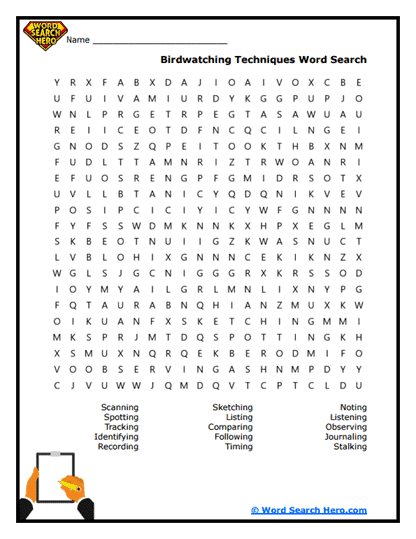
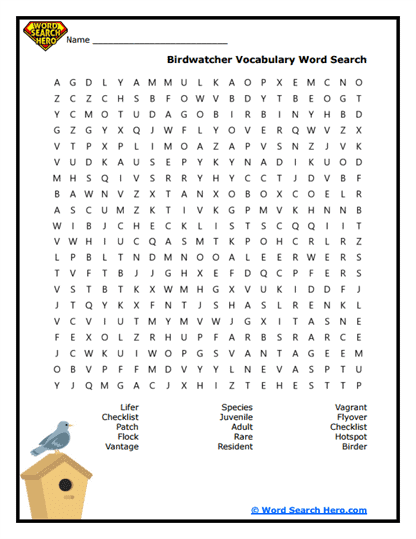
About Our Birdwatching Word Searches
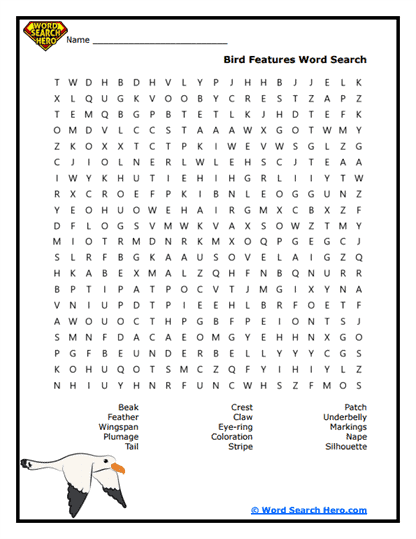
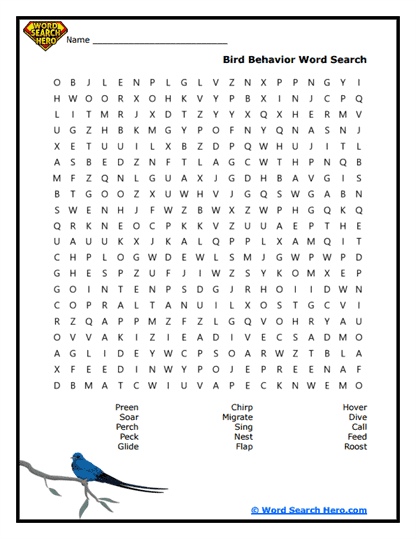
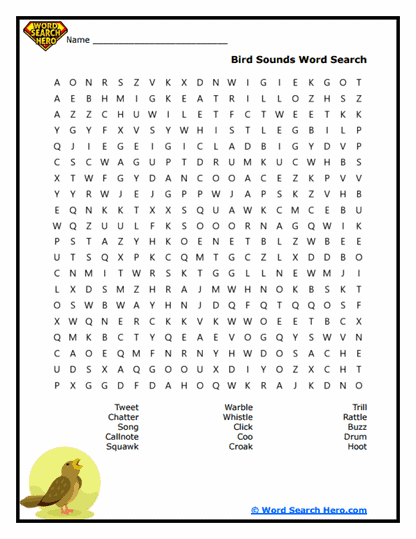
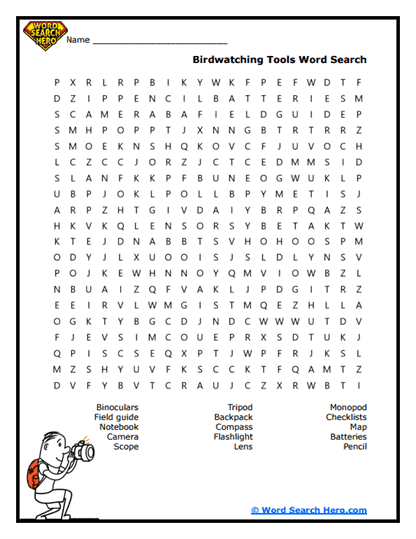
Our Birdwatching Word Searches celebrate the peaceful and fascinating hobby of observing birds in nature. These printable puzzles feature vocabulary connected to birds, habitats, feathers, migration, and the many tools birdwatchers use when exploring the outdoors. Teachers, parents, and homeschool educators enjoy using themed puzzles like these because they combine nature exploration with meaningful vocabulary and reading practice.
As participants search through the puzzle grid for hidden words, they strengthen essential literacy skills such as spelling recognition, visual scanning, and pattern identification. Word searches encourage learners to carefully scan rows, columns, and diagonals to locate each word. Even though the activity feels like a relaxing game, it quietly reinforces reading fluency, attention to detail, and concentration.
The birdwatching theme is especially engaging because it connects learners with the natural world. Words related to wings, nests, binoculars, forests, and migration often remind students of birds they have seen in parks, backyards, or during nature walks. This connection helps keep participants interested while reinforcing vocabulary in a meaningful context.
Teachers often use birdwatching puzzles during science units about animals, ecosystems, or habitats. Parents and homeschool families also appreciate how easy these puzzles are to print and use during quiet learning time or after outdoor exploration.
By combining nature-inspired vocabulary with an engaging puzzle format, birdwatching word searches encourage curiosity about wildlife while strengthening language and reading skills.
Discovering Birds and Their Habitats
Birdwatching introduces learners to a wide range of fascinating birds and natural environments. From colorful songbirds in backyard trees to large birds soaring across open skies, each species has unique features and behaviors. When learners encounter bird-related vocabulary through puzzles, they begin to recognize the language used to describe these animals and their habitats.
Words commonly associated with birdwatching include feathers, wings, nest, perch, migration, and binoculars. As participants search for these words inside the puzzle grid, they become more familiar with spelling patterns and the meanings behind each term. This repeated exposure helps reinforce vocabulary in a fun and memorable way.
Teachers often use birdwatching activities when discussing animal adaptations and ecosystems. Birds provide excellent examples of how animals adapt to different environments through their beaks, feathers, and flight abilities. Recognizing bird-related vocabulary can help students better understand these science concepts.
Another advantage of birdwatching-themed puzzles is that they encourage observation. Birdwatchers learn to look closely at colors, shapes, and movements to identify different species. Word searches strengthen similar observation skills as participants carefully examine the puzzle grid.
By exploring birdwatching vocabulary through puzzles, learners develop curiosity about wildlife while strengthening both language and observation skills.
Paul’s Pro-Tip
Birdwatching word searches are perfect before heading outside for a quick nature walk. I like to challenge students to find a few bird-related words before we step outside.
Once they find them, I tell students to keep their eyes and ears open for birds around the schoolyard or neighborhood. Suddenly everyone becomes a mini birdwatcher listening for chirps and looking up into the trees. It’s a simple way to connect the puzzle with the real world.
Turning Birdwatching Puzzles Into Nature Exploration
Birdwatching word searches can easily lead to hands-on learning experiences in nature. After finishing the puzzle, teachers can invite students to choose one bird-related word they discovered and talk about where they might see that bird or behavior in the wild.
For example, a student who finds the word nest might describe where birds build their homes and how they gather materials like twigs and grass. Another learner who spots the word feather might talk about how feathers help birds fly and stay warm.
Another engaging extension is a backyard bird observation challenge. Students can watch birds outside a window or during a short walk and see how many birds they can spot. They might also try to describe the colors, sounds, or movements they notice.
Families can try similar activities at home by connecting the puzzle with birdwatching in the backyard or at a nearby park. Children can look for birds perched on branches, flying overhead, or searching for food on the ground.
By linking puzzles with real-world observation, educators and parents transform a simple word search into an exciting opportunity for wildlife discovery and outdoor learning.
Frequently Asked Questions
How can teachers use birdwatching word searches in the classroom?
Teachers often use these puzzles as warm-up activities, early finisher tasks, or quiet transitions during science lessons about animals and habitats. The puzzles introduce bird-related vocabulary while giving students a relaxing activity that strengthens reading skills.
Are birdwatching word searches helpful for homeschool learning?
Yes, they work very well in homeschool environments because they combine vocabulary practice with outdoor exploration. Parents can print a puzzle and then follow it with backyard birdwatching or nature observation activities.
Do word searches help students learn wildlife vocabulary?
Word searches reinforce vocabulary by repeatedly exposing learners to wildlife-related terms in a visual format. As students scan the puzzle grid and recognize spelling patterns, they strengthen word recognition skills that support reading comprehension.
What age groups enjoy birdwatching-themed word searches the most?
Elementary and middle school students often enjoy these puzzles because the theme connects to nature and outdoor exploration. However, older students and adults can also enjoy them as relaxing brain challenges that strengthen concentration and observation.
Can these puzzles encourage interest in birdwatching?
Absolutely. When learners discover words related to birds and nature, it often sparks curiosity about wildlife and outdoor exploration. The puzzle can become the first step toward noticing birds in everyday environments and learning more about the natural world.