About Our Slang Word Searches
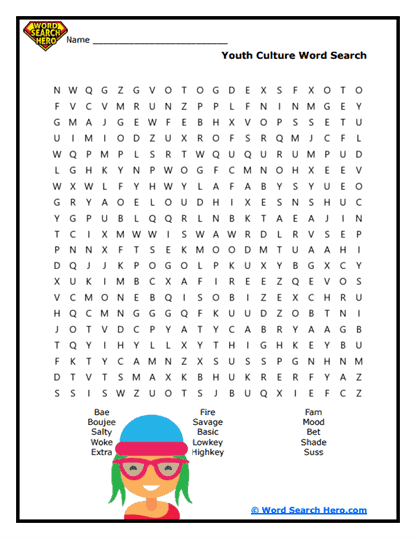
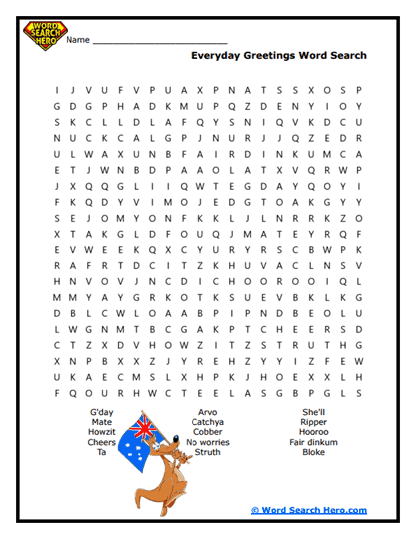
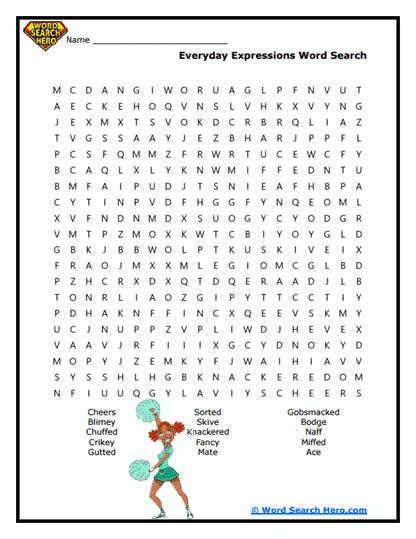
Our slang word searches take everyday language and turn it into a fun learning activity. Instead of focusing only on formal words, these puzzles explore the kind of language people actually use in conversations, movies, and online. That makes them feel familiar right away-and more exciting to solve.
As students work through these puzzles, they are building important skills like spelling, scanning, and pattern recognition. At the same time, they are learning how language changes depending on where you are and who you are talking to.
These puzzles also connect to different parts of the world. Students can explore expressions from American Slang, Australian Slang, and British Slang, which helps them see how language shifts across cultures.
Why Slang Words Lead to Smarter Conversations
Slang may seem casual, but it actually teaches important language skills.
When students work with slang, they start to notice that not every word fits every situation. A word that sounds fine with friends might not belong in a school essay or presentation.
This helps students understand ideas like:
- audience (who you are talking to)
- purpose (why you are speaking or writing)
- tone (how your words sound)
For example, students might compare a slang word to a more formal one. That simple comparison helps them see how meaning stays the same, but tone changes.
Slang also makes learning feel more real. Many students recognize words from conversations, music, or videos. That familiarity makes them more willing to participate and think more deeply about language.
Over time, students become more flexible communicators. They learn when to use casual language-and when to switch to something more formal.
Paul’s Pro-Tip
 Play the “say it another way” game.
After finding a slang word, ask:
- How would you say this in a more formal way?
You can also ask:
- Would you say this to a teacher?
- Would you say this in a speech?
This turns a simple puzzle into a fun language challenge-and students usually love the answers.
Activities That Turn Slang Into Real Learning Moments
These puzzles are a great starting point for deeper learning.
One easy activity is sorting:
- Write down a few slang words from the puzzle
- Then match them with more formal versions
This helps students clearly see the difference between casual and formal language.
Another idea is discussion:
- Ask students where they have heard these words
- Talk about whether the words feel current or outdated
This builds awareness of how language changes over time.
You can also try sentence practice:
- Have students write one sentence using slang
- Then rewrite it in a more formal way
This helps connect vocabulary to real communication.
For a creative extension:
- Let students create their own slang word
- Then define it and use it in a sentence
This makes the activity fun while reinforcing how language works.
Frequently Asked Questions
What are slang word searches?
Slang word searches are puzzles that focus on informal words people use in everyday conversation. They help students recognize language they hear often while practicing spelling and reading skills.
Are slang word searches actually educational?
Yes, they are more useful than they might seem. Students learn spelling, pattern recognition, and also important communication skills like understanding tone and audience. They begin to see that word choice matters depending on the situation.
How can teachers use these in the classroom?
Teachers can use them as warm-ups, early finisher activities, or discussion starters. They work especially well when paired with a short conversation about formal vs. informal language, helping students connect the puzzle to real learning.
Are these good for learning at home?
Absolutely. They are easy to print and require little setup. Parents can turn them into a short activity and then talk about a few words afterward, which helps deepen understanding without making it feel like a long lesson.
Why is slang important for students to learn?
Slang helps students understand how real people communicate. It also teaches them when informal language works-and when it does not-which is an important part of becoming a strong reader and writer.