


Climate Systems
Perfect for curious minds, future meteorologists, and anyone who thinks “thermohaline circulation” sounds like a spicy dance move.
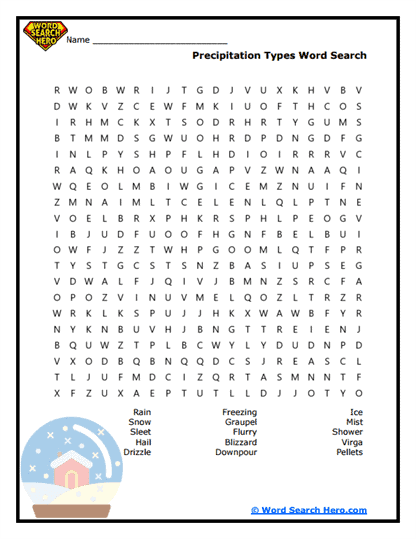
Perfect for curious minds, future meteorologists, and anyone who thinks “thermohaline circulation” sounds like a spicy dance move.

You’ll run into words like subduction, bioavailability, fractionation, and magnetosphere-the kind of terms that actually explain how the planet works, but here, they’re hiding in plain sight.
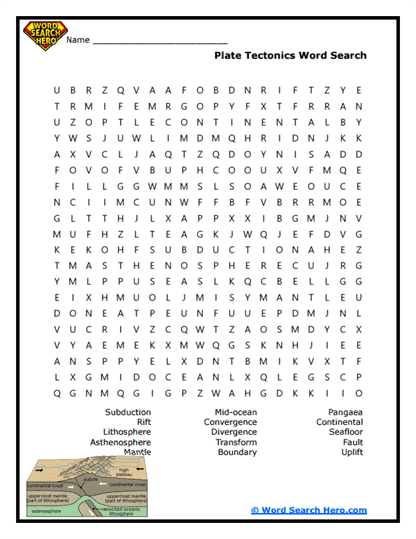
Crack open the Earth’s crust (gently, please) and explore a laugh-out-loud lineup of word search puzzles that make geology so fun, even tectonic plates would shift for it.
Earth Science word searches introduce students to the vocabulary used to study the planet we live on and the natural processes that shape it. These printable puzzles help learners become familiar with important scientific terms related to landforms, weather, rocks, and the systems that make up Earth. Before students explore detailed earth science concepts, it often helps to first recognize the language used to describe the planet and its natural features.
Students studying earth science may encounter words such as crust, mantle, erosion, volcano, atmosphere, mineral, and tectonics. These terms frequently appear in earth science and geology lessons and help students understand how Earth’s surface changes over time. A word search provides an engaging way to reinforce this vocabulary while strengthening reading, spelling, and observation skills.
Because the activity feels like a puzzle rather than a traditional worksheet, it can make scientific vocabulary more approachable and enjoyable to learn. Teachers often use these printables during science centers, independent practice, review sessions, or early finisher activities. Parents and homeschool educators can also include them in lessons as a way to introduce earth science vocabulary in an interactive format.
As students search for the words in the puzzle grid, they strengthen concentration, visual scanning, and pattern recognition skills. At the same time, they build familiarity with the scientific language used to describe Earth’s structure and the processes that shape its environment.
Earth science is the study of the planet Earth and the systems that interact to shape it. Scientists in this field examine the land, oceans, atmosphere, and internal layers of the planet to understand how they change over time.
Many natural processes influence the surface of the Earth. Erosion can slowly reshape landscapes, while volcanic activity and tectonic movement can dramatically alter the planet’s surface. Weather and climate patterns also affect how landforms develop and how ecosystems function.
Earth science also helps scientists study natural resources, natural hazards, and environmental changes. By understanding how the Earth works, researchers can better predict events such as earthquakes, volcanic eruptions, and severe weather.
Learning the vocabulary associated with earth science helps students understand the many systems and processes that shape our planet.
Word searches reinforce this learning by giving students repeated exposure to the key terms used when studying Earth’s structure and natural processes.

A powerful way to extend this puzzle is to introduce a “local Earth science investigation.” After students complete the word search, ask them to observe the natural features around their community.
Students might identify examples of rocks, soil, landforms, or weather patterns in their local environment. Encourage them to connect their observations to vocabulary words from the puzzle.
This activity adds strong instructional value because it helps students see that earth science concepts exist all around them, not just in textbooks. Teachers and homeschool educators can also quickly assess whether students understand how scientific vocabulary applies to real-world environments.
Earth science helps explain how the planet formed, how its surface changes, and how natural systems interact. Understanding these processes allows scientists to study environmental changes and manage natural resources more effectively.
Learning earth science vocabulary also helps students interpret science diagrams, maps, and classroom discussions about geology, weather, and environmental science. These concepts connect to many other areas of science, including physics, chemistry, and biology.
A word search can serve as an introduction to an earth science lesson or as a review after students have studied topics such as rocks, weather, or plate tectonics in class. After completing the puzzle, educators can encourage students to connect the vocabulary with maps, diagrams, or outdoor observations.
When students become familiar with earth science vocabulary, they gain the language and understanding needed to explore the dynamic processes that shape our planet.
Earth science is the study of the planet Earth and the natural processes that shape its land, atmosphere, and oceans.
Earth science includes areas such as geology, meteorology, oceanography, and environmental science.
Earth science helps scientists understand natural events, environmental changes, and how to manage Earth’s resources.
Examples include erosion, volcanic activity, earthquakes, and weather patterns.
Students can observe natural features in their surroundings and identify examples of earth science concepts such as rocks, soil, or weather patterns.