


George Patton
March through history with a pencil in hand as you hunt down tank tactics, warfront lingo, and the fiery traits of General George Patton like a word-seeking warrior on a caffeine high.

March through history with a pencil in hand as you hunt down tank tactics, warfront lingo, and the fiery traits of General George Patton like a word-seeking warrior on a caffeine high.
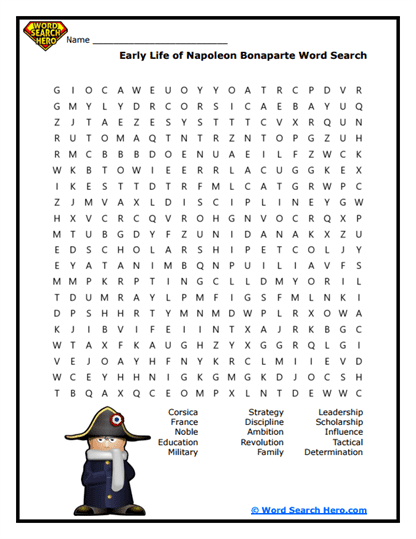
March through history and sharpen your brain with these hilariously heroic Napoleon Bonaparte word searches, where spotting Corsica and Guillotine in a grid is way more fun than storming across Europe in a bicorne hat.
Military leaders word searches focus on people in positions of command, responsibility, and decision-making during times of conflict or defense. This collection highlights roles like general, commander, captain, officer, and strategist. Each word represents a person who leads others, plans actions, and takes responsibility for important outcomes.
As students search for words like “general,” “commander,” “colonel,” and “leader,” they begin to understand the structure of leadership within the military. These aren’t just titles-they represent people who guide teams, make strategic decisions, and manage complex situations. This makes the vocabulary more meaningful because it’s tied to real roles and responsibilities.
These puzzles are ideal for classroom use during history or social studies units. They also work well as independent activities that build focus, spelling, and reading skills. At home, they provide a structured way to explore leadership roles and how people take charge in organized systems.
Because leadership roles often involve responsibility and teamwork, students naturally begin to think about what it means to lead. This turns a simple word search into a deeper exploration of people in positions of authority and influence.
Military leadership is built on clear roles, each with specific responsibilities. When students encounter words like “general,” “captain,” “major,” and “lieutenant,” they’re learning about different levels of leadership. Each position comes with its own duties, from planning strategies to leading teams in action.
One way to extend this activity is by discussing how these roles differ. A general may oversee large operations, while a captain leads a smaller group. Officers manage teams and ensure plans are followed. These distinctions help students understand how leadership is organized.
You can also explore the idea of strategy. Words like “command,” “order,” and “plan” show that military leaders are responsible for thinking ahead and making decisions. This helps students see that leadership involves both action and planning.
For a creative extension, ask students to imagine they are leading a team. What decisions would they need to make? How would they guide others? This builds both comprehension and critical thinking.
By focusing on people in leadership positions, these word searches help students understand how organization and responsibility work in structured environments.

Use the “rank ladder” strategy-start by finding the highest-ranking titles like “general” or “commander.” These are usually longer and easier to spot, and once you find them, your brain naturally starts recognizing related ranks more quickly.
Then work your way down to shorter titles like “major” or “captain.” By clearing the bigger words first, you reduce clutter in the grid and make the smaller roles stand out much faster.
Military leaders word searches help students explore what it means to be in charge of others. Each word represents a person responsible for guiding, organizing, and making decisions. This helps students understand leadership in a clear and structured way.
These puzzles also strengthen comprehension by connecting vocabulary to real roles. Words like “commander” and “officer” help students see how authority and responsibility are distributed. This adds depth to their understanding of leadership systems.
Another benefit is learning about hierarchy. Students begin to see that different positions have different levels of responsibility. This helps them understand how large groups are organized and managed.
The activity also builds focus and persistence. Students must carefully search for each word, improving attention to detail and strategy. The structured topic helps keep them engaged and thinking.
By connecting vocabulary to people in leadership positions, these word searches create a learning experience that is both practical and thought-provoking.
These puzzles typically include ranks like general, colonel, major, captain, lieutenant, and commander. Each represents a different level of leadership and responsibility. This helps students understand how leadership is structured.
They connect each title to a position where someone is responsible for leading others. For example, students learn that a captain leads a group while a general oversees larger operations. This builds both vocabulary and understanding of leadership.
Yes, they introduce the idea of ranks and hierarchy in a simple and accessible way. Students begin to see how different positions fit together. This helps them understand how organized systems work.
You can ask students to compare roles and explain what each leader might be responsible for. Another idea is to create a simple team scenario and assign leadership roles. This helps connect vocabulary to real decision-making.
Learning about leadership helps students understand responsibility, organization, and decision-making. It also shows how people guide and support others in structured environments. These are valuable skills that apply in many areas of life.