


Alien
As students search for terms like mutation, nanotech, atmosphere, and syntax, they are mapping out the actual language used in cutting-edge research across multiple fields.

As students search for terms like mutation, nanotech, atmosphere, and syntax, they are mapping out the actual language used in cutting-edge research across multiple fields.
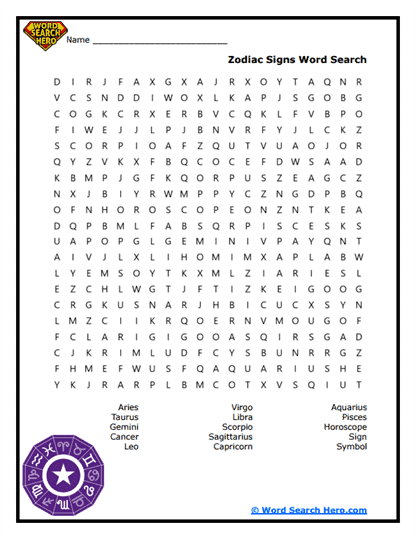
From the elemental frameworks that underlie personality models to the geometric principles driving planetary aspects, every puzzle here drags you deeper into a symbolic system built on mathematical placements and interpretive nuance.


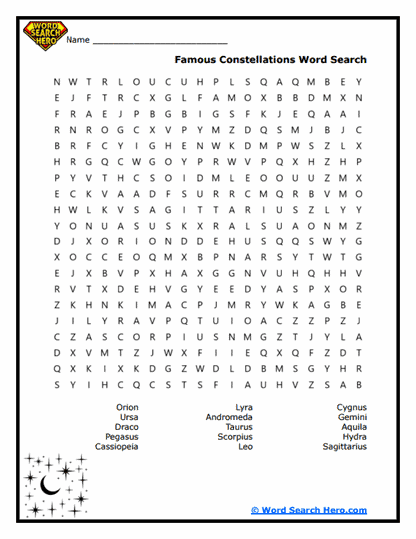
It’s a celestial vocabulary gauntlet where students dodge between declination and asterism, navigate loops and zeniths, and emerge fluent in the terms that scientists, navigators, and myth-makers have used to map the night sky for millennia.
In just a few pages, you’ll stare down seismic stress terms like “Subduction” and “Epicenter,” navigate the frosty reaches of the “Exosphere,” dive into watery systems from “Estuaries” to “Aquifers,” and wrestle with humanity’s environmental legacy through words like “Deforestation” and “Emissions.”

You’re not just circling words; you’re indexing the taxonomy of galaxy types, mapping the anatomy of spirals and bulges, decoding light’s slippery behavior across parsecs, and wading into the unresolved chaos of dark energy and gravitational lensing like it’s your afternoon hobby.
The result is a kind of controlled chaos where ancient Babylonian astronomers bump elbows with smartphone filters, and blood-red moons share space with rotational geometry.

From tracking flux patterns to preparing thermal gear for skywatching marathons, these word grids sneak complex planetary science into your brain under the guise of leisure.
It’s a lexical obstacle course where learners hunt down “gibbous,” “regolith,” “thruster,” and “inclination” with the intensity of a planetary scientist under deadline, all while accidentally absorbing the conceptual frameworks that explain how moons orbit, shape, and sometimes even destabilize their planetary hosts.

It’s like a secret training ground where “luminosity,” “dark matter,” and “telemetry” quietly sharpen the mind while pretending to be innocent entertainment. Each term is a doorway into something far bigger: questions about scale, motion, existence, and the absurd vastness of the universe.
It’s less about circling letters and more about internalizing the conceptual wiring diagram of rocket science. Each grid is a tight capsule of specialized language, and the only way out is through.
Get ready to laugh your umbra off with this side-splitting word search collection dedicated to the dramatic, the cosmic, the utterly overhyped phenomenon known as the solar eclipse–aka the sky’s version of “hold my cup” as the moon photobombs the sun like it’s trying to win a celestial prank war.

You’ll come across the language of orbital dynamics, atmospheric chemistry, planetary structure, and solar radiation-all embedded in letter grids like a kind of quiet, low-stress bootcamp for thinking like a scientist.
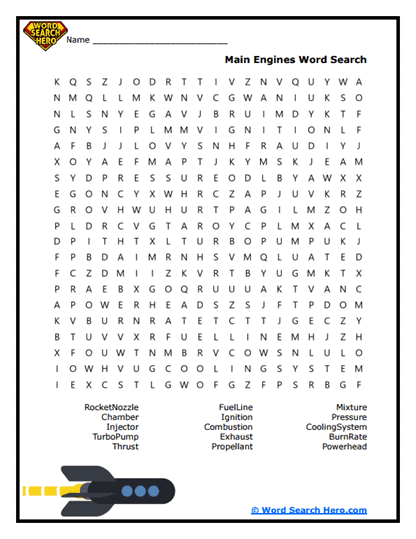
From the violently efficient combustive precision of Injector and TurboPump to the careful trajectory corrections whispered through AttitudeControl and Telemetry, every puzzle drags you, willingly or not, through the real conceptual architecture of spaceflight.
Space word searches introduce students to the vocabulary used to study the universe beyond Earth. These printable puzzles help learners become familiar with scientific terms related to planets, stars, galaxies, and other objects found in space. Before students explore astronomy and space science in depth, it often helps to first recognize the language scientists use to describe the vast structures and phenomena that exist throughout the universe.
Students studying space may encounter words such as planet, star, galaxy, orbit, asteroid, comet, and telescope. These terms frequently appear in astronomy and earth science lessons and help students understand the objects and forces that shape our solar system and the broader universe. A word search provides an engaging way to reinforce this vocabulary while strengthening reading, spelling, and observation skills.
Because the activity feels like a puzzle rather than a traditional worksheet, it can make scientific vocabulary easier and more engaging to learn. Teachers often use these printables during science centers, independent practice, review sessions, or early finisher activities. Parents and homeschool educators can also include them in lessons as a way to introduce space science vocabulary in an interactive format.
As students search for the words in the puzzle grid, they strengthen concentration, visual scanning, and pattern recognition skills. At the same time, they build familiarity with the scientific language used to describe objects and events in space.
Space refers to the vast region beyond Earth’s atmosphere where planets, stars, galaxies, and other celestial bodies exist. Scientists who study space and the universe are called astronomers.
Within our solar system, planets orbit the Sun along with smaller objects such as moons, asteroids, and comets. Beyond our solar system lie billions of stars grouped into galaxies. The galaxy that contains our solar system is called the Milky Way.
Astronomers use powerful telescopes and spacecraft to observe distant objects and learn more about the structure and history of the universe. Their discoveries help scientists understand how stars form, how galaxies evolve, and how planetary systems develop.
Learning the vocabulary associated with space science helps students understand how scientists describe and study the objects found throughout the universe.
Word searches reinforce this learning by giving students repeated exposure to the key terms used when studying astronomy and space exploration.

A powerful extension activity is a “scale of the solar system walk.” After students complete the word search, help them build a scaled model of the solar system outdoors using common objects to represent the planets.
For example, a small bead might represent Mercury, while a larger ball could represent Jupiter. Place the objects along a long walkway or field to demonstrate how far apart the planets actually are.
This activity adds tremendous instructional value because students often assume planets are much closer together than they truly are. Seeing the distances physically represented helps learners grasp the enormous scale of our solar system.
Space science helps people understand the structure and history of the universe. By studying stars, planets, galaxies, and cosmic phenomena, scientists can learn how the universe formed and how it continues to change.
Understanding space vocabulary helps students interpret diagrams of the solar system, images from telescopes, and classroom discussions about astronomy and space exploration. These concepts also connect to broader topics such as planetary science, astrophysics, and space technology.
A word search can serve as an introduction to a lesson about the solar system or as a review after students have studied astronomy in class. After completing the puzzle, educators can encourage students to connect the vocabulary with images of planets, star charts, or models of the solar system.
When students become familiar with space science vocabulary, they gain the language and understanding needed to explore the universe and the objects that exist far beyond our planet.
Space is the vast region beyond Earth’s atmosphere where planets, stars, and galaxies exist.
Astronomy is the scientific study of space, including celestial objects such as stars, planets, and galaxies.
The solar system is the collection of planets, moons, asteroids, and other objects that orbit the Sun.
Earth is located in the Milky Way galaxy, which contains billions of stars.
Students can create a scaled model of the solar system to better understand the relative sizes and distances between planets.