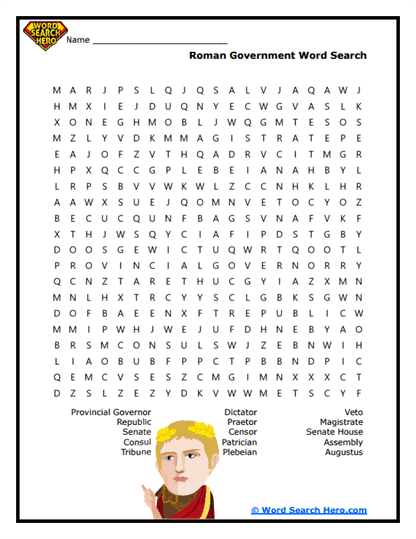
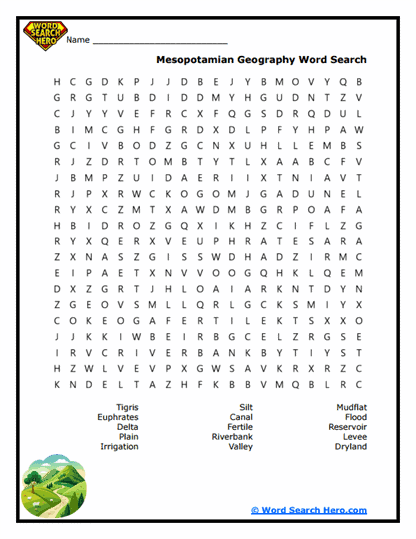
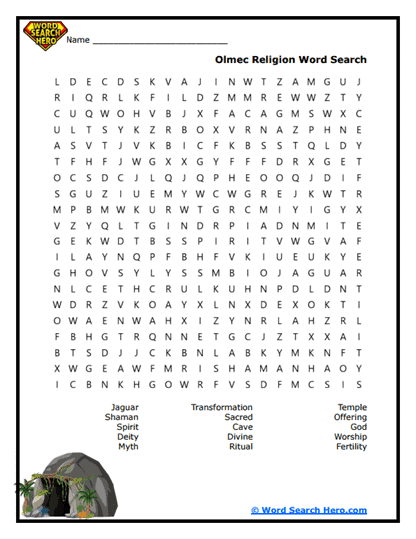
About Our Ancient Civilizations Word Searches
Ancient civilizations played a major role in shaping the world we live in today. Societies like Egypt, Mesopotamia, Greece, Rome, and the Indus Valley introduced ideas, technologies, and cultural traditions that still influence modern life. Our Ancient Civilizations Word Searches give students an engaging way to explore the vocabulary connected to these early societies while strengthening reading and recognition skills.
These printable puzzles introduce learners to important historical terms such as pyramids, pharaoh, empire, temple, and hieroglyphics. Instead of simply memorizing names and definitions from a textbook, students interact with the vocabulary by searching for words hidden in puzzle grids. This playful format helps reinforce key concepts while keeping students interested in the topic.
Teachers often use these puzzles during social studies units about early civilizations. They work well as bell ringers, literacy center activities, or review exercises after a lesson about a specific culture. Because they are easy to print and distribute, they fit naturally into classroom routines.
Parents and homeschool educators also find these puzzles helpful for introducing historical topics in a relaxed way. Word searches provide an approachable entry point to discussions about ancient cultures, inventions, and historical achievements.
Another benefit is the development of focus and visual scanning skills. As students search rows, columns, and diagonals to find words, they practice careful observation while reinforcing important vocabulary.
Our Ancient Civilizations Word Searches turn key historical terms into an interactive activity that helps learners build curiosity about the early societies that helped shape human history.
How Early Civilizations Changed the World
Ancient civilizations laid the foundation for many systems we still use today, including writing, government, architecture, and trade. Word search puzzles help students become more familiar with the vocabulary connected to these early achievements.
As students search for words like pharaoh, temple, dynasty, empire, and civilization, they begin recognizing terms that frequently appear in social studies lessons. This repeated exposure makes it easier for learners to understand historical discussions and reading passages.
Teachers can extend the puzzle activity by asking students to identify which civilization each word relates to. For example, pyramid may connect to ancient Egypt, while senate might relate to ancient Rome. These quick connections help students see how vocabulary links to specific cultures.
Another engaging activity is to group puzzle words into categories such as people, places, inventions, or government systems. Sorting vocabulary in this way helps students see how different elements of a civilization work together.
Students can also choose a few words from the puzzle and write a short explanation about what they mean. For example, they might describe what a pharaoh was or why irrigation was important for farming.
Through puzzles and discussion, learners begin to see that ancient civilizations were complex societies with important contributions to human history.
Paul’s Pro-Tip
When students finish an ancient civilizations word search, try turning it into a mini exploration activity.
Ask learners to choose one word from the puzzle that sounds interesting-maybe pyramid, dynasty, or temple. Then spend a few minutes talking about what that word represents in history.
You can also ask students which civilization they think the word belongs to. Even a quick guess can lead to a great discussion about how different ancient societies lived.
Sometimes one word from a puzzle is all it takes to spark curiosity about an entire civilization.
Discovering Connections Between Ancient Cultures
Studying ancient civilizations helps students see how early societies developed ideas that influenced later cultures. Many ancient civilizations shared similar challenges, such as building cities, managing resources, and organizing governments.
Word search puzzles help introduce students to the vocabulary that describes these historical developments. Words like trade, agriculture, writing, and architecture appear frequently when discussing early societies.
Teachers can use the puzzle as a starting point for comparing civilizations. For example, students might notice that both ancient Egypt and Mesopotamia developed systems of writing. Recognizing these shared features helps learners understand the broader story of human development.
Reading assignments also benefit from this vocabulary practice. When students recognize terms like empire or dynasty from the puzzle, they are more likely to understand historical passages that use these words.
Families can reinforce the learning at home by discussing some of the puzzle words together. Looking up pictures of ancient structures like pyramids or temples can help bring the vocabulary to life.
Word search puzzles provide a simple introduction, but they often lead to deeper curiosity about how ancient civilizations lived, built, and influenced the future.
Frequently Asked Questions
What types of words appear in ancient civilizations word searches?
These puzzles often include words related to early societies such as pharaoh, pyramid, empire, temple, agriculture, and dynasty.
Which civilizations are usually represented in these puzzles?
Many puzzles include vocabulary connected to civilizations like ancient Egypt, Greece, Rome, Mesopotamia, and the Indus Valley.
Are these puzzles useful during social studies lessons?
Yes. Teachers often use them as vocabulary warm-ups, review activities, or early finisher tasks during ancient history units.
Can these puzzles help students remember historical terms?
They can. Repeated exposure to important vocabulary helps students recognize and recall the terms more easily during reading and discussions.
What is a good follow-up activity after completing the puzzle?
Students can choose a word they found and research which civilization it belongs to, then share one interesting fact about that topic.