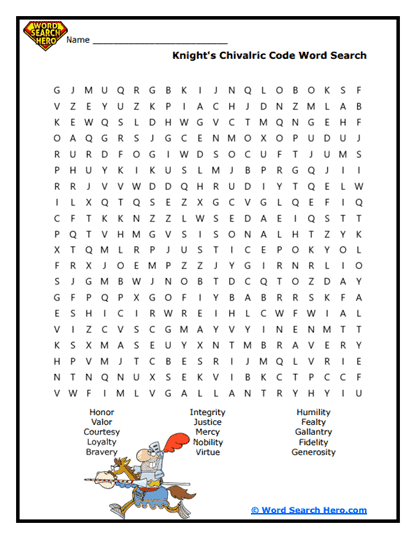
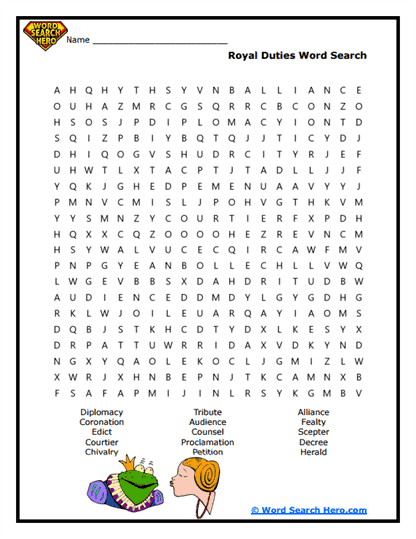
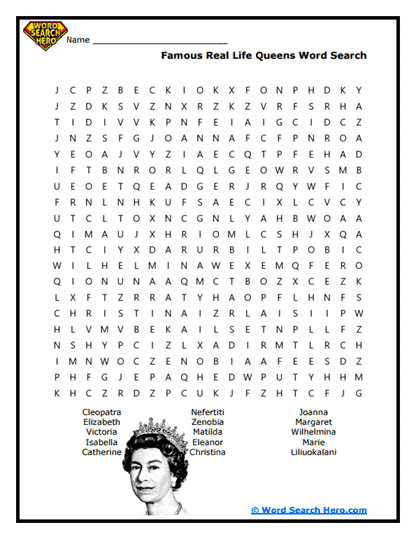
About Our Medieval Times Word Searches
Our Medieval Times Word Searches bring the fascinating world of castles, knights, and kingdoms into an engaging printable puzzle collection that helps students build vocabulary while exploring an important historical era. Medieval times, often called the Middle Ages, were filled with powerful rulers, fortified castles, traveling merchants, and brave knights. By turning this exciting historical theme into word search puzzles, learners can connect language practice with a vivid picture of life long ago.
Word searches are a simple but powerful learning activity. As students scan the puzzle grid to locate hidden words, they practice identifying spelling patterns, recognizing letter combinations, and strengthening visual tracking skills. These abilities support reading development and help learners become more confident when encountering unfamiliar vocabulary.
Teachers frequently use themed puzzles like these as classroom warm-ups, literacy center activities, or enrichment work for students who finish assignments early. Because word searches are structured yet flexible, they allow students to practice language skills independently while staying engaged.
Parents and homeschool educators also find them helpful because they are easy to use and require very little preparation. A printed puzzle can instantly become a meaningful learning activity during quiet study time or as part of a history unit about life in the Middle Ages.
The medieval theme naturally encourages curiosity about castles, knights, kings, and village life. Words connected to armor, battles, feasts, and royal courts help students imagine what everyday life might have looked like during this important historical period.
By blending historical themes with skill-building activities, these puzzles create a learning experience that strengthens vocabulary while sparking curiosity about the past.
Life Inside a Medieval Kingdom
Medieval times were a period filled with fascinating traditions, social roles, and daily routines that shaped how people lived. Kingdoms were often centered around large castles that served as both homes and fortresses. Kings and queens ruled their lands, while knights trained to defend the kingdom and protect the people.
Using a medieval-themed puzzle introduces vocabulary connected to this historical world. Students may encounter words related to castles, armor, feasts, tournaments, villages, and royal courts. Each of these words helps build a clearer picture of what life might have looked like hundreds of years ago.
Teachers can expand the learning by asking students to imagine what a day might be like inside a medieval castle. Who would live there? What jobs would people have? These questions help students connect vocabulary to real historical ideas and encourage thoughtful discussion.
Another interesting topic is the role of knights and tournaments. Knights often participated in competitions that tested their strength, skill, and horsemanship. These events were both entertainment and training, drawing crowds from nearby villages.
Exploring these ideas alongside puzzle activities helps students understand that history is more than just dates and events. It is a story about how people lived, worked, and organized their societies.
Paul’s Pro-Tip

After students finish the puzzle, challenge them to build a mini medieval scene using the words they found. Ask them to pick three or four words and describe what might be happening in a castle, village, or tournament.
Another great extension is a “medieval job match.” Students choose a word from the puzzle and explain which person in a medieval kingdom might use it-a knight, a blacksmith, a farmer, or a king.
Activities like these help students move beyond finding words and start connecting vocabulary to historical ideas.
Why History-Themed Puzzles Improve Engagement
Historical themes help students visualize the past, making vocabulary more meaningful and memorable. When learners encounter words connected to castles, knights, and villages, they begin forming mental images that strengthen comprehension.
Word searches also strengthen several cognitive skills that support reading. Students must carefully scan rows and columns to identify hidden letter patterns. This type of visual tracking mirrors how readers move their eyes across lines of text.
Another benefit is spelling reinforcement. Seeing historical vocabulary multiple times in the puzzle grid helps students internalize letter patterns and word structure. This repeated exposure improves recognition and reading confidence.
The medieval theme also invites curiosity about history. Students often ask questions about armor, castle life, or royal traditions after encountering these words in the puzzle. These questions create natural opportunities for teachers and parents to introduce short history discussions.
Puzzle-solving also builds persistence. Some words are easy to find, while others require patience and careful observation. Each successful discovery encourages students to keep working and strengthens problem-solving habits.
Combining history with interactive puzzles creates a learning experience that is both educational and engaging.
Frequently Asked Questions
What types of medieval vocabulary appear in these word searches?
Medieval-themed puzzles often include words related to castles, knights, armor, kingdoms, and village life. These terms help students become familiar with the language commonly used when studying the Middle Ages.
How can teachers use Medieval Times word searches during a history unit?
Teachers can use the puzzles as an introduction to a lesson about medieval society or castle life. After students complete the puzzle, the vocabulary can be used to discuss important roles such as knights, kings, farmers, and craftsmen.
Can these puzzles help students remember historical terms?
Yes, repeatedly searching for and recognizing the same historical vocabulary helps reinforce memory. When students later encounter those words in textbooks or lessons, they are more likely to recognize and understand them.
How can parents connect the puzzle to learning about medieval history?
Parents can ask children to choose several words from the puzzle and explain what those items or roles might look like in a medieval kingdom. This encourages children to think about how people lived during that time period.
Are these word searches helpful for introducing the Middle Ages to younger learners?
Yes, puzzles provide a simple and engaging way to introduce historical vocabulary without overwhelming students. The activity allows learners to become familiar with important words before exploring deeper historical lessons.