Choose a topic !

Physics Word Searches

Circular Motion Word Searches

Circular Motion

Beneath the surface of each puzzle lies a layered web of scientific precision: the geometry of orbits, the subtle coercion of centripetal force, the illusory rebellion of centrifugal effects, and the equations quietly implied by terms like interval, mass, and power.

View More
Computer Science Word Searches

Computer Science

Inside these puzzles lurk the blueprints of logic gates, the anatomy of storage hierarchies, the lineage of programming languages, and the secret handshake of cryptographic protocols. Each term-from “Array” to “Firewall”-isn’t just a word to be found, but a trigger for cognitive dissonance, curiosity, and occasional existential questioning (“Wait, what is a stack, really?”).

View More
Electricity Word Searches

Electricity

From the particle-level choreography of protons and electrons to the sprawling complexity of circuits, conduction, and energy transfer, these words aren’t just labels-they are distilled concepts that trace how we generate, control, and survive our entanglement with electric phenomena.

View More
Light and Optics Word Searches

Light and Optics

You’ll chase down words like refract, pulse, invert, and spectacle like you’re mapping out a light ray’s path through a fiber optic cable, except the fiber is made of letters and your lab bench is a grid.

View More
Magnetism Word Searches

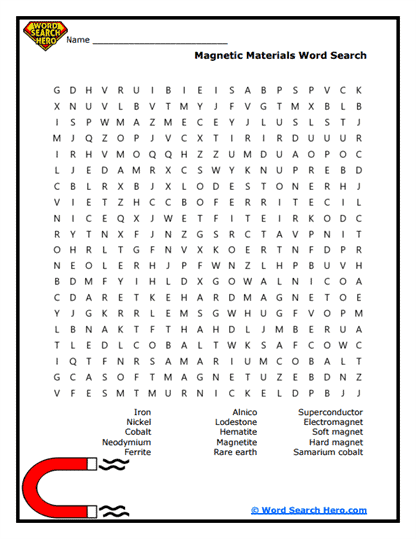
Magnetism

Magnets are pulling more than fridge doors in this electrifying collection of word searches-they’re yanking your brain into a vortex of fun, science, and sneaky learning. Packed with poles, particles, and positively charged entertainment, these puzzles will have you feeling the attraction faster than a paperclip in a magnet convention.

View More
Momentum and Impulse Word Searches

Momentum and Impulse

It’s a hands-on, eyes-down exercise in decoding the language of the physical world, where terms like “elastic,” “slope,” “impact,” and “duration” aren’t just letters-they’re cognitive tools for dissecting how and why objects move, collide, and rebound.

View More
Newton's Laws of Motion Word Searches

Newton's Laws of Motion

Packed with concept-heavy vocabulary like inertia, reaction, friction, gravity, and mass, these puzzles do more than ask you to find words-they demand you confront the strange and stubborn behaviors of the universe, one cleverly hidden term at a time.

View More
Scientific Method Word Searches

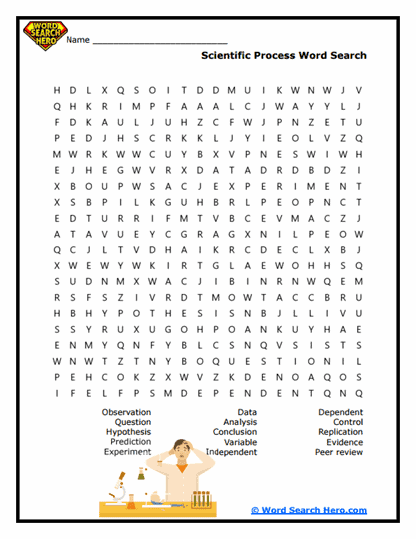
Scientific Method

Sharpen your pencils and your wits, because this collection of Scientific Method word searches is the nerdiest thrill ride since someone yelled “Let’s test that hypothesis!” in a lab coat.

View More
Semiconductors Word Searches

Semiconductors

If someone told you that spotting Donor diagonally would help demystify carrier injection or that circling Bias could sharpen your understanding of voltage thresholds, you’d raise an eyebrow-but that’s exactly what’s happening.

View More
Simple Machine Word Searches

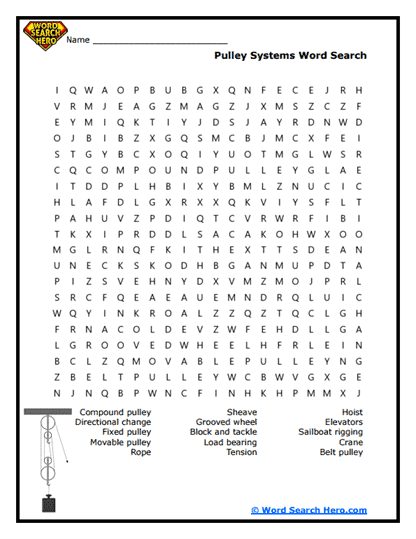
Simple Machines

From screws that screw to wedges that wedge (real technical stuff, we promise), these puzzles are a laugh-out-loud way to learn why your toaster and your toolbox are secretly physics professors.

View More
Sound Waves Word Searches

Sound Waves

One moment you’re circling Amplitude or Cochlea, and the next, you’re mentally reconstructing waveforms, echo paths, and the neural decoding of sound.

View More
Thermodynamics Word Searches

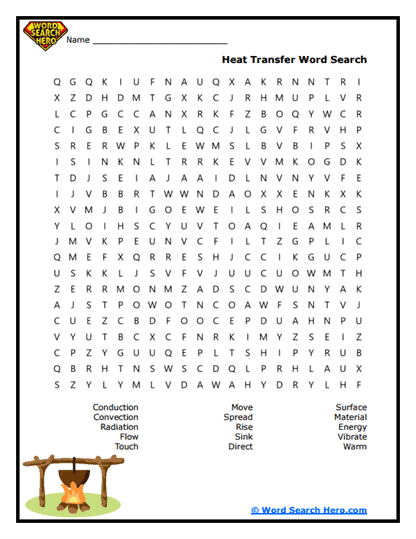
Thermodynamics

Inside these grids, you’ll trace the invisible paths of conduction and convection, decode the stubborn elegance of entropy, and stumble over Kelvin, pistons, boilers, and probability gradients like a well-meaning scientist lost in a steam engine.

View More
Work, Energy, and Power Word Searches

Work, Energy, and Power

Tucked inside these grids of orderly chaos are the real workhorses of physical science-words like Gravitational, Joule, Effort, Turbine, Convert, and Pulley-not just vocabulary, but the operational language of how matter moves, energy flows, and machines cheat fatigue.

View More

About Our Physics Word Searches

Welcome to the electrifying world of physics word searches, where learning meets fun in a collision of letters and scientific terms! If you’ve ever wanted to combine your love for physics with the thrill of a good puzzle, you’re in the right place. Our collection of physics-themed word searches is designed to challenge your mind and expand your scientific vocabulary, all while keeping you entertained.

Each puzzle focuses on a different aspect of physics, from the fundamental forces that govern our universe to the groundbreaking theories that have shaped our understanding of reality. Whether you’re a student looking to reinforce your knowledge or simply a curious mind eager to explore the wonders of physics, these word searches offer a delightful way to engage with the subject.

So, grab your thinking cap (and maybe a calculator, just for show), and dive into the captivating realm of physics word searches. Who knew that hunting for words like “quark” and “entropy” could be so exhilarating?

What’s Inside?

Our physics word search collection covers a broad spectrum of topics, ensuring there’s something for everyone. Here’s a glimpse into some of the puzzles you’ll encounter:

The puzzles Newton’s Laws of Motion, Momentum and Impulse, Simple Machines, and Work, Energy, and Power form a contiguous cluster: classical mechanics in applied and conceptual form. These aren’t separate “topics,” they are interconnected threads of the same structure-the study of how forces produce motion and how energy is transferred through that motion. Identifying terms like inertia, reaction, gravitational, turbine, or pulley forces a confrontation with real physical systems. “Effort” and “load” in Simple Machines isn’t metaphorical-it’s measurable, and it leads directly into the mechanics of leverage and mechanical advantage. The vocabulary in Momentum and Impulse demands an understanding of collisions, time intervals, and conservation laws. These puzzles build the lexicon necessary to understand Newtonian frameworks, whether solving equations or observing everyday motion.

The grouping of Magnetism, Electricity, Circular Motion, and Light and Optics represents a second conceptual domain: fields, forces, and the transmission of energy without contact. These are not abstract categories-they describe the invisible architectures governing particle interactions and large-scale physical systems. Magnetism and Electricity share a deep mathematical unification, described by Maxwell’s equations. Circling the word field in one and charge in another starts mapping the vocabulary that underpins electromagnetic theory. Circular Motion introduces necessary language-centripetal, angular, interval-for understanding systems bound by constraints: planetary orbits, spinning machinery, subatomic particles in accelerators. In Light and Optics, the vocabulary leans toward phenomena and instrumentation: lens, diffraction, invert, pulse. It’s not arbitrary-these are the terms that allow a learner to differentiate between geometric optics and wave behavior. Language draws the boundary between models.

Thermodynamics and Work, Energy, and Power form a conceptual bridge between classical mechanics and statistical physics. Thermodynamics in particular brings in abstract and often misunderstood ideas: entropy, conduction, equilibrium, Kelvin. Every term carries with it not just a definition, but a specific place in a theoretical framework that includes the conservation of energy, the directionality of processes, and the macroscopic outcomes of microscopic chaos. Piston and boiler in this puzzle aren’t throwaway industrial terms-they’re functional representations of systems built to embody the laws of thermodynamics. These words don’t just appear in textbooks-they appear in engines, turbines, and biological respiration. Their inclusion in a puzzle is an invitation to recognize real-world engineering through the lens of energetic laws.

The puzzles Scientific Method, Computer Science, and Semiconductors center around systems of organization and abstraction-how knowledge is acquired, tested, and engineered. Scientific Method focuses on the structure of inquiry itself. Terms like hypothesis, observation, and conclusion aren’t just academic jargon-they mark the stages of empirical validation. Computer Science, while not traditionally housed within physics, plays an increasing role in both the modeling and simulation of physical systems. When a learner finds array, stack, or compiler, they are brushing against the tools used to build modern physical models, from climate simulations to molecular dynamics. Semiconductors brings the abstraction down to a physical substrate. These puzzles are filled with terms like junction, bias, carrier, and donor, which form the vocabulary of solid-state physics and electronics. These terms explain how information moves through a chip and why your computer exists in the form it does.

Sound Waves stands apart not because it is unrelated, but because it translates physical theory into physiological experience. This is physics manifesting in sensation. Terms like frequency, cochlea, and resonance are not simply labels; they indicate how the air vibrates, how those vibrations are encoded by anatomy, and how sound propagates through different media. Unlike other puzzles that deal with invisible fields or idealized systems, this one is rooted in materiality-waves passing through matter, interacting with boundaries, dissipating energy. It connects physical measurement with lived experience.

We encourage you to incorporate these puzzles into your routine, whether as a warm-up before studying, a fun break during the day, or a group activity with friends or classmates. The more you play, the more you’ll learn, and the more you’ll appreciate the fascinating world of physics.

Fun Facts About Physics

To further pique your interest, here are some intriguing physics facts that might surprise you:

Time Travel at High Speeds – According to Einstein’s theory of relativity, time passes slower for objects in motion compared to those at rest. This means that astronauts traveling at high speeds experience time slightly differently than people on Earth-a phenomenon known as time dilation.โ€‹

Bananas Are Radioactive – Bananas contain potassium-40, a radioactive isotope of potassium. While the levels are extremely low and harmless, it’s fascinating to think that this common fruit is naturally radioactive.โ€‹

Light Can Be Both Particle and Wave – Light exhibits properties of both particles and waves, a concept known as wave-particle duality. This means that light can spread out like a wave but also interact with matter as discrete particles called photons.โ€‹

Absolute Zero Is Unreachable – Absolute zero, or 0 Kelvin (-273.15ยฐC), is the theoretical temperature at which all molecular motion stops. However, it’s impossible to reach this temperature due to the third law of thermodynamics. Scientists have come close but can never attain absolute zero.โ€‹

The Universe Is Expanding – Observations show that galaxies are moving away from each other, indicating that the universe is expanding. This discovery led to the Big Bang theory, suggesting that the universe originated from an extremely hot and dense state.โ€‹

These fascinating tidbits highlight the wonder and complexity of physics. As you work through the word searches, keep in mind that each term represents a concept that has contributed to our understanding of the universe.