


Biblical Stories
Holy smokes, these word search puzzles bring the Bible to life faster than you can say “part the Red Sea,” with everything from Jonah’s fishy fiasco to David’s giant-slaying slingshot showdown hiding in a sea of letters.

Holy smokes, these word search puzzles bring the Bible to life faster than you can say “part the Red Sea,” with everything from Jonah’s fishy fiasco to David’s giant-slaying slingshot showdown hiding in a sea of letters.
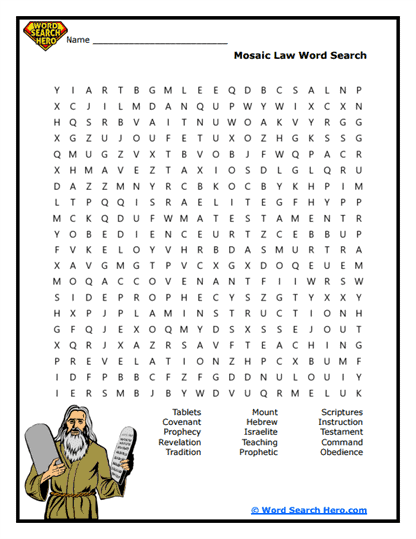
Put on your holy thinking cap and prepare to bless your brain with our Christian Beliefs Word Searches, where you’ll hunt down heavenly terms like “Beatitudes” and “Genesis” faster than Peter denied Jesus (that’s three times, folks).

From smoky martyr vocabulary in All Saints’ Day to apostolic adrenaline in Pentecost, these puzzles cram centuries of sacred drama, awkward symbolism, and divine plot twists into neat little squares-because nothing says “holy reflection” like trying to find “Swaddle” hiding diagonally behind “Lineage.”

This word search collection is basically what happens when a theology textbook, a motivational poster, and your favorite highlighter all get trapped in a crossword grid and decide to make the best of it.

This word search collection is where saints, popes, and prophets hide in plain sight, just waiting for you to circle their holy names like a crossword crusader on a mission from above.
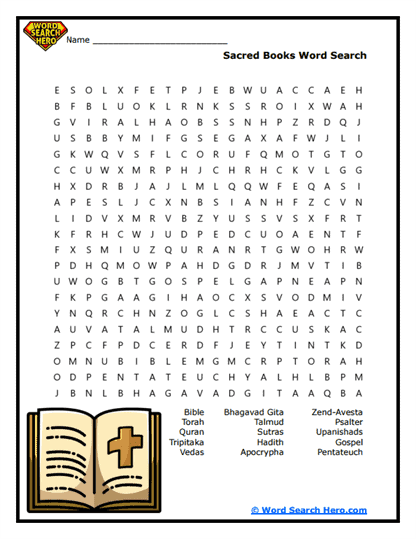
It’s like Sunday school got a glow-up, teamed up with trivia night, and now challenges you to find enlightenment one sneaky syllable at a time.

You’ll trace the outlines of karma and chrism, stupa and shoah, not for the thrill of the hunt, but because somewhere between the gridlines, you start to realize you’re navigating the infrastructure of civilizations that spent millennia trying to answer questions you still ask in traffic.
Religious word searches provide a thoughtful and engaging way for learners to explore important faith-based concepts while focusing on the people and positions that shape religious life. These printable puzzles introduce students to key roles such as priests, pastors, rabbis, imams, monks, and spiritual leaders, helping them understand how different individuals guide, teach, and support their communities.
As students search for words, they encounter a blend of titles, responsibilities, and faith-related terms. This helps build familiarity with the structure of religious communities and the roles people play within them. For example, a pastor may lead a congregation, while a monk might dedicate their life to study and reflection. These distinctions give students a clearer picture of how religious life is organized across different traditions.
These puzzles also strengthen essential academic skills like vocabulary development, spelling, and concentration. They are easy to use in classrooms, religious education programs, or homeschool settings. Teachers and parents can use them as warm-ups, review activities, or conversation starters about faith and community roles.
With a variety of difficulty levels, Religious word searches are flexible and accessible. They go beyond simple word finding by helping learners connect religious concepts with the people who live them out every day.
Religious communities are built around people who take on meaningful roles, and word searches are a great way to introduce those positions. Common roles included in these puzzles might be priest, pastor, rabbi, imam, deacon, nun, or missionary. Each of these positions carries unique responsibilities depending on the tradition.
For example, a priest may lead worship services and provide spiritual guidance, while a rabbi teaches and interprets religious texts. An imam leads prayers and supports the community, and a monk or nun may focus on a life of devotion and service. These roles help students understand that religion is not just about beliefs-it’s also about people who guide and support others.
Encouraging students to compare roles across different religions can deepen understanding. They may notice similarities, such as leadership and teaching responsibilities, even if the titles differ. This helps build respect and awareness of different traditions.
By focusing on people and positions, students begin to see religious communities as active, organized groups where each role contributes to a larger purpose.

One of the most effective ways to use Religious word searches is to turn them into a “role recognition” activity. As students find words like “pastor,” “rabbi,” or “imam,” have them pause and describe what that person actually does. Even a short explanation like “leads prayers” or “teaches others” helps connect the word to a real responsibility. This builds understanding instead of just memorization.
Another strategy I’ve used for years is grouping roles by what they focus on-leadership, teaching, service, or worship. After finishing the puzzle, ask students to sort the roles into these categories and explain their choices. This encourages deeper thinking and helps students see patterns across different religious positions. It also makes it easier for them to remember the roles because they’re organized in a meaningful way.
Religious word searches can become much more meaningful when students focus on the individuals behind the terms. After completing a puzzle, learners can choose one role-such as a priest, imam, or missionary-and explore what a typical day might look like for that person. This helps connect vocabulary to real-life experiences.
For example, a student might imagine a pastor preparing a sermon or a rabbi teaching a lesson. Another might explore the daily routine of a monk dedicated to prayer and study. These reflections help students understand how roles are lived out, not just defined.
This approach also supports cross-curricular learning. It can connect with reading by exploring religious texts, or with social studies by discussing how communities are organized. Group discussions can also help students compare roles and responsibilities across traditions.
By focusing on people and positions, students gain a deeper appreciation for how religious communities function. It transforms a simple puzzle into an opportunity to understand purpose, service, and leadership.
Religious word searches often include roles like priest, pastor, rabbi, imam, monk, nun, and missionary. These positions represent leadership, teaching, and service within different faith communities. Including these roles helps students understand how religious groups are organized. It also makes the puzzles more meaningful by connecting words to real responsibilities.
They introduce key roles and responsibilities in an accessible and engaging way. As students find and recognize these positions, they begin to understand how different communities function. This builds awareness and encourages respectful learning about various traditions. It also helps students see both differences and similarities across religions.
Yes, they are a great supplement to lessons in churches, schools, or homeschool environments. Teachers and leaders can use them to reinforce vocabulary and introduce important roles. This makes learning interactive and helps students retain information more effectively. It also provides a quiet activity that still supports meaningful discussion.
You can ask students to explain the role of each person they find or group them by their responsibilities. Another option is to have them compare similar roles across different religions. These activities deepen understanding and keep students engaged. They also encourage critical thinking about how roles function in real life.
Focusing on roles helps students understand that religion involves people with specific responsibilities and purposes. It shows how leadership, teaching, and service are carried out within a community. This creates a clearer and more complete picture of religious life. It also makes the learning experience more relatable and memorable.