Animal Cells
With each puzzle, students wade deeper into the inner bureaucracy of the animal cell, chasing down words like “microfilament,” “endoplasmic,” and “lysosome” as if they were secret passwords to understanding life itself.
With each puzzle, students wade deeper into the inner bureaucracy of the animal cell, chasing down words like “microfilament,” “endoplasmic,” and “lysosome” as if they were secret passwords to understanding life itself.
It covers the full cast of microbial concepts-shapes, parts, behaviors, diets, habitats, public health consequences, and even the occasional prokaryotic triumph in fermented food. Each puzzle takes the raw material of scientific literacy-flagellum, binary fission, tuberculosis, ferment, resist-and embeds it in a format that demands both focus and curiosity.
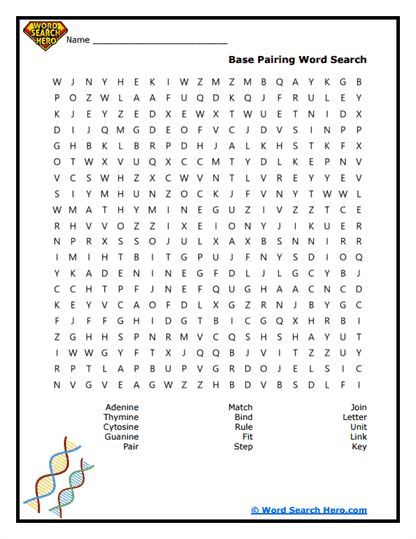
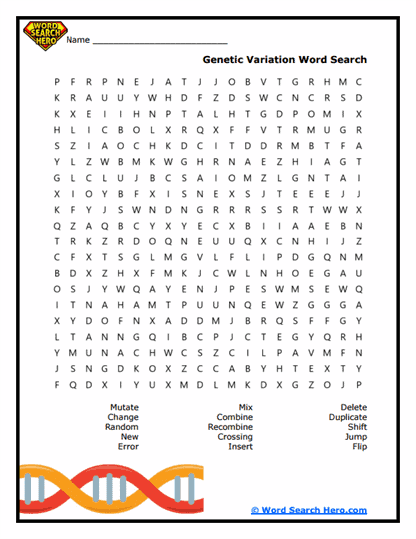
Each puzzle distills essential ideas-structure, replication, coding, mutation, gene mapping, chromosomal architecture-into a scavenger hunt of precision terms like “phosphate,” “template,” “codon,” and “locus,” demanding the same pattern-recognition skills that once drove real genetic discovery.
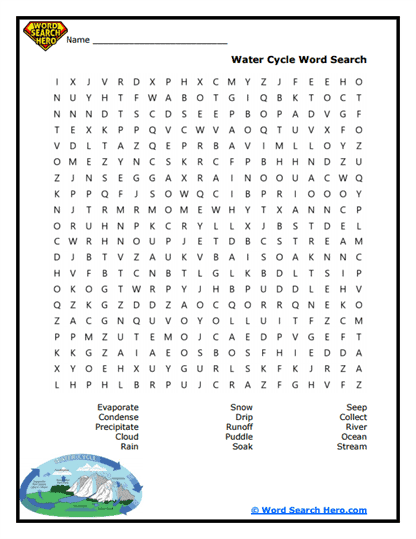
Each search demands close attention to the language that underpins ecological thinking, making the alphabet soup of science not only digestible, but genuinely absorbing.
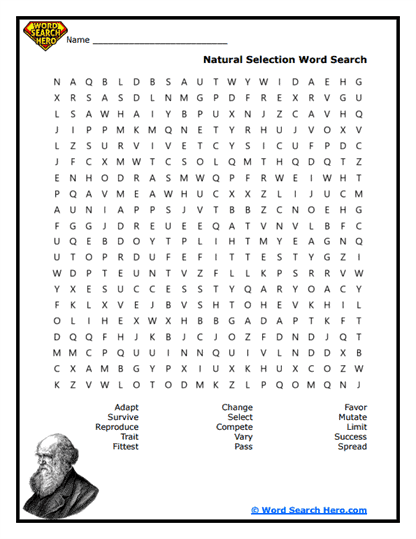
It’s a curated vocabulary tour through the mechanisms, milestones, and mayhem of life’s constant transformation: genes misfire, species split, fossils whisper, and Darwin takes notes. Somehow, while scanning grids for terms like embryo, extinction, and natural selection, learners absorb decades of scientific discovery without realizing they’ve just had a meaningful brush with concepts that shook the foundations of biology.
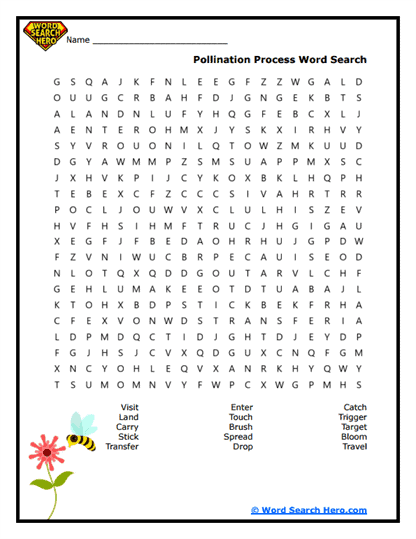
It’s not just a worksheet-it’s a low-stakes intellectual ambush by plant life, using language as the delivery system for concepts we all should’ve learned the first time we admired a daisy and thought, “That’s nice,” without realizing it was engaged in a full-blown evolutionary arms race.
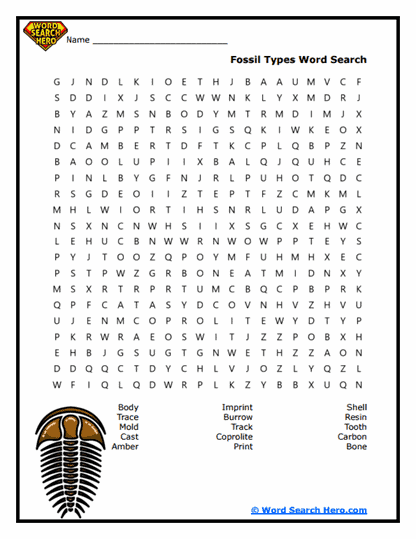
A crash course in Earth’s long memory disguised as a vocabulary exercise, where students methodically dig through grids in search of the conceptual bones of paleontology-words like sediment, epoch, coprolite, and adapt-that form the backbone of how we understand life’s ancient patterns.
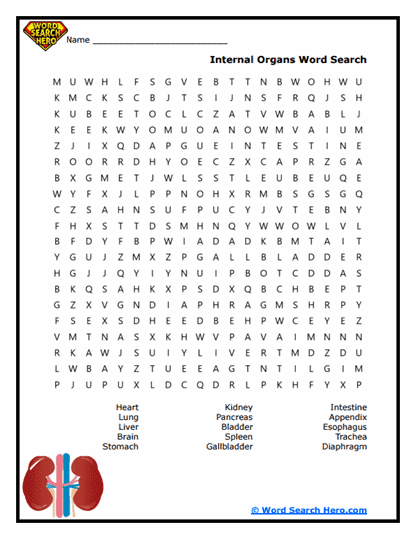
This word search collection is essentially a lexical obstacle course through the guts, glands, and gray matter of human biology, where students chase down precision-packed terms like cytokine, sarcomere, melatonin, and cortisol-not for fun (though it somehow is), but because these words are the molecular breadcrumbs of actual understanding.
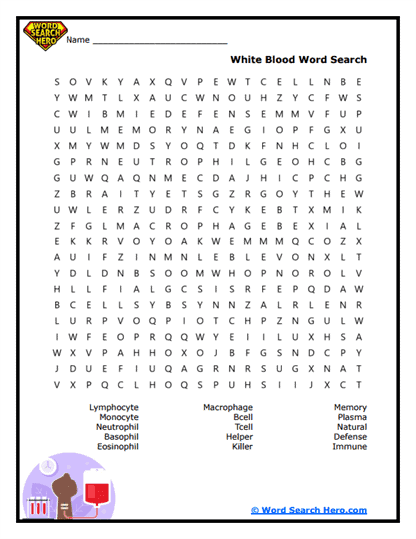
From the vigilant Patrol of Immune Squad to the microscopic memory banks of Adaptive Agents, each puzzle challenges learners to decode not just spelling, but structure-how a B cell knows what to attack, why a Prion isn’t just a bad Scrabble hand, and how Stimulate, Tag, React, and Resist form the verbs of survival.
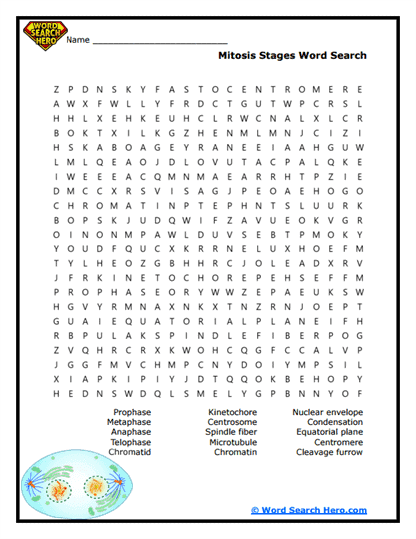
It’s biology class meets game night, where finding “cytokinesis” feels like winning the science lottery and “crossing over” isn’t just a risky intersection move anymore!
From the chloroplast’s photonic acrobatics to the bureaucratic efficiency of the Golgi apparatus, each puzzle asks students to hunt down the real players-thylakoid, cytoskeleton, plasmodesma, ribosome-those unsung terms that textbooks mention once and expect everyone to remember forever.
The vocabulary moves from the visible (roots, stems, petals) to the abstract (energy, fertilize, habitat) with the subtlety of a curriculum that knows exactly what it’s doing. It’s a plant unit for those who prefer their science hands-on, brains-on, and at least partially alphabetized.
Biology word searches introduce students to the vocabulary used to study living organisms and the systems that support life. These printable puzzles help learners become familiar with the terms that scientists use to describe plants, animals, cells, ecosystems, and the many processes that keep living things functioning. Before students fully understand biological concepts, it often helps to first become comfortable with the language used to explain them.
Biology covers a wide range of fascinating topics. Students may encounter words such as cell, organism, habitat, photosynthesis, species, and ecosystem. These terms appear frequently in science lessons and textbooks, and recognizing them helps students follow biological explanations more easily. A word search provides a simple and engaging way to reinforce these terms while strengthening vocabulary and spelling.
Because the activity feels like a puzzle rather than a traditional worksheet, it can make science vocabulary practice more enjoyable. Teachers often use these printables during science centers, morning work, independent practice, or review sessions at the start of a new unit. Parents and homeschool educators can also include them in lessons as a way to introduce biology terms in a relaxed and interactive format.
As students search for the words in the puzzle grid, they strengthen concentration, visual scanning, and pattern recognition skills. At the same time, they are building familiarity with the scientific language used to describe living systems.
Biology is often called the study of life. Scientists in this field explore how living things grow, reproduce, interact with their environments, and maintain the systems that keep them alive.
Understanding biological vocabulary helps students grasp these ideas more clearly. Words like cell, tissue, organ, and organism describe levels of biological organization, while terms such as adaptation, environment, and population help explain how living things interact with the world around them.
When students recognize these words, they are better able to follow scientific explanations and understand how different biological concepts connect with each other. Learning the vocabulary first can make complex topics easier to understand later.
Word searches reinforce this learning by providing repeated exposure to the words students will encounter in biology lessons.

A powerful way to extend this puzzle is to turn it into a “living things connection” activity. After students complete the word search, ask them to choose three to five words from the puzzle and explain how those words relate to real living things.
For example, if the word habitat appears in the puzzle, students could describe the habitat of a familiar animal such as a forest for deer or a pond for frogs. If the word cell appears, students could discuss how all living organisms are made of cells.
This approach adds strong instructional value because it encourages students to connect vocabulary with real biological examples. Teachers and homeschool educators can quickly see whether students understand how the words relate to living systems rather than simply recognizing the spelling.
Learning the language of biology helps students begin thinking scientifically about the living world. When students understand the vocabulary used to describe organisms, environments, and life processes, they can better interpret what they observe in nature.
This understanding also supports reading comprehension. Biology textbooks and science articles often contain specialized vocabulary, and familiarity with these words allows students to follow explanations more confidently.
A word search can serve as an introduction to a new biology unit or as a review activity after students have explored a topic. After completing the puzzle, educators can encourage students to connect the vocabulary with experiments, nature observations, or classroom discussions.
When students build confidence with biology terms, they develop the language needed to explore life science topics with curiosity and understanding.
They may include vocabulary related to plants, animals, cells, ecosystems, genetics, and other life science topics.
They help students become familiar with scientific vocabulary before or after learning about a new biology concept.
Yes. They work well as an introductory activity that helps students preview important terms before beginning a biology lesson.
Absolutely. They are well suited for independent practice, science centers, or quiet review time during science instruction.
Students can choose a few vocabulary words from the puzzle and create a short explanation, diagram, or labeled drawing that demonstrates the concept.