


Classic Rock
Turn up the volume on your brainpower with these free Classic Rock word searches that’ll have you headbanging through hidden words like “Bohemian Rhapsody” and “Stairway to Heaven” faster than a Keith Moon drum solo.
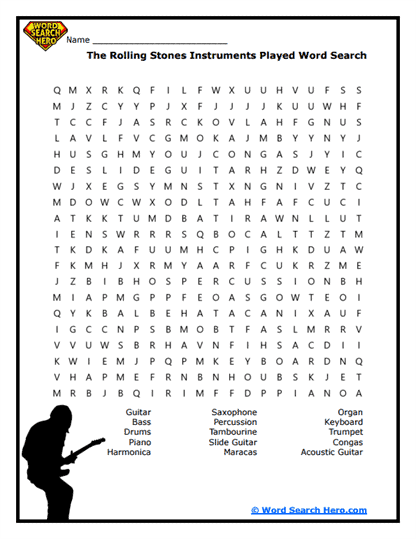
Turn up the volume on your brainpower with these free Classic Rock word searches that’ll have you headbanging through hidden words like “Bohemian Rhapsody” and “Stairway to Heaven” faster than a Keith Moon drum solo.
Our Musical Bands Word Searches celebrate the energy, creativity, and collaboration found in bands across every genre. These printable puzzles are perfect for classrooms, homeschool environments, or at-home fun, offering an engaging way to build vocabulary while exploring the world of music groups, instruments, and performance.
Students will search for words like “band,” “guitarist,” “drummer,” “vocals,” “tour,” and “album,” all while strengthening spelling, reading fluency, and concentration. Because bands are such a recognizable and exciting part of music culture, these puzzles naturally capture student interest and keep them engaged. Teachers often use them as warm-ups, early finisher activities, or as part of lessons on music appreciation and teamwork.
These printables are easy to use with no preparation required. They can be adapted for different age groups, allowing younger learners to focus on basic band-related terms while older students explore more detailed vocabulary connected to performance and the music industry.
Beyond literacy skills, these puzzles highlight the importance of collaboration and creativity. By connecting vocabulary to real-world musical experiences, students develop a deeper understanding of how bands work together to create something memorable.
Musical band themes introduce students to vocabulary that reflects both individual roles and group dynamics. Words like “lead,” “rhythm,” “harmony,” “rehearsal,” and “stage” help learners understand how different elements come together in a band setting. Because these words are tied to real-life experiences, they are easier for students to recognize and remember.
A helpful classroom strategy is to have students group words into categories such as instruments, roles, and performance settings. For example, they might separate “bass” and “drums” from words like “concert” or “studio.” This helps students see how each part contributes to the overall performance.
You can extend the activity by asking students to create their own band concept using several of the words from the puzzle. They might choose a band name, assign roles, and describe the type of music they would play. This reinforces vocabulary while encouraging creativity and teamwork.
Because bands rely on coordination and communication, these puzzles also support understanding of collaboration. Students begin to see how individuals work together toward a shared goal, making the learning experience both practical and meaningful.

One thing I always noticed is that students light up when music is involved, especially when they can picture themselves as part of it. Before handing out the puzzle, I’d ask them what kind of band they would want to be in-rock, pop, or something totally unique. That simple question got everyone engaged and made the activity feel more personal.
After they finished, I liked to have students pick one word and connect it to a role they would play in a band. It didn’t have to be serious-some of the answers were pretty funny-but it helped them think about how each part contributes to the group. And if someone got stuck, I’d remind them to look for instrument names first since those are often easier to spot and build confidence.
Musical band word searches offer strong connections to multiple areas of learning. In music education, they support lessons on instruments, group performance, and song structure. Vocabulary from the puzzle helps students better understand how bands create and perform music together.
In language arts, these puzzles can be used to inspire descriptive writing and storytelling. Students might write about a band’s first performance, describe a concert experience, or imagine a behind-the-scenes rehearsal. This strengthens both vocabulary and creative expression.
These puzzles also connect to teamwork and collaboration skills. Students can discuss how band members rely on each other and how communication is essential for success. This can lead to meaningful conversations about working together in any setting.
Creative extensions are especially effective. Students might design a band poster, create a setlist, or invent a new genre using words from the puzzle. By linking vocabulary to creativity and real-world experiences, these puzzles become an engaging and well-rounded learning tool.
Musical bands word searches are printable puzzles that include vocabulary related to bands, instruments, performance, and the music industry. They provide a fun and interactive way for students to build vocabulary while exploring a topic they enjoy.
These puzzles improve spelling, word recognition, and reading fluency by encouraging students to find and identify words. When paired with creative or discussion activities, they also help deepen understanding of music-related concepts.
Yes, they are very flexible and easy to incorporate into both classroom and homeschool settings. They can be used as independent work, group activities, or as part of a larger lesson on music or creativity.
Absolutely, they are a great addition to music education. The vocabulary supports lessons on instruments, roles within a band, and how music is performed and shared.
Students are naturally drawn to music and enjoy imagining themselves as part of a band. When learning connects to something exciting and relatable, it increases engagement and helps students retain what they’ve learned.