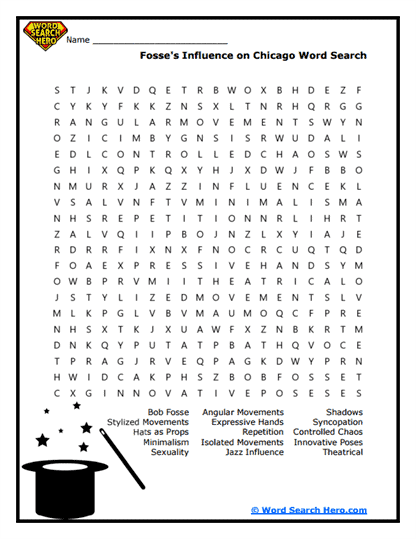
About Our Chicago (The Play) Word Searches
Our Chicago (The Play) Word Searches bring the bold, jazzy energy of one of Broadway’s most iconic musicals into a fun and educational activity. These printable puzzles are perfect for classrooms, homeschool settings, or music-focused learning, offering an engaging way to explore vocabulary while diving deep into the sound, rhythm, and style that define this legendary production.
Students will search for words like “jazz,” “rhythm,” “chorus,” “orchestra,” “lyrics,” and “spotlight,” along with character and performance-related terms. Because Chicago is driven by music-especially its sharp, syncopated jazz style-these puzzles emphasize how musical elements shape the tone and storytelling of the entire show. Teachers often use them in music appreciation lessons, theater studies, or as creative extensions tied to performance and composition.
These printables are easy to use with no prep required. They can be adapted for different age groups, allowing younger learners to focus on basic musical terms while older students explore more advanced vocabulary tied to style, performance, and musical structure.
Beyond literacy skills, these puzzles help students understand how music defines character, mood, and pacing. In Chicago, the music isn’t just part of the show-it is the heartbeat of the entire performance.
The Jazz Sound That Drives Chicago
Chicago is rooted in jazz, and that musical style is key to understanding both the show and the vocabulary in these puzzles. Words like “tempo,” “syncopation,” “brass,” “beat,” and “ensemble” help students explore how jazz music creates energy and movement. The sharp rhythms and bold musical accents in Chicago give it a distinct sound that stands out from other musicals.
A helpful classroom strategy is to have students group words into categories such as musical elements, instruments, and performance roles. For example, they might separate “trumpet” and “piano” from words like “dance” or “stage.” This helps students see how the music and performance aspects are closely connected.
You can extend the activity by asking students to imagine a scene from Chicago and describe what the music would sound like using several of the words from the puzzle. Would it be fast and punchy or smooth and controlled? This reinforces vocabulary while encouraging musical thinking.
Because jazz relies heavily on rhythm and expression, these puzzles help students understand how timing, sound, and performance work together to create a memorable experience.
Paul’s Pro-Tip

I always found that when jazz entered the picture, students became instantly curious because it sounds different from what they usually hear. With Chicago, I’d start by asking, “What kind of music makes you want to move or snap along?” That question helped them connect to rhythm right away and made the puzzle feel more alive.
After they finished, I liked to have students pick one word and imagine how it would sound in a live performance. Maybe it’s a bold brass hit or a steady beat driving a dance number. That extra step helped them connect vocabulary directly to music. And if someone got stuck, I’d remind them to look for music terms they’ve heard before-those are usually the easiest entry point.
Connecting Chicago to Music, Performance, and Expression
Chicago word searches offer strong connections to music education and performance studies. In music lessons, they support understanding of jazz elements like rhythm, tempo, and instrumentation. Students can explore how these elements create mood and drive the energy of a performance.
In theater and language arts, these puzzles help students examine how songs and lyrics tell a story. Chicago is a great example of how music replaces traditional dialogue in many moments, showing how powerful lyrics and composition can be.
Creative extensions are especially effective with this theme. Students might write their own jazz-inspired lyrics, design a performance scene, or create a short musical number using words from the puzzle. These activities reinforce vocabulary while encouraging both musical and creative expression.
These puzzles also connect to performance and collaboration. Students can discuss how musicians, dancers, and singers work together to create a unified production. By focusing heavily on the music, these puzzles help students see how sound and rhythm shape every aspect of a Broadway show.
Frequently Asked Questions
What are Chicago (The Play) word searches?
Chicago word searches are printable puzzles that feature vocabulary related to the musical, including jazz music terms, performance elements, and stage concepts. They provide a fun way for students to engage with both music and theater while improving literacy skills.
How does Chicago help students learn about music?
Chicago is built around jazz music, making it a great example of rhythm, tempo, and musical expression. These word searches introduce key terms that help students understand how music drives storytelling and performance.
Are Chicago-themed word searches good for classroom use?
Yes, they are highly engaging and fit well into music, theater, and language arts lessons. Teachers can use them as interactive tools to reinforce vocabulary and introduce musical concepts.
Can these puzzles be used in music or drama lessons?
Absolutely, they are a great addition to both subjects. They help students connect musical vocabulary to real performance elements and understand how songs shape a production.
Why do students enjoy Chicago-themed activities?
Students are drawn to the strong rhythm and unique jazz style of the music. When learning focuses on sound, movement, and performance, it becomes more exciting and helps students stay engaged.