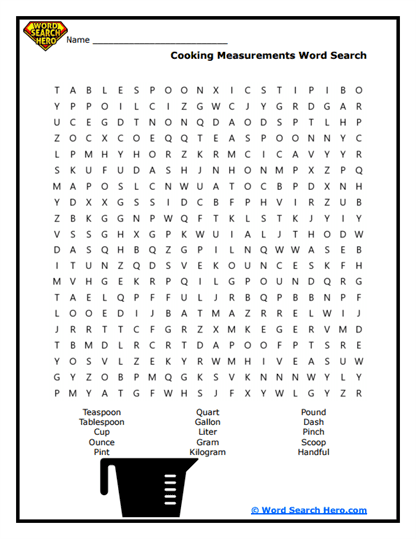
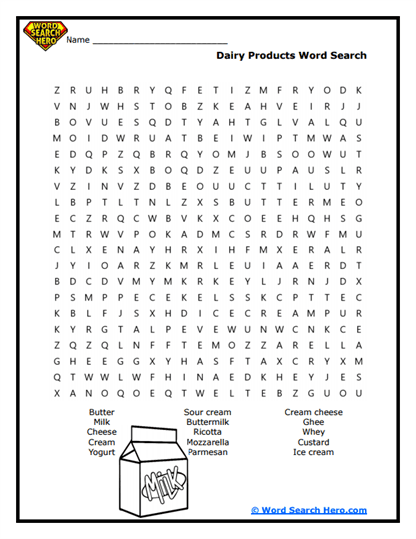
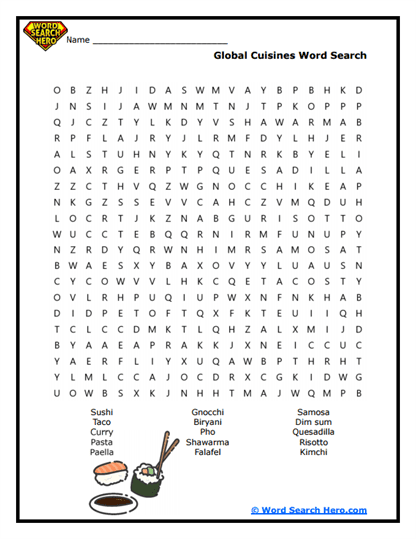
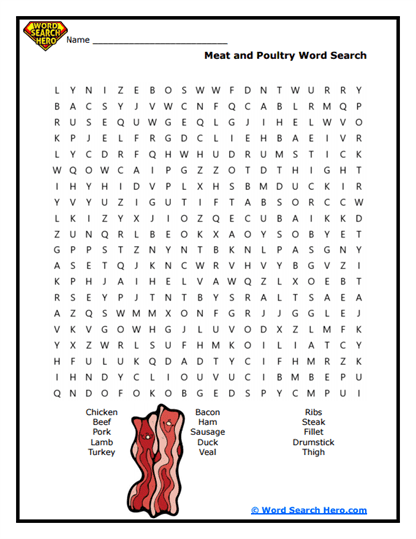
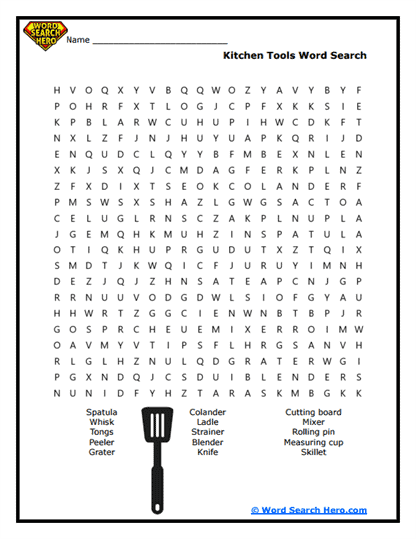
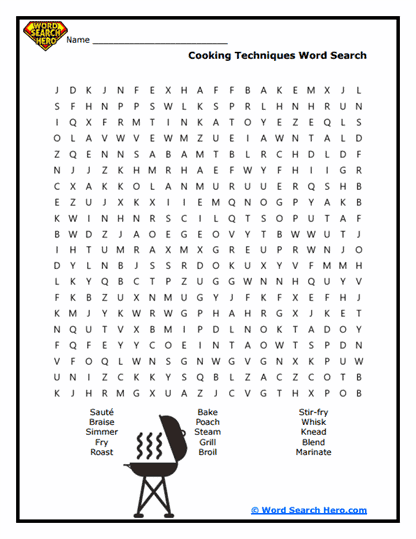
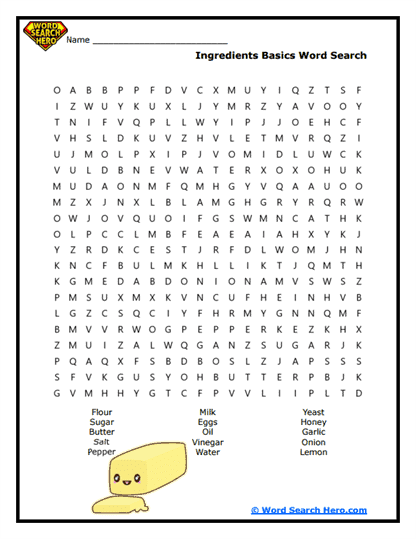
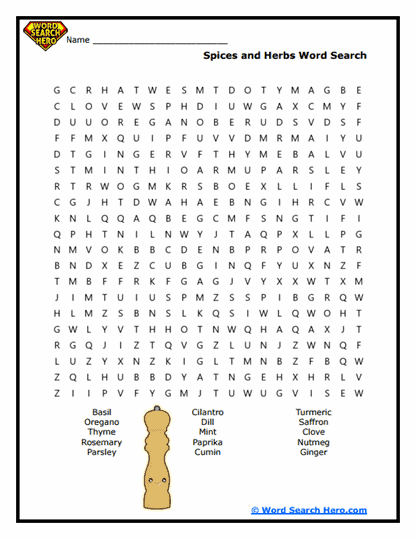
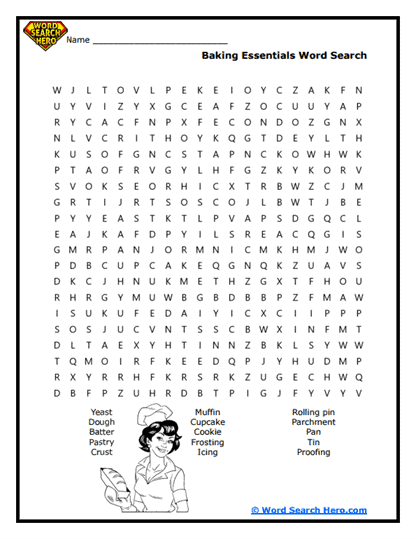
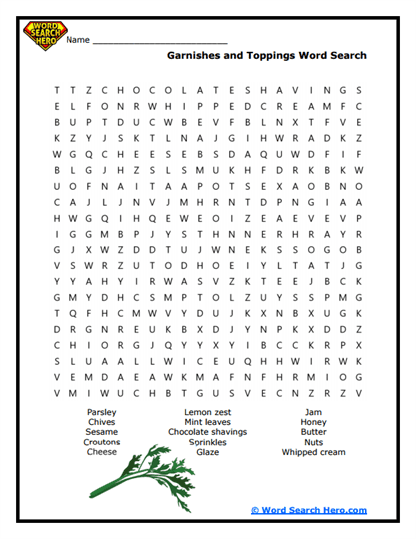
About Our Cooking Word Searches
Cooking word searches introduce students to vocabulary connected with preparing food and working in the kitchen. These printable puzzles help learners become familiar with words related to cooking tools, ingredients, and common kitchen actions. Because cooking is a daily activity in many homes, the vocabulary used in these puzzles helps students connect learning with real-life experiences.
Students exploring this theme may encounter words such as cook, mix, stir, bake, recipe, pan, and ingredients. These words frequently appear in conversations about food preparation and recipes. A word search provides a fun way to reinforce this vocabulary while strengthening spelling recognition, reading confidence, and observation skills.
Since the activity feels like a puzzle rather than a traditional worksheet, it can make vocabulary practice more engaging. Teachers often use these printables during learning centers, quiet work periods, or early finisher activities. Parents and homeschool educators can also include them in lessons as a screen-free activity that connects literacy with practical life skills.
As students search the puzzle grid for hidden words, they strengthen concentration, visual scanning abilities, and pattern recognition. These skills support literacy development while keeping the activity interactive and enjoyable.
Understanding the Basics of Cooking
Cooking is the process of preparing food so it can be safely eaten and enjoyed. People cook meals using a variety of methods such as baking, boiling, frying, roasting, and grilling. Each method changes the texture, flavor, or temperature of ingredients.
Recipes are often used to guide cooking. A recipe lists ingredients and provides step-by-step instructions for preparing a dish. Following a recipe helps ensure that the ingredients are combined in the correct order and amounts.
Cooking also requires tools and equipment. Common kitchen tools include mixing bowls, spoons, knives, pans, and measuring cups. Each tool helps complete specific tasks during food preparation.
Learning vocabulary related to cooking helps students understand recipes, follow kitchen instructions, and talk about food preparation.
Word searches reinforce this learning by giving students repeated exposure to common cooking and kitchen-related terms.
Paul’s Pro-Tip
A great extension activity is a recipe reading challenge. After students complete the word search, provide a simple recipe appropriate for their age level.
Ask students to identify cooking vocabulary in the recipe such as mix, stir, measure, or bake. Older students can explain the purpose of each step, while younger students can illustrate the steps in the recipe.
This activity strengthens reading comprehension while helping students understand how cooking instructions work.
Building Life Skills Through Cooking
Cooking is an important life skill that teaches organization, planning, and responsibility. Preparing meals requires following directions, measuring ingredients, and completing tasks in the correct order.
Cooking activities can also introduce students to topics such as nutrition, food safety, and cultural traditions. Many cultures have unique recipes and cooking methods that reflect their history and environment.
Vocabulary related to cooking appears frequently in recipes, cooking shows, and everyday conversations about food. When students learn these words, they become more confident participating in kitchen activities and understanding food preparation.
A word search can serve as a warm-up before a cooking lesson or as a calm activity after discussing food and nutrition. After completing the puzzle, educators can encourage students to share their favorite foods or describe meals they enjoy helping prepare at home.
When students become familiar with vocabulary related to cooking, they strengthen both their language skills and their understanding of practical everyday activities.
Frequently Asked Questions
What are Cooking word searches?
They are puzzles that feature vocabulary related to preparing food, kitchen tools, and cooking methods.
Why is learning cooking vocabulary useful for students?
It helps students understand recipes, follow kitchen instructions, and talk about food preparation.
What kinds of words might appear in these puzzles?
Examples include cook, mix, stir, bake, recipe, pan, and ingredients.
Are these puzzles appropriate for classroom activities?
Yes. They work well alongside lessons about nutrition, food preparation, or cultural cooking traditions.
What classroom activity pairs well with this puzzle?
Students can read a simple recipe and identify cooking vocabulary while discussing the steps used to prepare the dish.