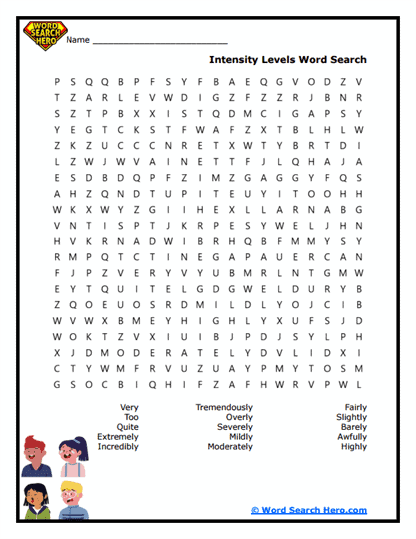
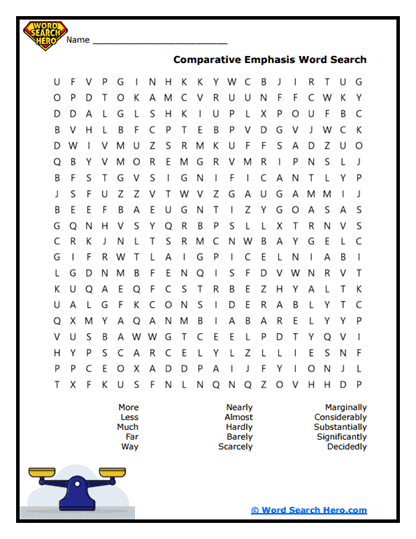
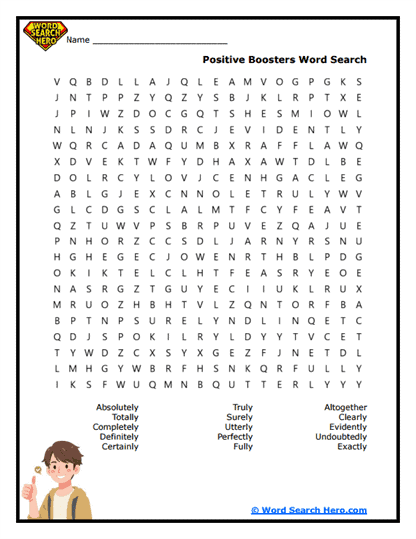
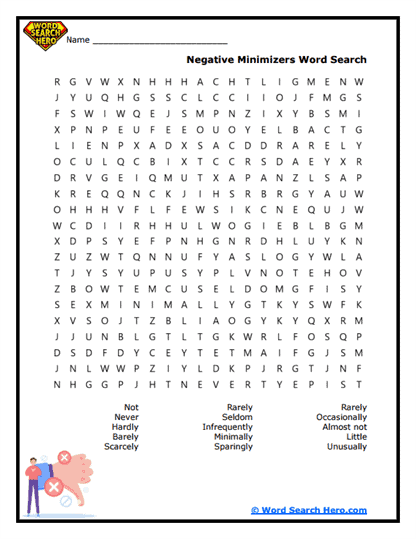
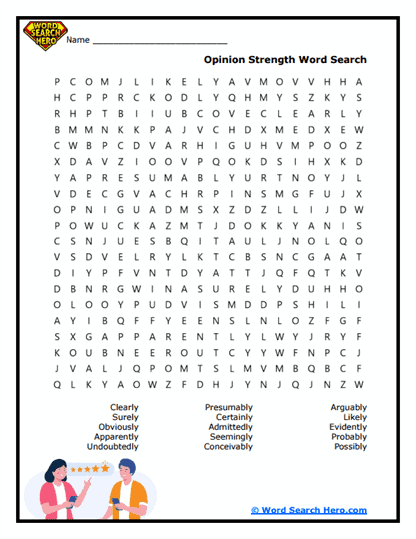
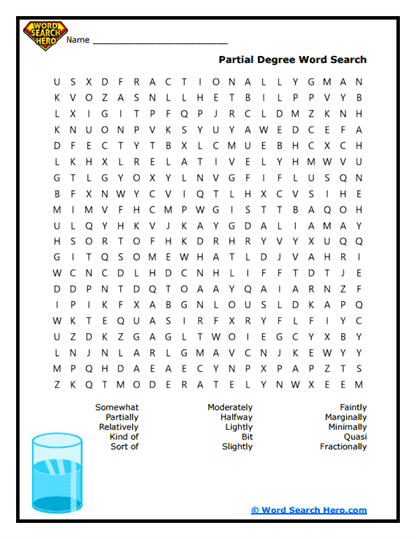
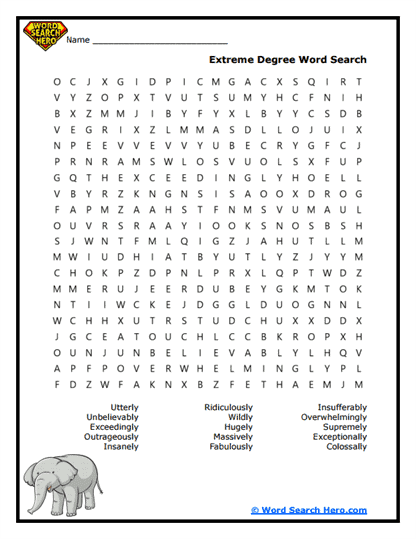
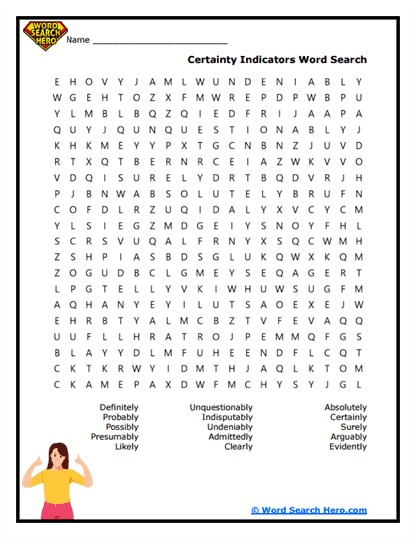
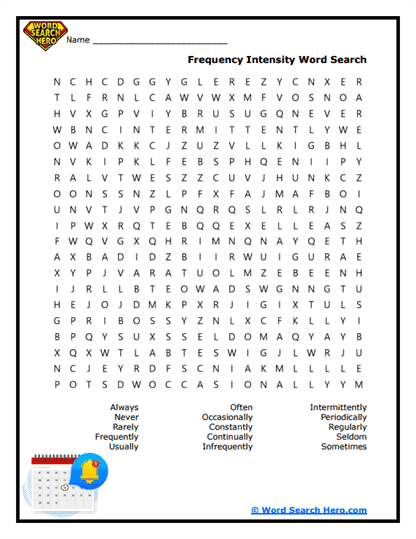
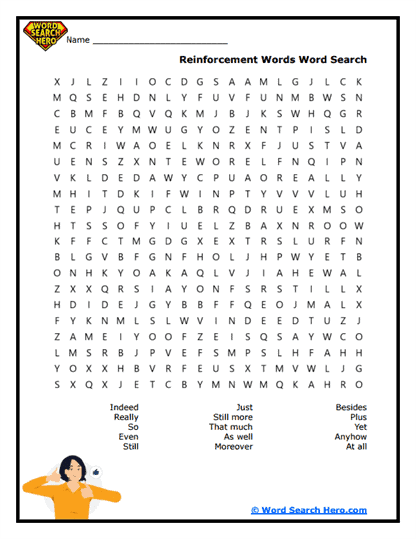
About Our Degree Adverbs Word Searches
Degree adverbs help answer a key question: How much? Words like very, almost, too, and barely change how strong or weak something sounds. This collection helps students learn those differences in a simple and fun way.
Each puzzle gives students a mix of words that show strong, weak, or in-between meaning. They will see words that boost intensity, soften ideas, or show uncertainty. This variety helps students understand that small words can change the whole sentence.
These puzzles also support other grammar skills. Students can connect what they learn here to topics like describing how actions change and building stronger sentences with common adverbs in writing. Instead of just memorizing words, they begin to notice how those words shape meaning.
Why Words Like “Very” and “Barely” Change Everything
A single word can completely change a sentence. Compare:
“She was tired.”
“She was very tired.”
“She was barely tired.”
Each sentence feels different. That is the power of degree adverbs.
These words help students be more exact. Instead of saying something in a basic way, they can show how strong, weak, or close something is. That makes writing clearer and more interesting.
These puzzles help students spot those small differences. As they find and compare words, they begin to understand how meaning shifts. This is especially helpful when paired with skills like choosing better describing words or building ideas through simple writing practice.
Paul’s Pro-Tip
Pick one short sentence and change just one word.
For example:
“The movie was good.”
Now try:
“The movie was very good.”
“The movie was almost good.”
Ask students which one sounds best and why. This quick activity helps them feel how meaning changes.
Quick Writing Games Using Degree Adverbs
Once students know the words, it’s time to play with them.
Start with a simple game. Give students a sentence like “The dog was fast.” Then have them rewrite it three times using different degree adverbs:
- “The dog was very fast.”
- “The dog was slightly fast.”
- “The dog was extremely fast.”
This shows how one word can change the whole idea.
Another fun game is “guess the meaning.” One student reads a sentence with a degree adverb, and others guess how strong the meaning is. This works well alongside building sentence meaning step by step and supports skills like basic grammar writing practice.
You can also have students write short paragraphs using three or four degree adverbs from the puzzle. This helps them move from finding words to actually using them.
Over time, students will start using these words on their own. That is when grammar really starts to stick.
Frequently Asked Questions
How can I use these puzzles in the classroom?
These puzzles are easy to use in many ways. Teachers often use them as warm-ups, center activities, or quick review before a lesson. They are also great for early finishers who need something helpful to work on.
Are these word searches useful for homeschool grammar lessons?
Yes, they are very easy to use at home. You can print them and start right away. They fit well into short lessons and help keep learning relaxed but meaningful.
Do degree adverb word searches help with vocabulary building?
Yes, they do. Students see the same words again and again while searching. This helps them remember spelling and understand how the words change meaning.
What age group are these printables best for?
They work for a wide range of ages. Younger students can focus on finding and reading the words. Older students can use the words in sentences and explain how they change meaning.
Can I pair these puzzles with other grammar activities?
Absolutely. They work well with writing, sentence-building, and editing activities. They are especially helpful when teaching how small word changes can affect the meaning of a sentence.