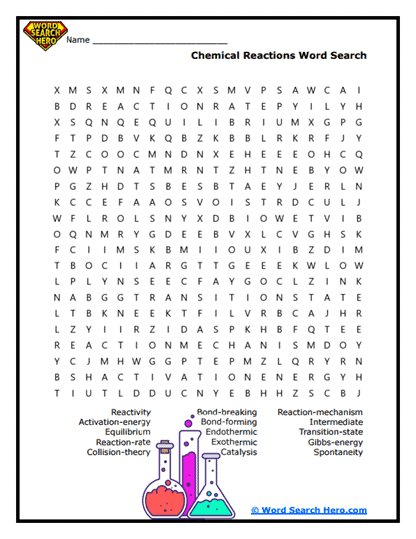
About Our Learn & Explore Word Searches
Curiosity is one of the most powerful tools for learning, and our Learn & Explore word searches are designed to spark that curiosity in a fun, engaging way. These printable puzzles introduce learners to a variety of discovery-based topics while strengthening reading, vocabulary, and observation skills. Whether used in classrooms, homeschool environments, or at the kitchen table, they turn simple word searches into mini adventures of knowledge.
Each puzzle encourages learners to look closely at words connected to exploration-ideas word searches related to science, geography, nature, history, and discovery. Instead of memorizing facts from a worksheet, students interact with language through a playful challenge that promotes active thinking. As they scan the grid for hidden terms, learners naturally become familiar with words they might encounter in books, documentaries, or classroom discussions.
Teachers often use these puzzles as engaging bell ringers, quiet work activities, or transition tasks between lessons. Because the puzzles are printable and easy to distribute, they fit smoothly into lesson plans without requiring extra preparation. Homeschooling families also appreciate how they add variety to language arts and social studies routines.
Word searches also support key learning skills beyond vocabulary. Students practice focus, pattern recognition, and persistence as they search for hidden words in different directions. These mental skills help build confidence and encourage learners to tackle new challenges with patience.
Most importantly, the puzzles reinforce the idea that learning can be exciting. When students associate discovery with fun activities, they become more motivated to explore new ideas both inside and outside the classroom.
Connecting Curiosity Across Subjects
Learning rarely happens in isolated boxes. A student might discover something in science that sparks interest in geography, or read a story that leads to questions about history. That’s why exploration-themed word searches can be a surprisingly powerful cross-curricular tool.
Teachers often use these puzzles to connect multiple subjects in a single activity. A puzzle might include words related to exploration such as discovery, journey, nature, or expedition. Once students complete the puzzle, it becomes a natural starting point for discussion across different subjects.
In science lessons, teachers might ask students to identify words related to observation or investigation. In social studies, the same puzzle might inspire a conversation about historical explorers or world travel. Language arts teachers can turn the words into writing prompts, asking students to imagine an adventure or describe a place they would like to explore.
This kind of flexible activity works especially well because it lowers the barrier to participation. Students who might hesitate to speak up in a formal discussion often feel more confident sharing ideas after completing a puzzle together.
Cross-curricular learning also helps students see how knowledge connects in the real world. When a single activity touches multiple subjects, learners begin to understand that exploration isn’t just a topic-it’s a mindset that applies to science, reading, history, and everyday life.
Word searches become more than a quiet activity. They become a launchpad for curiosity and conversation.
 Paul’s Pro-Tip
After three decades in the classroom, I learned something important about curious learners: they ask the best questions right after finishing an activity.
So here’s my trick with exploration-themed puzzles. When students finish, I ask them to pick one word they found and tell me something they wonder about it.
One student once chose the word expedition and asked how people explored the world before maps and GPS. Suddenly the whole class was debating ships, stars, and old-school navigation!
A word search might look simple, but it can open the door to big questions. And those questions? That’s where the real learning happens.
The Hidden Cognitive Benefits of Exploration-Themed Puzzles
Word searches may appear simple on the surface, but they engage several important cognitive skills that support learning. Exploration-themed puzzles are particularly effective because they combine language recognition with curiosity-driven thinking.
One key benefit is visual scanning ability. As learners search through rows and columns of letters, their brains practice identifying patterns quickly. This skill helps strengthen reading fluency and improves the ability to recognize words in context.
Another benefit is sustained attention. In a world full of distractions, activities that encourage focused concentration are increasingly valuable. Word searches require learners to slow down, examine details, and maintain attention until they locate each word.
Memory also plays an important role. When students see a word multiple times while searching the puzzle, the repeated exposure helps strengthen memory pathways. Later, when they encounter the word in reading or conversation, it feels more familiar.
Exploration-themed puzzles add an extra layer of engagement because the words themselves suggest discovery and adventure. Learners may become curious about what the words mean or where they connect in real life.
That curiosity transforms a simple puzzle into a meaningful learning experience. Instead of just finding letters, learners are building attention skills, strengthening vocabulary recognition, and developing the habits of curious thinkers.
Frequently Asked Questions
How can teachers use Learn & Explore word searches in the classroom?
Teachers often use them as warm-up activities, literacy centers, or quick transitions between lessons. They also work well as discussion starters for science or social studies topics.
Are these puzzles suitable for homeschool learning?
Yes. They are easy to print and can be used as part of language arts, geography, or science lessons to encourage curiosity and vocabulary growth.
Do word searches help students develop vocabulary?
They help learners recognize spelling patterns and become familiar with new words through repeated exposure, which supports long-term grade level vocabulary development.
What age group are these puzzles designed for?
They work well for upper elementary students, middle school learners, and curious adults who enjoy educational puzzles.
Can word searches support focus and concentration?
Absolutely. The search process strengthens attention, visual scanning, and persistence, which are valuable cognitive skills for learners of all ages.