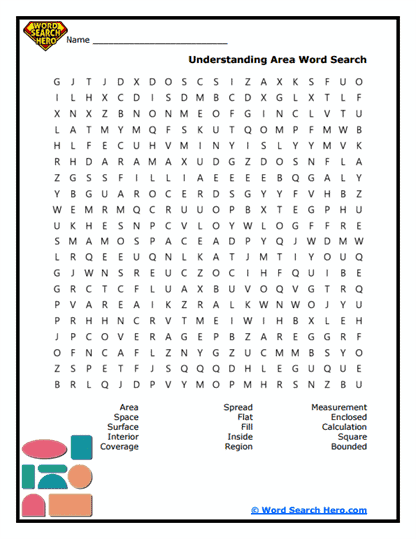
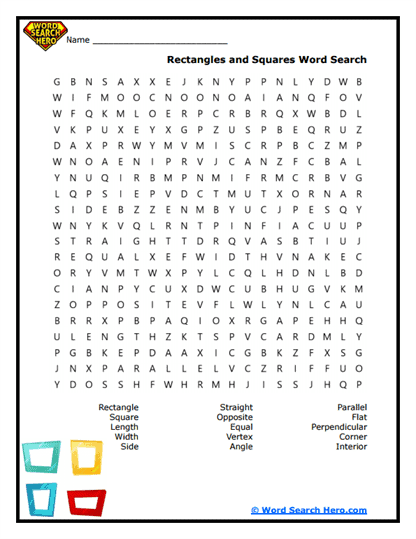
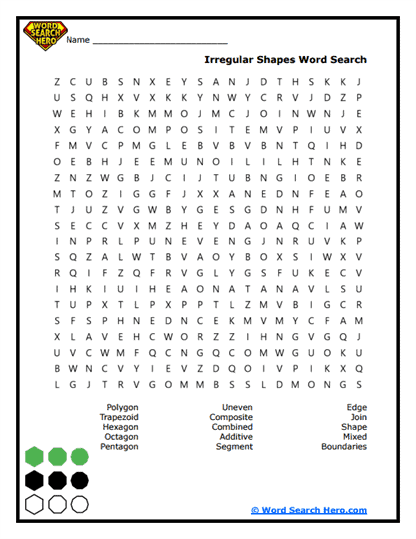
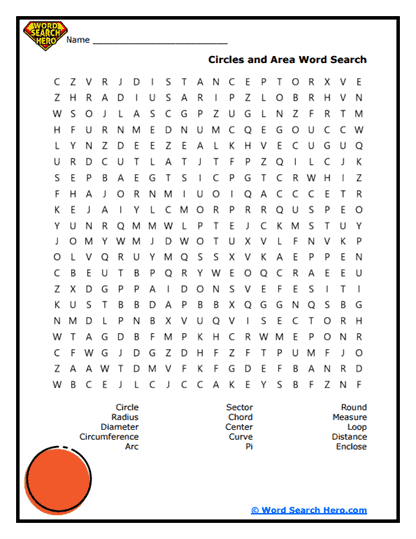
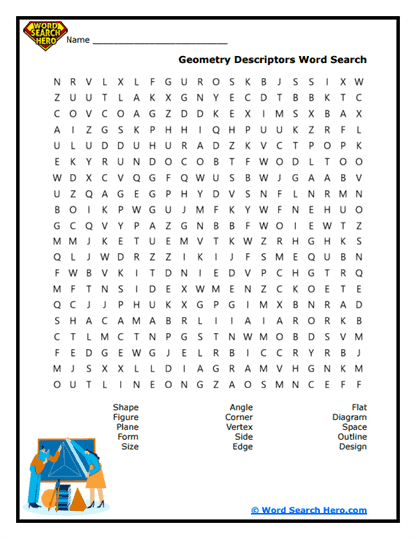
About Our Perimeter and Area Terms Word Searches
Perimeter and Area Terms word searches help students become familiar with the vocabulary used when measuring and describing shapes. These printable puzzles introduce and reinforce words connected to boundaries, surface space, units of measurement, and geometric figures. Before students begin solving perimeter and area problems, it often helps to first recognize the language used to explain how shapes are measured.
As students explore geometry, they encounter words like perimeter, area, length, width, boundary, square units, rectangle, and polygon. These terms appear frequently in lessons, diagrams, and word problems. A word search offers a simple and engaging way for students to become comfortable with this vocabulary before applying it during calculations and problem-solving activities.
Because the activity feels like a puzzle instead of a traditional worksheet, it can increase engagement and lower frustration for students who may be new to these concepts. Teachers often use these printables as warm-ups, center activities, early finisher work, or review pages during measurement and geometry units. Parents and homeschool educators can also add them to lessons as an easy way to reinforce key vocabulary while keeping learning enjoyable.
As students search for the words in the puzzle grid, they are also strengthening concentration, visual scanning, and pattern recognition. At the same time, they are building the vocabulary foundation that helps them understand how shapes are measured and compared.
Understanding the Difference Between Perimeter and Area
Perimeter and area are two important ways to measure shapes, but they describe different things. The perimeter of a shape refers to the distance around its outer boundary. Students often think of it as walking around the edge of a shape and measuring the total distance traveled.
The area, on the other hand, describes how much space is contained inside a shape. Instead of measuring the edges, students measure the surface that fills the shape. Area is often described using square units, which represent small equal sections that cover the inside of a figure.
Understanding these ideas requires students to recognize the vocabulary used to describe them. Words like side, boundary, surface, length, width, and units appear frequently when working with perimeter and area. When students recognize these terms quickly, they can focus more easily on understanding the concepts and solving the problems.
Word searches support this learning by giving students repeated exposure to the key terms. As they locate each word in the puzzle, they become more comfortable with spelling and recognition, which makes it easier to follow instructions and explanations later during lessons.
Paul’s Pro-Tip
One of the most effective ways to deepen understanding after the puzzle is to use a quick “draw and measure” activity. After students complete the word search, ask them to draw two simple shapes on graph paper-such as a rectangle and a square.
Next, have them trace the perimeter by outlining the edges of the shapes, and then count the number of small squares inside to determine the area. Encourage students to explain what they are doing using the vocabulary they found in the puzzle, such as boundary, side, length, width, and square units.
This strategy works well because it connects vocabulary to visual and hands-on learning. For teachers and homeschoolers, it also serves as a quick check for understanding. If students can correctly describe what they are measuring and why, it shows that the vocabulary from the puzzle is helping them think about the concepts more clearly.
Helping Students Connect Geometry to Real-Life Situations
Perimeter and area appear often in everyday situations. People use these ideas when measuring a fence around a yard, calculating how much carpet is needed for a room, planning a garden space, or designing a floor layout. These real-life examples help students see why learning about measurement and shapes is useful.
When students understand the vocabulary behind these ideas, they are better able to describe and solve real-world problems. Instead of simply counting sides or squares, they begin to think about how measurements relate to space and boundaries.
A word search can be a helpful starting point for these connections. After completing the puzzle, educators can ask students to think about places where perimeter and area might matter in daily life. Even a short conversation can help students see that geometry is not just about shapes on paper-it is about understanding and measuring the spaces around us.
When students become comfortable with the language of perimeter and area, they are better prepared to analyze shapes, solve geometry problems, and explain their thinking clearly.
Frequently Asked Questions
When are perimeter and area word searches most useful?
They are especially helpful before or during units on measurement and geometry, when students are learning to calculate perimeter and area of shapes.
What grade levels benefit most from these puzzles?
They are commonly used in upper elementary and middle school math lessons where students begin working with shape measurements.
Can homeschool educators use these puzzles during geometry lessons?
Yes. These printables are easy to include in homeschool lessons and pair well with graph paper activities, drawing exercises, or hands-on measurement practice.
Do word searches help students learn geometry vocabulary?
They can. Repeated exposure to key terms helps students recognize and remember the language used in geometry problems and explanations.
What is a good follow-up activity after completing the puzzle?
A helpful next step is asking students to draw simple shapes, identify their sides, trace the perimeter, and count square units inside to describe the area using the vocabulary they learned.