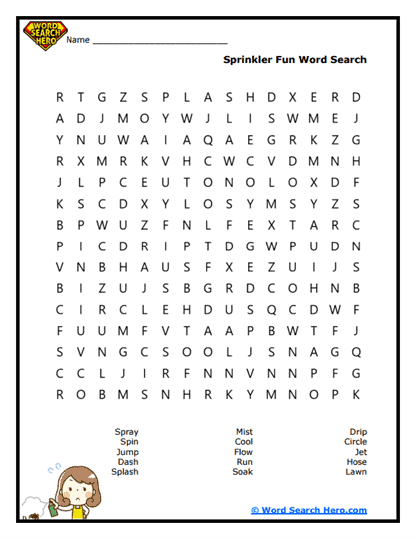
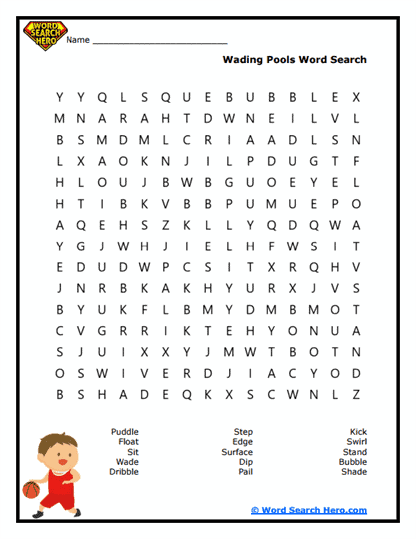
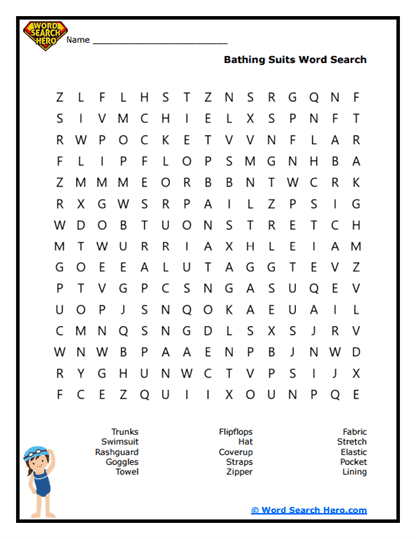
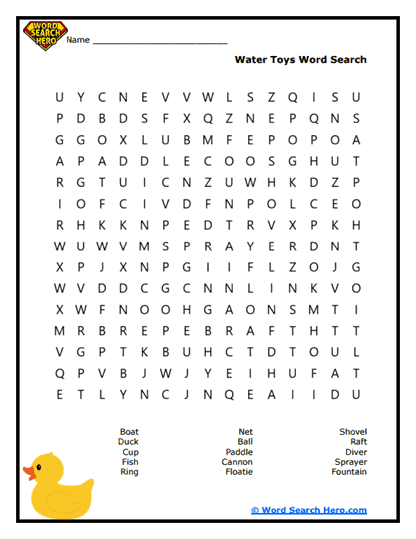
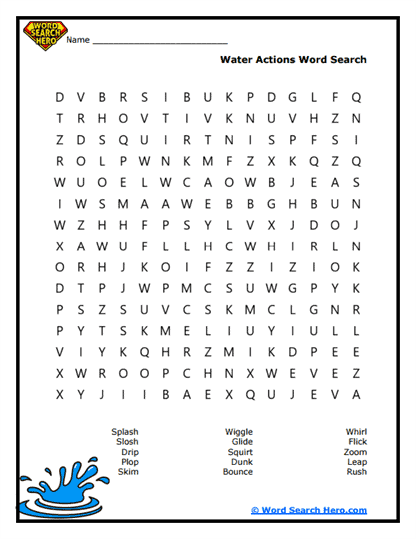
About Our Water Play Word Searches
Water Play word searches introduce students to vocabulary connected with one of the most enjoyable and refreshing types of play. These printable puzzles help learners become familiar with words related to splashing, pouring, swimming, and outdoor water activities. Because water play is a favorite activity for many children, the vocabulary used in these puzzles feels exciting and easy to connect with.
Students exploring this theme may encounter words such as splash, pour, bucket, pool, float, spray, and wave. These words frequently appear in early learning environments, especially during outdoor play, summer activities, or sensory exploration. A word search provides a fun way to reinforce this vocabulary while strengthening spelling recognition, reading confidence, and observation skills.
Because the activity feels like a puzzle rather than a traditional worksheet, it can make literacy practice more engaging. Teachers often use these printables during learning centers, indoor recess, early finisher time, or seasonal activities. Parents and homeschool educators can also include them in lessons as a screen-free learning tool that keeps children engaged while building vocabulary.
As students search the puzzle grid for hidden words, they strengthen concentration, visual scanning skills, and pattern recognition. These abilities support early literacy development while keeping the activity playful and relaxing.
Why Water Play Is Valuable for Learning
Water play is more than just fun-it also supports important developmental skills for young learners. When children pour, scoop, splash, or float objects in water, they naturally explore concepts related to movement, volume, and cause-and-effect.
Water play often introduces early science ideas. For example, children observe which objects float and which ones sink. They may experiment with filling and emptying containers or discover how water moves through funnels and tubes.
These activities also support fine motor skills. Actions like squeezing water toys, pouring from cups, or scooping with small containers strengthen hand coordination and control.
Water play also encourages social interaction and cooperative play. Children often work together to build water channels, fill buckets, or invent imaginative games involving water.
Learning vocabulary connected to water play helps students describe their actions and observations during these activities.
Word searches reinforce this learning by giving students repeated exposure to words related to water movement and outdoor play.
Paul’s Pro-Tip
A great extension activity is a sink-or-float experiment. After students complete the word search, provide a container of water and a collection of small objects such as plastic toys, coins, corks, or small blocks.
Before placing each object in the water, ask students to predict whether it will sink or float. Then test the object and record the results on a simple chart.
This activity encourages scientific thinking while reinforcing vocabulary related to water and observation.
Encouraging Learning Through Sensory Play
Sensory play activities like water exploration help children learn through direct experience. These hands-on activities allow students to experiment, observe changes, and ask questions about how materials behave.
Vocabulary related to water often appears in science lessons, weather discussions, and outdoor play activities. When students become familiar with these words, they are better able to describe what they see and explain what they are doing.
A word search can serve as a calm indoor activity before or after water play. After completing the puzzle, educators can invite students to explore water-based activities such as pouring stations, splash play, or simple water experiments.
When students become familiar with vocabulary related to water play, they gain language skills that help them describe actions, observations, and discoveries during hands-on exploration.
Frequently Asked Questions
What are Water Play word searches?
They are puzzles that feature vocabulary related to splashing, pouring, swimming, and other water-based activities.
Why is water play important for children?
Water play helps develop coordination, curiosity, and early science skills through hands-on exploration.
What skills do children develop during water play?
Children practice fine motor skills, problem-solving, observation, and cooperative play.
Are these puzzles suitable for younger learners?
Yes. The vocabulary is simple and connected to activities that many children already enjoy.
What classroom activity pairs well with this puzzle?
Students can conduct a sink-or-float experiment and record their observations about which objects stay on the surface of the water.