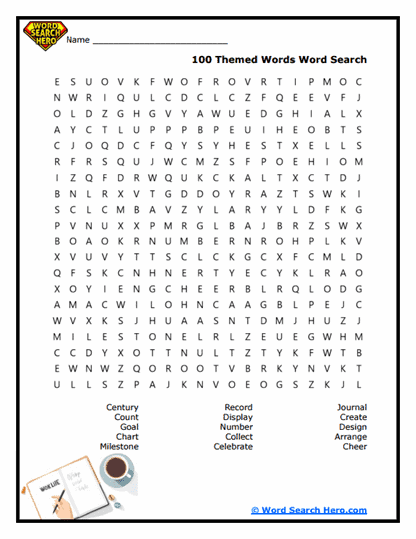
About Our 100th Day of School Word Searches
The 100th Day of School is a widely celebrated milestone in elementary classrooms, usually occurring sometime between late January and mid-February depending on when the school year begins. Our 100th Day of School Word Searches collection turns this exciting academic celebration into an engaging activity that helps students connect vocabulary with counting, achievement, and classroom fun.
This special day marks the 100th day students have been in school, making it a perfect opportunity to celebrate progress, learning, and growth. Teachers often plan themed activities around the number 100, including counting exercises, creative projects, and classroom celebrations.
Word searches introduce terms like “hundred,” “count,” “numbers,” “celebrate,” “learn,” and “school,” helping students connect the meaning of the day with what they’ve accomplished. These puzzles are especially popular in kindergarten and early elementary classrooms during this time of year.
Because the 100th Day of School is tied to the academic calendar rather than a fixed date, these puzzles can be used whenever that milestone occurs.
Celebrating a Classroom Milestone
The 100th Day of School is more than just a number-it’s a celebration of learning and progress. Word searches built around this event help students reflect on how far they’ve come since the start of the school year.
Puzzles might include words like “100,” “count,” “math,” “numbers,” and “practice,” reinforcing key early learning skills. These words connect directly to classroom activities focused on counting to 100 and understanding number patterns.
You might also include terms like “celebration,” “achievement,” “classroom,” and “learning,” which highlight the purpose of the day. These words help students see that the 100th day is about both fun and recognizing their hard work.
By combining academic concepts with celebration, 100th Day of School word searches make this milestone even more meaningful.
Paul’s Pro-Tip

This one’s always a hit with younger students. I’d say, “Can you find the word ‘hundred’? Now-what’s something you could count to 100 of?”
You’ll get some funny answers, but it gets them thinking about the number in a real way. That’s what makes the day stick.
Making the 100th Day of School Memorable
100th Day of School Word Searches help turn this milestone into a fun and reflective experience. Instead of just marking the day, students actively engage with what 100 means.
As students find words like “count” and “learn,” they begin to understand how much they’ve accomplished over the school year. This builds confidence and excitement for continued learning.
Because the 100th day usually falls in the middle of the school year, it’s also a great time to re-energize students and celebrate progress before moving forward.
Using 100th Day of School-themed word searches creates a fun, engaging way to recognize a major classroom milestone and keep students motivated.
Frequently Asked Questions
When is the 100th Day of School usually celebrated?
The 100th Day of School typically falls between late January and mid-February, depending on when the school year starts. Schools count forward from the first day to determine the exact date.
Why is the 100th Day of School such an important classroom celebration?
It marks a major milestone in the school year and gives students a chance to celebrate their progress. It’s also commonly used to reinforce counting and early math skills.
What vocabulary should be included in 100th Day of School word searches?
High-value words include hundred, count, numbers, math, celebrate, learning, classroom, and achievement. These terms reflect both the academic and celebratory aspects of the day.
What are some meaningful activities to pair with 100th Day of School word searches?
Popular activities include counting to 100, bringing in 100 items, creating “100-day” projects, and doing themed math games. These activities reinforce the purpose of the celebration.
How can I make the 100th Day of School engaging for younger students?
Focus on hands-on and interactive activities, like counting games and creative projects, alongside word searches. Keeping the day fun and active helps students connect with the milestone.