Choose a topic !

4-Letter Words Word Searches

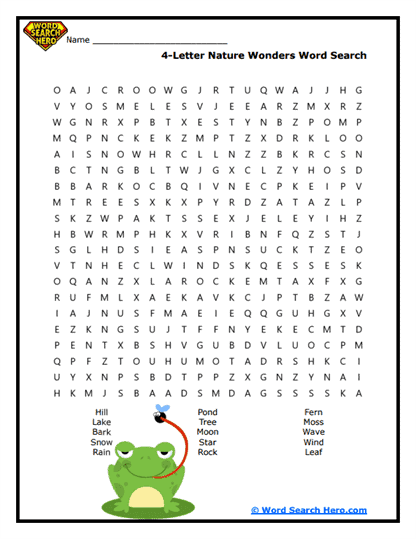
Nature Explorer Word Search

Nature Explorer

This word search focuses on four-letter nature-related words, helping students recognize elements of the natural world. Words such as “hill,” “tree,” “pond,” and “wind” reinforce vocabulary related to landscapes and weather. These words describe common features of nature that students encounter in books, science lessons, and outdoor experiences. By finding and circling these words, students […]

View More
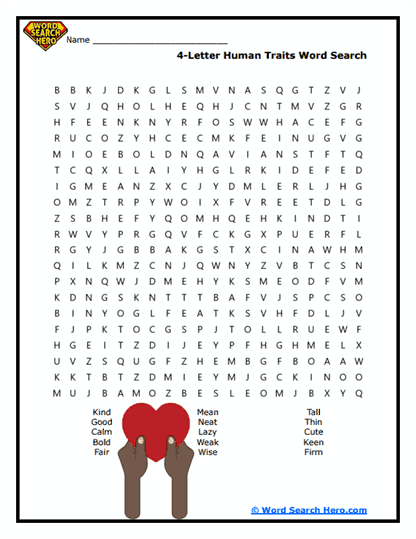
Trait Tracker Word Search

Trait Tracker

This word search contains four-letter words describing human traits, including personality and physical attributes. Words such as “kind,” “bold,” “lazy,” and “firm” highlight different characteristics people may have. Recognizing these words helps students understand and describe emotions, behaviors, and appearances in more detail. This search encourages awareness of both positive and negative traits. Learning these […]

View More
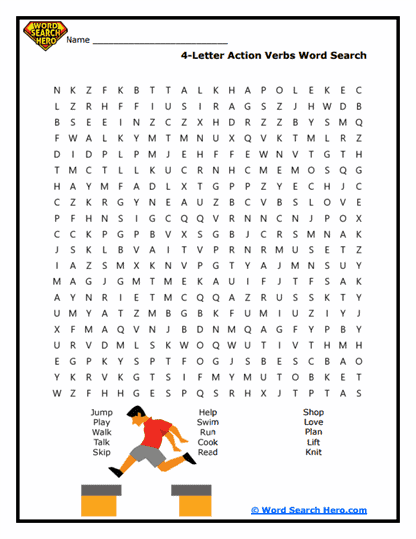
Action Finder Word Search

Action Finder

This word search includes four-letter action verbs that describe different physical and mental activities. Words such as “jump,” “walk,” “cook,” and “plan” help students recognize commonly used verbs. These words are essential for writing, speaking, and understanding instructions. Finding and circling these words reinforces students’ ability to identify and use action verbs correctly. Recognizing action […]

View More
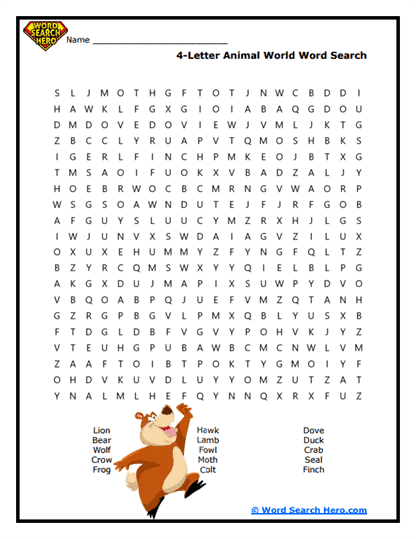
Animal Kingdom Word Search

Animal Kingdom

This word search introduces four-letter names of animals from different habitats, reinforcing students’ zoological vocabulary. Words such as “lion,” “bear,” “frog,” and “hawk” help students identify common and lesser-known creatures. These words expand their knowledge of wildlife and classification. Searching for these names helps students connect words to real-world animals. Recognizing animal names strengthens students’ […]

View More
Heart Compass Word Search

Heart Compass

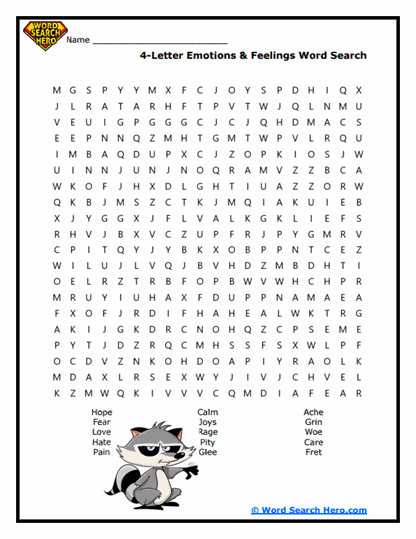
This word search focuses on four-letter words describing emotions and feelings, both positive and negative. Words such as “hope,” “rage,” “fear,” and “joys” help students express different states of mind. These words are essential for understanding emotions in literature, communication, and social interactions. By finding and recognizing these words, students enhance their emotional vocabulary. Expanding […]

View More
Kitchen Essentials Word Search

Kitchen Essentials

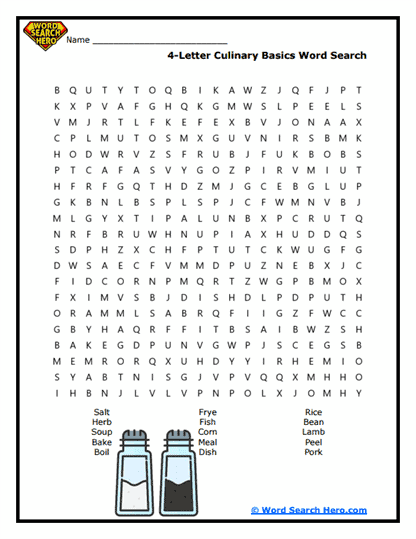
This word search features four-letter culinary words related to cooking, food, and meal preparation. Words such as “salt,” “herb,” “rice,” and “fish” help students recognize essential ingredients and cooking terms. These words are commonly used in recipes, menus, and food discussions. Finding and identifying them reinforces vocabulary related to the kitchen and dining. Recognizing culinary […]

View More
Handy Tools Word Search

Handy Tools

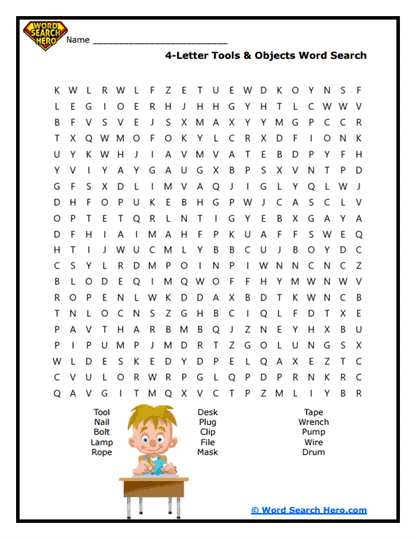
This word search introduces four-letter words related to tools and everyday objects. Words such as “tool,” “bolt,” “clip,” and “desk” help students recognize items used in construction, school, and household settings. These words are commonly found in instruction manuals and workplace environments. Finding and identifying these terms reinforces students’ ability to name and describe objects […]

View More
Organism Outline Word Search

Organism Outline

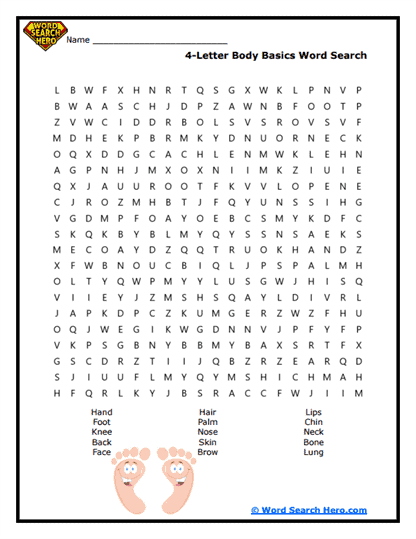
This word search contains four-letter words related to human body parts, helping students identify essential anatomical terms. Words such as “hand,” “foot,” “chin,” and “nose” help students learn about different parts of their bodies. These words are commonly used in health, fitness, and biology discussions. Searching for these terms reinforces knowledge of body-related vocabulary. Recognizing […]

View More
Color Craze Word Search

Color Craze

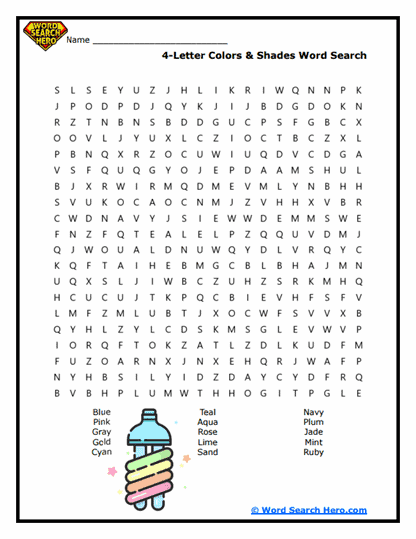
This word search includes four-letter words describing colors and shades, helping students recognize different hues. Words such as “blue,” “pink,” “jade,” and “ruby” reinforce vocabulary related to color identification. These words are commonly used in art, fashion, and design discussions. Finding and circling these words strengthens students’ understanding of colors. Recognizing color names enhances students’ […]

View More
Travel Trek Word Search

Travel Trek

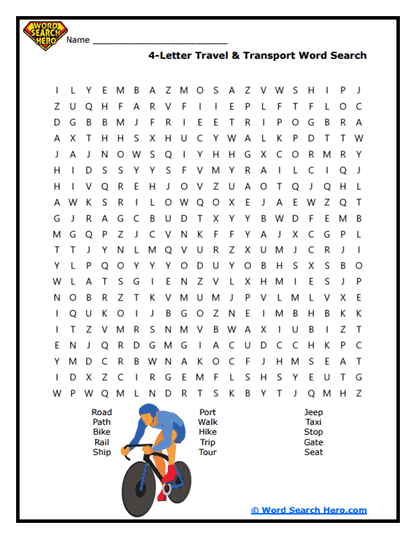
This word search features four-letter words related to travel and transportation. Words such as “road,” “bike,” “port,” and “seat” reinforce vocabulary commonly used in travel discussions. These words help students understand different modes of transportation and travel-related concepts. Finding and recognizing these words supports literacy and real-world language application. Recognizing travel-related words enhances students’ ability […]

View More

About Our 4-Letter Words Word Searches

Our 4-letter word search collection hits a powerful balance in early literacy-just challenging enough to stretch learners, but still familiar enough to keep them confident. These puzzles focus on everyday words like “tree,” “jump,” “book,” and “wind,” giving students meaningful practice with vocabulary they actually use.

This makes them an ideal next step after shorter word work. Students move beyond basic recognition and begin strengthening skills tied to spelling practice, decoding, and word recognition-all without feeling overwhelmed.

Because these words show up frequently in both conversation and reading, students quickly see the value. They’re not just solving puzzles-they’re building language they’ll use every day.

The Sweet Spot Between Simple and Challenging Words

Four-letter words sit right in the middle of early reading development-and that’s what makes them so effective.

They’re longer than beginner words, which means students can’t rely on quick guessing. But they’re still short enough to stay manageable, allowing learners to:

  • track letter sequences more carefully
  • recognize common patterns
  • build confidence with slightly more complex vocabulary

This is where reading starts to click.

Students begin noticing things like:

These are key pieces of word families and foundational for stronger reading.

Across themes like animals, weather, and everyday actions, students encounter words that feel relevant and recognizable. That connection helps learning stick-and makes practice feel more meaningful.

Over time, students shift from simply finding words to actually understanding how they’re built.

Paul’s Pro-Tip

Paul's Pro Tip For This Category

Try the “middle matters” strategy.

Instead of starting with the first letter, have students focus on the middle two letters of the word.

Why? Because in four-letter words, the center often stands out more in the grid. Once they spot that middle chunk, they can quickly check the surrounding letters to confirm the full word.

It’s a small shift-but it makes searching faster and more intentional.

Activities That Help Students Notice Word Patterns

These puzzles become much more powerful when students start looking for patterns-not just answers.

Start with a simple grouping activity.
After finishing the puzzle, ask students:

  • Which words rhyme?
  • Which share the same ending?
  • Which start the same way?

This builds awareness of word patterns and helps students see connections between words.

Next, try a vowel focus:

  • Which words use short vowels?
  • Which use long vowel sounds?

This ties directly into phonics games and strengthens sound-letter understanding.

You can also turn it into a quick writing task:

  • Pick one word and use it in a sentence
  • Act it out (for action words like “jump” or “walk”)

This connects vocabulary to real-life usage and supports language development.

For an extra challenge, ask:

  • Can you change one letter to make a new word?

This builds flexibility and reinforces how words are constructed.

These activities take just a few minutes-but they turn simple puzzles into deeper learning experiences.

Frequently Asked Questions

Why are 4-letter words such an important step?

They introduce more complex patterns without overwhelming students. This helps bridge the gap between beginner words and more advanced reading.

What skills improve the most with these puzzles?

Spelling accuracy, pattern recognition, and word tracking all improve as students work with slightly longer words.

Are these puzzles good for struggling readers?

Yes. They offer a manageable challenge that builds confidence while reinforcing key reading skills.

How do these connect to real reading?

These are the kinds of words students encounter constantly. Recognizing them quickly improves both reading speed and comprehension.

What’s the easiest way to extend the activity?

Have students sort words by pattern or use them in a sentence. That small step helps turn recognition into real understanding.