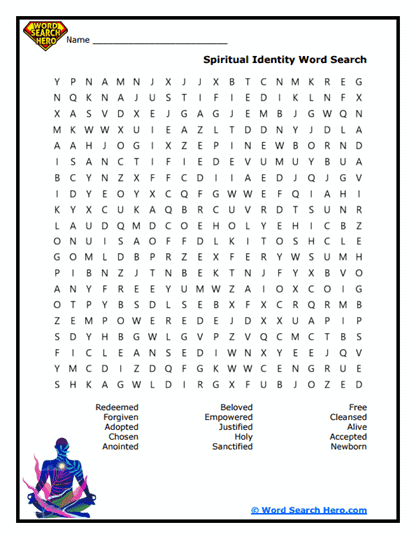
About Our Affirmation Word Searches
Affirmation word searches provide a meaningful and engaging way to explore encouraging truths while focusing on the person and position connected to them. These printable puzzles introduce learners to key terms such as faith, hope, strength, courage, identity, and truth, along with roles like believer, speaker, encourager, and listener. By emphasizing both the words and the positions behind them, students gain a clearer understanding of how affirmations are used.
As students search for words, they begin to connect affirmations with responsibility. A believer takes on the role of someone who speaks and believes truth, while an encourager supports others by sharing positive and meaningful words. The listener holds the position of receiving and reflecting. This helps learners move beyond recognizing uplifting words and toward understanding how people actively use them.
These puzzles also support essential academic skills like vocabulary development, spelling, and focus. They can be used in classrooms, Sunday school, or homeschool settings as warm-ups, reflection tools, or discussion starters.
With a range of difficulty levels, Affirmation word searches are accessible for many learners. They provide a thoughtful way to explore encouraging truths while focusing on the people and positions that bring them to life.
Speaker, Receiver, and Encourager
Affirmations become much clearer when students focus on the roles connected to them. Word searches centered on this topic often include terms like speak, believe, truth, courage, and identity, along with roles such as speaker, listener, and encourager. Each of these reflects a responsibility tied to how affirmations work.
The speaker takes on the role of declaring truth and encouragement. The listener holds the position of receiving and believing those words. Encouragers support others by sharing affirmations that build confidence and strength. Each role shows how affirmations are both spoken and received.
Encouraging students to think about these roles helps deepen understanding. They can ask questions like, “What does it mean to speak an affirmation?” and “How does a listener respond?” This kind of thinking builds stronger comprehension and reflection.
By focusing on roles and positions, students begin to see affirmations not just as words, but as actions that involve communication, belief, and responsibility.
Paul’s Pro-Tip

One of the most effective ways to use an Affirmation word search is to turn it into a “role-based speaking practice.” As students find words like “truth,” “strength,” or “courage,” have them create a short affirmation sentence and assign a role to it-who is speaking it and who is receiving it. For example, is the person speaking to themselves, or encouraging someone else? This helps students understand that affirmations are most powerful when tied to a clear role and purpose.
Another strategy that works incredibly well is the “daily role reinforcement system.” After completing the puzzle, ask students to choose one role-speaker, listener, or encourager-and practice it intentionally throughout the day. What does it look like to consistently speak truth? How does a listener respond and apply it? This builds deeper understanding by turning the concept into ongoing action. It also helps students see that affirmations are not one-time statements, but part of a consistent role they can take on.
From Words to Action
Affirmation word searches can lead to deeper learning when students focus on how each role connects to real-life use. After completing a puzzle, students can choose one role-such as speaker or encourager-and describe what that position involves. This helps connect vocabulary to understanding.
For example, a student might explore what it means to speak truth with confidence or what responsibilities come with encouraging others. Another might examine how listening and believing affirmations can shape thoughts and actions. These reflections help students understand how roles influence behavior.
This approach also supports cross-curricular learning. It can connect with writing by asking students to create affirmations or with reading by exploring examples of encouragement. Group discussions can deepen understanding by comparing different roles.
By focusing on people and positions, students gain a clearer picture of affirmations. It transforms a simple puzzle into a meaningful exploration of communication, responsibility, and belief.
Frequently Asked Questions
What roles are involved in affirmation word searches?
Affirmation word searches often include roles like speaker, listener, and encourager. Each of these positions reflects a different part of how affirmations work. Understanding these roles helps students see how words are shared and received. It also makes the activity more meaningful.
How do affirmation word searches help students understand their purpose?
They connect positive words with the roles that use them. As students find the words, they begin to think about how affirmations are spoken and applied. This builds a deeper understanding beyond simple recognition. It also reinforces learning through practice and reflection.
Why is the role of the speaker important in affirmations?
The speaker takes on the responsibility of declaring truth and encouragement. This position helps shape how affirmations are delivered and understood. It also influences how others receive the message. Understanding this role highlights the importance of intentional communication.
How can I make affirmation word searches more interactive?
You can have students create their own affirmations based on the words they find and assign roles to them. Another effective activity is asking them to practice a specific role, like encourager, in real situations. These strategies deepen understanding and encourage participation. They also help connect the puzzle to everyday life.
What can students learn by focusing on roles in affirmations?
Students can learn how communication, belief, and responsibility are connected. By examining each role, they see how words can influence actions and thinking. This creates a clearer understanding of affirmations. It also encourages intentional and positive use of language.