About Our Aircraft Word Search Collection
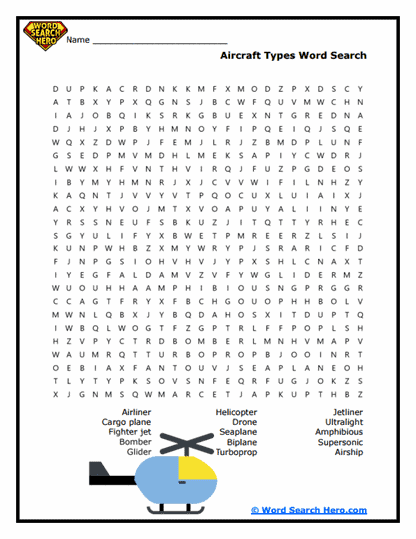
Aircraft word searches offer an exciting way to explore the powerful and complex objects that take to the skies. These printable puzzles focus specifically on aircraft such as airplanes, jets, helicopters, and gliders-along with their key parts and features. Because aircraft are highly recognizable physical objects with distinct shapes and functions, they provide a strong foundation for meaningful vocabulary development.
As students search for words like “fuselage,” “cockpit,” “wing,” and “landing gear,” they’re not just identifying letters-they’re learning how these objects are built and how they operate. This adds depth to the activity, transforming it from a simple puzzle into a learning experience that connects language with real-world engineering and design.
In educational settings, aircraft-themed puzzles work well alongside lessons on transportation, science, or technology. They can be used as independent practice, small group work, or even as part of a larger unit on flight. At home, they provide a fun and focused activity that encourages curiosity about how aircraft function and what makes them unique.
Because aircraft are often associated with travel, innovation, and adventure, these puzzles naturally capture student interest. That engagement helps improve focus, persistence, and overall enjoyment while reinforcing important literacy skills tied to real, physical objects.
Inside the Aircraft: Words That Describe How It All Works
Aircraft are made up of many specialized parts, and that makes them perfect for deeper vocabulary exploration. When students encounter words like “propeller,” “rudder,” or “engine” in a word search, they’re beginning to understand the structure of these complex machines. Each word represents a real component that plays a role in how an aircraft flies.
A great way to extend this learning is by breaking down the parts of an aircraft after completing the puzzle. Students can label a simple diagram or draw their own version of an airplane, adding in the words they found. This reinforces both spelling and comprehension in a visual, hands-on way.
You can also introduce comparison activities. Ask students how a jet differs from a propeller plane or what makes a helicopter unique. These discussions help learners connect vocabulary to function, strengthening both understanding and retention.
For group learning, students can work together to categorize aircraft types or discuss where they might see each one used. Whether it’s commercial travel, rescue missions, or cargo transport, these real-world connections make the vocabulary more meaningful.
By focusing on the physical structure and purpose of aircraft, these word searches go beyond basic word finding and encourage deeper thinking about how these objects operate.
Paul’s Pro-Tip

When you’re searching for aircraft words, start with the ones that have unusual letter patterns like “gear” or “jet.” Those shorter words can be easier to find and help you get momentum.
For longer words like “helicopter” or “fuselage,” try breaking them into chunks in your head. Look for smaller parts of the word first, then connect them across the grid-it’s much easier than trying to spot the whole word at once.
How Aircraft Objects Strengthen Observation and Learning
Aircraft word searches naturally build observation skills because they require students to carefully scan for precise letter sequences. This kind of attention to detail reflects the precision needed when working with real aircraft, where every part and function matters. It’s a great way to practice focus in a structured and engaging format.
These puzzles also introduce technical vocabulary tied to real-world objects. Words like “altitude,” “cockpit,” and “engine” give students insight into how aircraft operate, not just what they are. This supports both reading comprehension and general knowledge, especially in science-related topics.
Another benefit is the development of strategic thinking. Students begin to recognize patterns, such as common prefixes or repeated letters, and use those clues to locate words more efficiently. This builds confidence and encourages independent problem-solving.
Fine motor skills are also reinforced as students circle or highlight words, helping improve coordination and control. Because the topic is engaging and tied to exciting real-world objects, students are more likely to stay focused and complete the task.
By combining literacy with an exploration of physical objects like aircraft, these puzzles provide a well-rounded and meaningful learning experience.
Frequently Asked Questions
What types of aircraft are included in these word searches?
These puzzles typically include a variety of aircraft such as airplanes, jets, helicopters, and gliders. Many also feature specific types like cargo planes or fighter jets. This variety helps students learn about different aircraft and how they are used.
Do these puzzles include parts of an aircraft or just the aircraft names?
They often include both, which adds more educational value. Words like “wing,” “rudder,” “engine,” and “landing gear” help students understand how an aircraft is built. This makes the activity more detailed and informative.
How do aircraft word searches help kids understand how aircraft function?
By repeatedly seeing and searching for parts of an aircraft, students begin to connect vocabulary with function. For example, learning the word “propeller” can lead to discussions about how it helps move the aircraft. This builds a stronger understanding of how these objects work.
Can these puzzles be used for STEM or aviation lessons?
Yes, they are a great addition to STEM-focused learning. Teachers can use them to reinforce key terms while introducing concepts related to flight and engineering. They also work well as a review activity after hands-on lessons.
How can I make aircraft word searches more interactive for my child?
You can have your child draw and label an aircraft using the words from the puzzle. Another idea is to watch airplanes in the sky or at an airport and identify parts they’ve learned. These activities help turn vocabulary into real-world understanding.