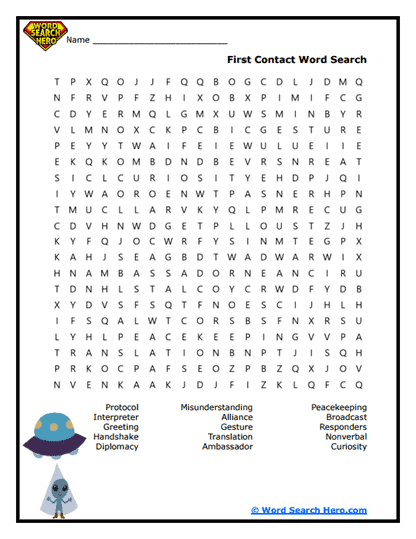
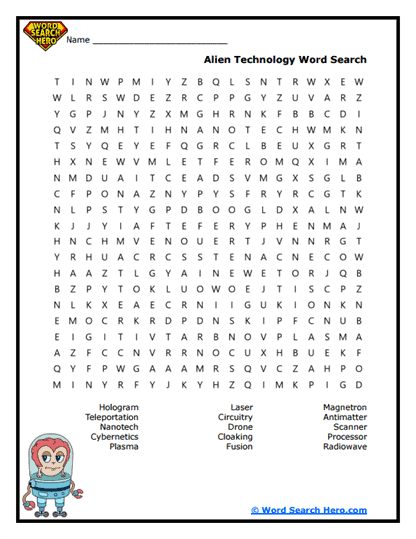
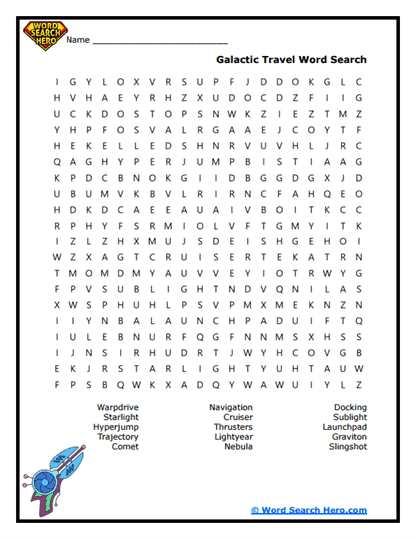
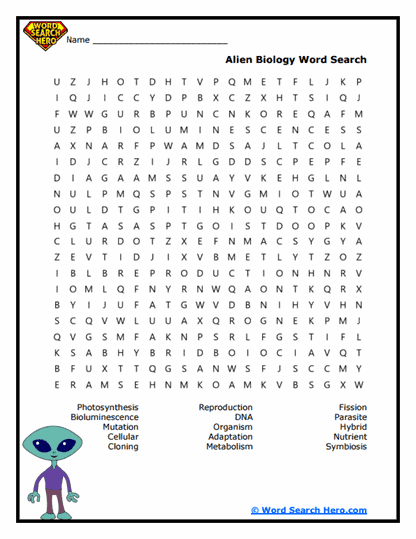
About Our Alien Word Searches
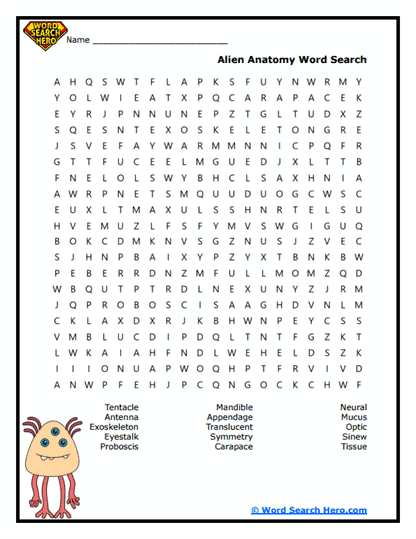
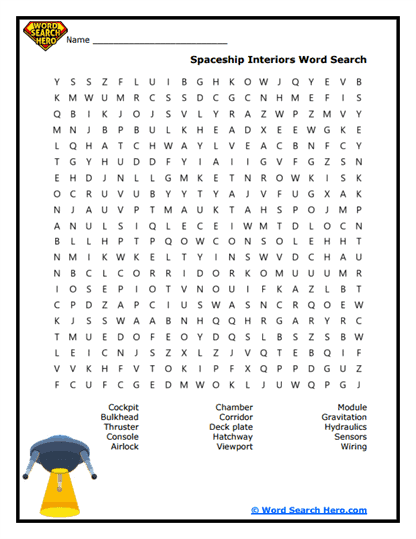
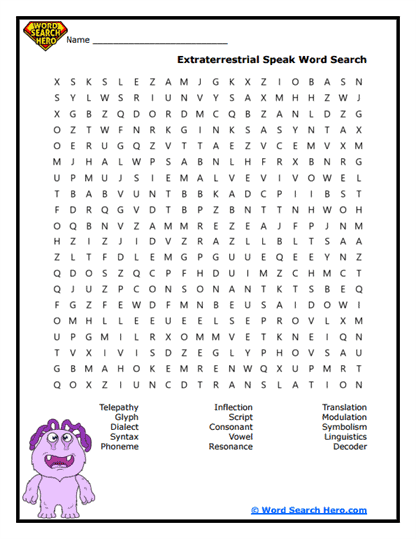
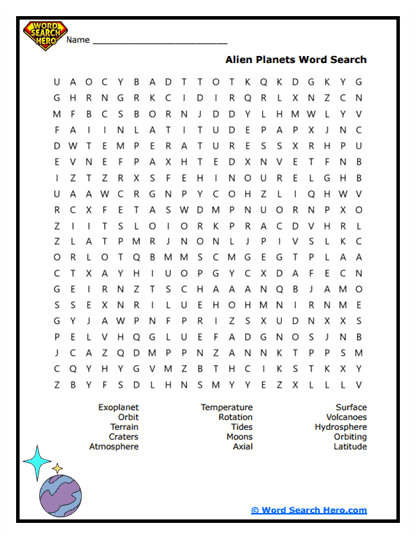
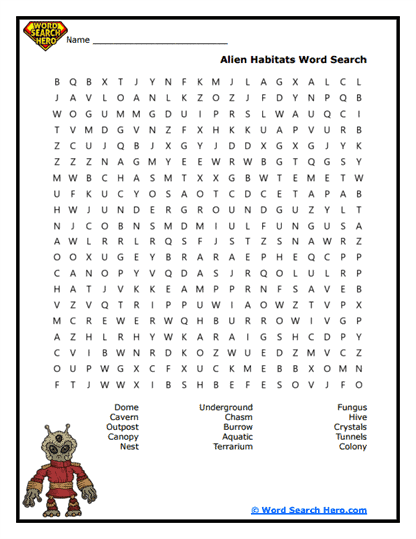
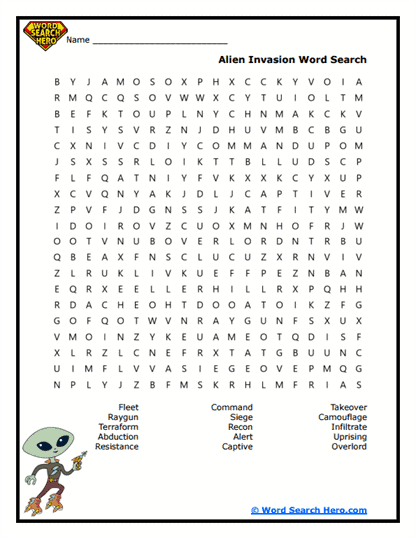
Alien word searches introduce students to the vocabulary and ideas connected to extraterrestrial life, space exploration, and the search for life beyond Earth. These printable puzzles help learners become familiar with terms related to space science, planetary environments, and the possibility of life existing elsewhere in the universe. Before students explore astronomy and astrobiology topics in depth, it often helps to first recognize the language scientists use when discussing extraterrestrial life and space discovery.
Students studying the idea of aliens and extraterrestrial life may encounter words such as alien, extraterrestrial, planet, galaxy, spacecraft, astronaut, and signal. These terms frequently appear in space science discussions and help students understand how scientists search for life on other planets and study distant worlds. A word search provides an engaging way to reinforce this vocabulary while strengthening reading, spelling, and observation skills.
Because the activity feels like a puzzle rather than a traditional worksheet, it can make science vocabulary easier and more engaging to learn. Teachers often use these printables during science centers, independent practice, review sessions, or early finisher activities. Parents and homeschool educators can also include them in lessons as a way to introduce space-related vocabulary in an interactive format.
As students search for the words in the puzzle grid, they strengthen concentration, visual scanning, and pattern recognition skills. At the same time, they build familiarity with the language used when discussing space exploration and the search for life beyond Earth.
Understanding Extraterrestrial Life
An alien, or extraterrestrial life form, refers to a living organism that may exist outside of Earth. Scientists have not yet confirmed the existence of extraterrestrial life, but the possibility remains an active area of scientific research.
Astrobiologists study the conditions that might support life on other planets or moons. They examine environments that contain water, energy sources, and suitable temperatures that could potentially allow living organisms to survive.
Scientists search for signs of life by studying planets and moons in our solar system and by examining distant exoplanets orbiting other stars. Space telescopes, robotic spacecraft, and planetary probes help gather data that may reveal whether other worlds could support life.
Although alien life has not yet been discovered, the scientific search for extraterrestrial organisms continues to expand our understanding of the universe and the conditions required for life.
Learning the vocabulary associated with extraterrestrial life and space exploration helps students understand how scientists investigate one of the most fascinating questions in science: whether life exists beyond Earth.
Word searches reinforce this learning by giving students repeated exposure to the key terms used when studying astrobiology and space exploration.
Paul’s Pro-Tip
A powerful extension activity is a “design an alien world” challenge. After students complete the word search, ask them to imagine a distant planet with environmental conditions different from Earth.
Students can decide what the planet’s atmosphere, gravity, temperature, and landscape might be like. Then they can design a possible life form that could survive in those conditions.
Encourage students to explain how the alien’s features help it survive in that environment. This activity encourages scientific thinking about adaptation, planetary environments, and the requirements for life.
Helping Students Explore the Possibility of Life Beyond Earth
The search for extraterrestrial life is one of the most exciting areas of modern science. Scientists study distant planets, analyze signals from space, and investigate extreme environments on Earth to understand how life might exist elsewhere in the universe.
Understanding vocabulary related to aliens and extraterrestrial life helps students interpret discussions about space missions, astrobiology research, and discoveries of new planets around distant stars. These ideas also connect to broader topics such as astronomy, planetary science, and space exploration.
A word search can serve as an introduction to a lesson about astrobiology or as a review after students have studied planets and space exploration in class. After completing the puzzle, educators can encourage students to connect the vocabulary with images of planets, space missions, and scientific discoveries about distant worlds.
When students become familiar with extraterrestrial life vocabulary, they gain the language and understanding needed to explore how scientists search for life beyond our planet.
Frequently Asked Questions
What does the word alien mean in science?
In science, an alien usually refers to a life form that originates from outside Earth.
Has alien life been discovered?
Scientists have not yet confirmed the discovery of extraterrestrial life, but research continues to explore this possibility.
What is astrobiology?
Astrobiology is the scientific study of life in the universe and the conditions that might support life on other planets.
What kinds of places might support alien life?
Scientists look for environments that contain liquid water, energy sources, and suitable temperatures that could support living organisms.
What classroom activity pairs well with this puzzle?
Students can design an imaginary planet and create a life form that could survive under the planet’s environmental conditions.