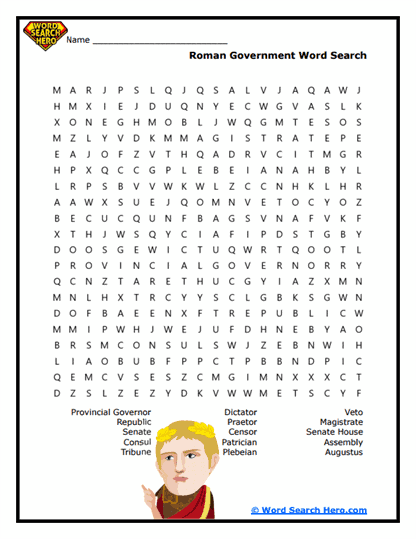
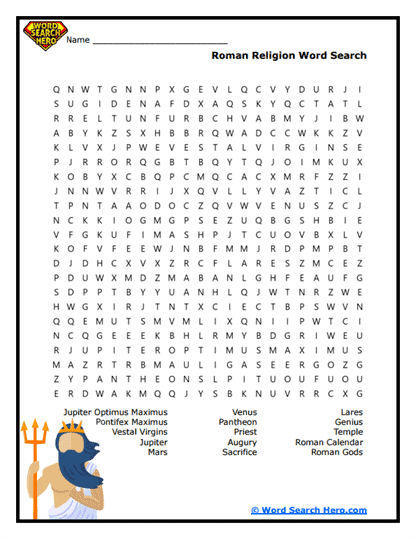
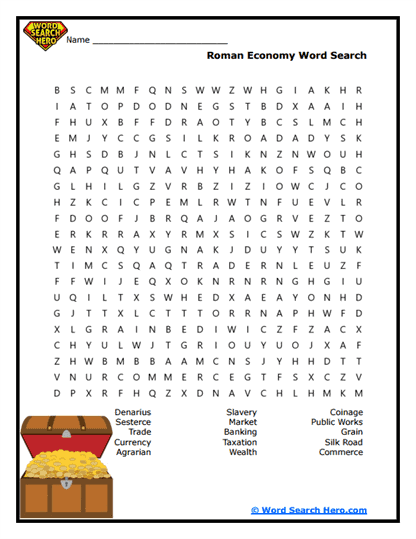
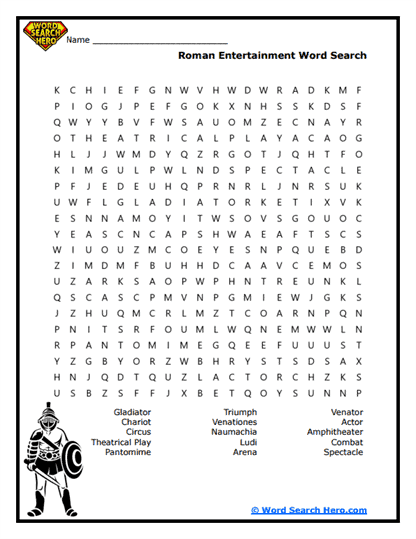
About Our Ancient Rome Word Searches
Ancient Rome was one of the most powerful and influential civilizations in world history. Its achievements in government, engineering, law, and culture helped shape many aspects of modern society. Our Ancient Rome Word Searches give students an engaging way to explore the vocabulary connected to Roman history while strengthening reading and recognition skills.
These printable puzzles introduce learners to important historical terms such as empire, senate, gladiator, colosseum, and legion. Instead of simply reading about Roman history in textbooks, students interact with the vocabulary by searching for the words hidden within puzzle grids. This hands-on activity helps reinforce key terms while making social studies lessons more enjoyable.
Teachers often use these puzzles during units on ancient civilizations or world history. They work well as bell ringers, literacy center activities, review tasks, or early finisher challenges. Because they are easy to print and simple for students to complete independently, they fit smoothly into many classroom routines.
Parents and homeschool educators also appreciate how word searches introduce historical topics in a relaxed and fun way. Puzzles can spark curiosity about ancient cultures and encourage students to ask questions about how people lived thousands of years ago.
Another benefit is the development of concentration and visual scanning skills. As students search rows, columns, and diagonals to locate words, they practice careful observation while reinforcing important historical vocabulary.
Our Ancient Rome Word Searches turn key social studies terms into an interactive puzzle activity that encourages students to learn more about the people, ideas, and achievements of the Roman world.
Exploring the Vocabulary of the Roman Empire
Ancient Rome was known for its powerful military, advanced engineering, and complex government system. Word search puzzles help students become familiar with the vocabulary connected to these important historical developments.
As learners search for words like senate, emperor, legion, republic, and colosseum, they begin recognizing terms that frequently appear in lessons about Roman history. This repeated exposure helps students feel more confident when encountering these words in reading assignments or classroom discussions.
Teachers can extend the puzzle activity by connecting vocabulary words to specific aspects of Roman society. For example, the word senate can lead to a discussion about how the Roman government functioned, while legion introduces the structure of the Roman army.
Another engaging activity is to group puzzle words into categories such as government, architecture, military, or daily life. Sorting vocabulary this way helps students understand how different parts of Roman society were connected.
Students can also choose a few words from the puzzle and write short explanations about them. A learner might describe what the Colosseum was used for or explain the role of Roman soldiers in expanding the empire.
By combining puzzles with discussion and exploration, students begin to see how ancient Rome became one of the most influential civilizations in history.
Paul’s Pro-Tip
When students finish an Ancient Rome word search, ask them to choose one word that sounds the most interesting.
Maybe it’s gladiator, senate, or colosseum. Ask them what they think that word represents in Roman life.
Even a quick conversation can lead to great discoveries. A word like gladiator might spark a discussion about Roman entertainment, while senate could lead to talking about government and leadership.
A single vocabulary word from a puzzle can open the door to understanding how an entire civilization worked.
Discovering Roman Innovations and Daily Life
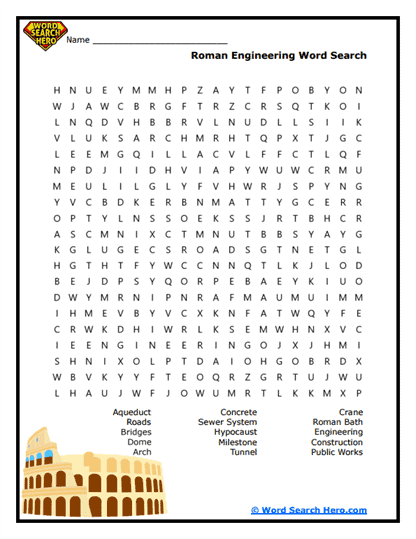
Ancient Rome is often studied because of the many innovations it introduced. Romans built impressive roads, aqueducts, and public buildings that helped cities grow and thrive. Many of these ideas influenced later civilizations.
Word search puzzles help introduce students to vocabulary connected to these achievements. Words such as aqueduct, empire, citizen, and architecture highlight different aspects of Roman life and development.
Teachers can use the puzzle as a starting point for discussing how Roman ideas spread across Europe and beyond. For example, Roman roads helped connect distant regions of the empire and made travel and trade easier.
Reading assignments also benefit from this vocabulary exposure. When students recognize words like emperor or republic in a passage, they often understand the historical context more easily.
Families can reinforce this learning at home by discussing some of the puzzle words together and looking up pictures of Roman structures such as the Colosseum or aqueducts. Seeing real examples can help bring the vocabulary to life.
Word search puzzles provide a simple introduction to Roman history, but they often inspire deeper curiosity about how ancient Romans governed, built cities, and shaped the world around them.
Frequently Asked Questions
What types of words appear in Ancient Rome word search puzzles?
These puzzles often include vocabulary such as empire, senate, gladiator, legion, republic, and colosseum, which relate to important aspects of Roman history.
Do these puzzles include topics like Roman soldiers and gladiators?
Yes. Many puzzles include words related to the Roman military and entertainment, such as legion and gladiator, which were important parts of Roman society.
Are Ancient Rome word searches helpful during social studies lessons?
They are often used as vocabulary warm-ups, review activities, or literacy center tasks during units about ancient civilizations.
Can these puzzles help students remember historical terms?
Repeated exposure to vocabulary through puzzles helps students recognize and recall important words when reading about Roman history.
What is a good follow-up activity after completing the puzzle?
Students can choose one word from the puzzle and research a quick fact about it, such as how Roman aqueducts worked or what happened in the Colosseum.