Choose a topic !

Barons War Word Searches

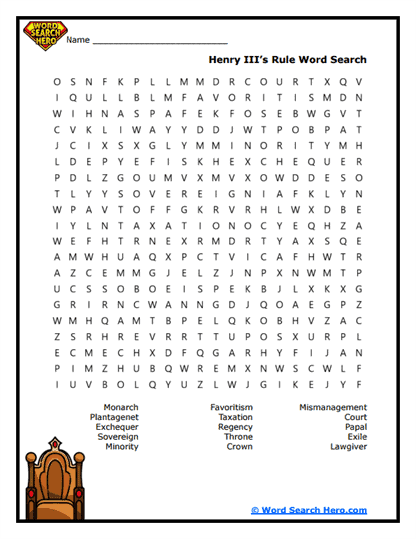
Henry III's Rule Word Search

Henry III’s Rule

The “Henry III’s Rule” word search centers around the key terms and themes related to King Henry III’s governance and political issues during his reign. The vocabulary touches on systems of monarchy, financial institutions like the Exchequer, concepts of favoritism and mismanagement, and legal-political roles like sovereign and lawgiver. Historical issues such as taxation, court […]

View More
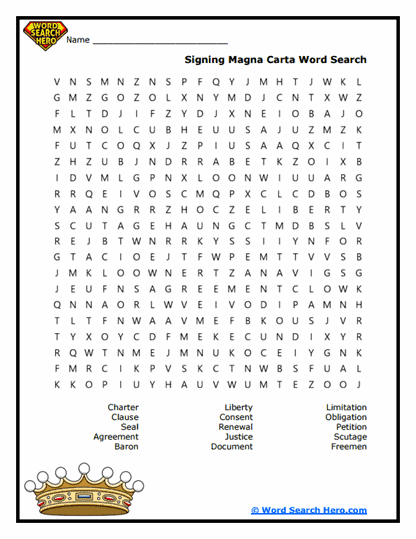
Signing Magna Carta Word Search

Signing Magna Carta

The “Signing Magna Carta” word search dives into the foundational document of English constitutional history. Words like “Charter,” “Clause,” and “Agreement” emphasize the legal framework of the Magna Carta, while others like “Baron,” “Consent,” and “Freemen” highlight the involved parties. The vocabulary reflects liberty and justice, the core values behind this historic document. The terms […]

View More
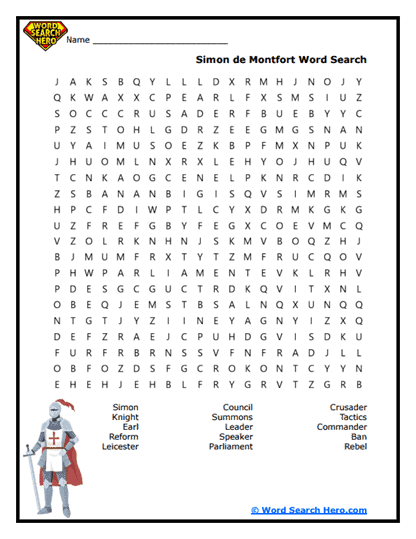
Simon de Montfort Word Search

Simon de Montfort

The “Simon de Montfort” word search introduces students to the influential figure who challenged royal authority and contributed to parliamentary development. It includes personal identifiers like “Simon,” “Knight,” and “Earl,” while also incorporating structural and political terms such as “Council,” “Summons,” and “Parliament.” Words like “Crusader,” “Commander,” and “Rebel” reflect his military and revolutionary roles, […]

View More
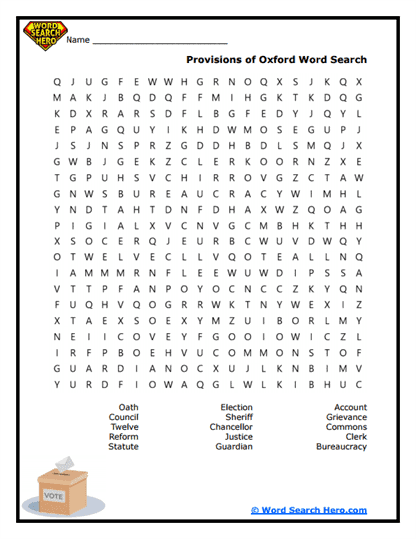
Provisions of Oxford Word Search

Provisions of Oxford

The “Provisions of Oxford” word search focuses on a key 1258 agreement that limited royal power and established reforms. Vocabulary like “Council,” “Reform,” and “Statute” highlight the structural changes introduced. Other words such as “Chancellor,” “Clerk,” and “Sheriff” point to government officials involved in the new system. It also includes justice and grievance-related terms, emphasizing […]

View More
Battle of Lewes Word Search

Battle of Lewes

The “Battle of Lewes” word search dives into a pivotal moment in the Second Barons’ War. It includes military terms like “Ambush,” “Shield wall,” and “Flank” alongside leadership roles such as “Prince” and “Command.” Students will encounter strategic and battlefield vocabulary that paints a picture of medieval warfare. The inclusion of “Victory,” “Retreat,” and “Capture” […]

View More
Prince Edward's Campaign Word Search

Prince Edward’s Campaign

The “Prince Edward’s Campaign” word search focuses on Edward’s military activities and his leadership role. Words like “Siege,” “Charge,” and “Outflank” detail battlefield actions, while “Edward,” “Heir,” and “Royalist” highlight his status and faction. Vocabulary like “Garrison,” “Bannerman,” and “Prisoner” flesh out the campaign environment. Themes of pursuit, leadership, and tactics are central to this […]

View More
Battle of Evesham Word Search

Battle of Evesham

The “Battle of Evesham” word search delves into one of the most brutal battles of the Barons’ Wars. With terms like “Massacre,” “Treachery,” and “Slaughter,” it captures the violence and chaos of the encounter. Place-specific and military terms such as “Evesham,” “Valley,” and “Floodplain” help define the setting. Meanwhile, words like “Loyalist,” “Skirmish,” and “Standard” […]

View More
Baronial Rebellions Word Search

Baronial Rebellions

The “Baronial Rebellions” word search covers the causes and sentiments behind uprisings against royal authority. It includes emotional and political vocabulary like “Resentment,” “Debt,” and “Oppression.” Terms such as “Feudal,” “Insurrection,” and “Overreach” highlight systemic tensions. This worksheet reflects the build-up of civil unrest and baronial dissatisfaction. It captures both personal and collective frustrations through […]

View More
Clerical Involvement Word Search

Clerical Involvement

The “Clerical Involvement” word search highlights the significant role of the Church during the Barons’ War period. Words like “Excommunication,” “Cathedral,” and “Canon” emphasize church authority, while “Monk,” “Bishop,” and “Cleric” showcase religious roles. Other words like “Homily,” “Sacrament,” and “Tithe” represent spiritual duties and church operations. The vocabulary reflects the powerful religious institutions that […]

View More
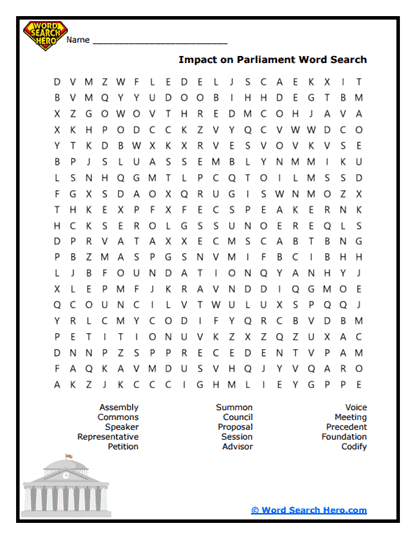
Impact on Parliament Word Search

Impact on Parliament

The “Impact on Parliament” word search explores the evolving role of England’s representative assembly. Words like “Assembly,” “Commons,” and “Petition” relate to citizen involvement, while “Speaker,” “Session,” and “Proposal” reference parliamentary procedures. It highlights development concepts with “Codify,” “Foundation,” and “Precedent.” These vocabulary words tell the story of how England’s modern political system began to […]

View More

About Our Barons’ War Word Searches

The Barons’ War wasn’t just a feud between noblemen and a king who never quite grasped the concept of limits-it was a fundamental clash over power, governance, and how far a crown could stretch its authority before someone picked up a sword. This word search collection dives straight into that political chaos, offering a vocabulary-packed look at the institutions, ideologies, and individuals who helped turn 13th-century England into a case study in resistance-by-charter.

Each puzzle in this set is built around a real historical fault line-Henry III’s financial missteps, the simmering unrest among barons, the Church’s behind-the-scenes involvement, and the emergence of representative politics in the aftermath of rebellion. These are not vocabulary lists slapped onto a theme; they’re curated selections of terms that defined medieval political discourse. Words like Exchequer, Scutage, Reform, and Massacre weren’t chosen for effect-they tell the story. One that unfolded in parchments, proclamations, and occasionally, in blood-soaked fields like Lewes and Evesham.

A Look At The Collection

Let’s begin where most royal trouble begins: Henry III’s Rule. Ah, Henry-bless his Plantagenet heart. With vocabulary like “Favoritism,” “Exchequer,” and “Mismanagement,” this word search reads more like a performance review gone horribly wrong. Students are gently introduced to the mechanisms of medieval monarchy, including terms like “Sovereign,” “Taxation,” and “Regency,” which are basically medieval ways of saying “It’s complicated.” This puzzle sets the stage for the brewing frustrations that led to outright revolt.

And what revolt would be complete without a charter or two? Enter the Signing Magna Carta word search-a crowd favorite. With terms like “Clause,” “Consent,” and “Scutage,” this one gets to the heart of baronial demands and royal limitations. This isn’t just a document-it’s the 13th-century equivalent of crowd-sourced governance, complete with clauses that say, “No more royal freeloading.” Students will quickly grasp the significance of this parchment protest while trying to find “Freemen” hiding somewhere between “Justice” and “Obligation.”

Of course, no revolution is complete without a charismatic disruptor, which brings us to Simon de Montfort, the rebel rock star of medieval reform. With vocabulary like “Rebel,” “Council,” and “Speaker,” this word search practically hums with political energy. Simon’s contributions to Parliament are felt even today, and students will find themselves pulled into the drama of one man against a monarchy-armed only with idealism, a small army, and an excellent sense of timing. (Plus, “Leicester” is fun to spell.)

Naturally, revolutionaries need rules, which leads us into the Provisions of Oxford, the Middle Ages’ best attempt at constitutional group therapy. This word search balances legal terms like “Statute” and “Account” with figures like “Sheriff” and “Chancellor.” It’s the vocabulary of bureaucratic compromise-and yet another reason why Henry III probably regretted not reading the fine print. Students will come away with a clear sense of how governance structures evolve under pressure. Or at least how a few good “Grievances” can go a long way.

We then charge headfirst into the Battle of Lewes, a word search that slaps on chainmail and heads for glory. With battlefield terms like “Shield wall,” “Ambush,” and “Capture,” this puzzle plays out like a strategy board game with very real consequences. The inclusion of “Prince,” “Command,” and “Banner” gives students insight into leadership dynamics and battlefield symbolism. It’s more than a skirmish-it’s a turning point.

And where Lewes leads, Prince Edward’s Campaign follows. This search traces the determined prince’s military maneuvers with words like “Outflank,” “Charge,” and “Prisoner.” “Edward,” “Heir,” and “Royalist” highlight his journey from young commander to the future king who would later become Edward I (the Hammer of the Scots-but that’s a story for another word search). It’s a vocabulary adventure filled with tactics, consequences, and the fine art of pursuing your enemies while trying not to trip over your armor.

We then ride into The Battle of Evesham, a puzzle soaked in drama-and unfortunately, blood. Words like “Massacre,” “Slaughter,” and “Treachery” don’t sugarcoat the brutality of this pivotal event. “Floodplain,” “Trap,” and “Loyalist” paint the scene of military genius (or tragic doom, depending on your side). This isn’t just vocabulary; it’s visceral storytelling, inviting students to imagine the stakes and emotional toll of civil war.

Of course, all this turmoil didn’t spring from nowhere. The Baronial Rebellions word search offers a prequel of sorts, tracing root causes like “Debt,” “Oppression,” and “Unrest.” “Feudal,” “Insurrection,” and “Exaction” introduce the systemic issues fueling baronial fury. Think of it as the medieval version of airing your political grievances in a very pointed group chat-only with swords.

Then comes the ever-present clergy, featured in Clerical Involvement. With “Excommunication,” “Tithe,” and “Bishop,” this word search reveals the Church’s deeply entangled role in state affairs. The addition of “Canon,” “Sacrament,” and “Homily” shows how spiritual tools were used to influence very earthly outcomes. And yes, even monks got involved in the political mess-robes and all.

Finally, we bring it home with Impact on Parliament, a puzzle that shows how all the chaos somehow resulted in a foundational political structure. “Commons,” “Petition,” “Codify,” and “Speaker” hint at the nascent democracy peeking through the ashes of rebellion. Students will connect the dots between crisis and institution, discovering that Parliament wasn’t just born-it was forged.

What Was The Barons War?

Picture this: It’s the 13th century. England is groaning under royal taxes, feudal obligations, and a king-Henry III-who seems to treat the crown more like a family heirloom than a political responsibility. Enter the Barons’ Wars, a pair of civil conflicts that erupted over royal overreach, mismanagement, and a general vibe of “We’ve had enough of this nonsense.”

The first Barons’ War (1215-1217) began shortly after King John’s infamous signing of the Magna Carta, a document intended to rein in his abuses of power. But John, never one to let a parchment dictate his behavior, reneged on his promises, leading angry barons to raise arms. That war fizzled after John’s death, with young Henry III (then a wee lad of nine) ascending the throne. There was hope-briefly.

Fast-forward to the 1250s, and Henry III’s rule is showing signs of deep disrepair. He’s borrowing money like a teenager with their first credit card and handing out political favors like medieval Oprah: “You get a duchy! And you get a duchy!” The barons, especially those with brains and backbones, were not pleased. Chief among them was Simon de Montfort, a Franco-English nobleman with reformist ideas and a rather low tolerance for royal nonsense.

The Provisions of Oxford (1258) were meant to bring peace, giving more power to a council of barons and reducing the king to something between a constitutional monarch and a figurehead with expensive hobbies. But surprise! Henry ignored them. Tensions boiled over, leading to the Second Barons’ War (1264-1267), an actual sword-clashing, armor-clanking, battle-hardened rebellion.

Key events include the Battle of Lewes in 1264, where de Montfort captured Henry and his heir Edward, effectively becoming ruler in all but name. But de Montfort’s power didn’t last. Edward escaped, regrouped, and delivered a crushing blow at the Battle of Evesham in 1265-a battle so brutal that Simon de Montfort’s body was reportedly hacked to pieces. (History is not always gentle with reformers.)

In the end, royal power was restored, but the ideas-limits on the monarchy, advisory councils, representation of the commons-had taken root. These wars didn’t just redraw political boundaries-they planted the seeds for Parliament, constitutional law, and the slow evolution of modern governance.