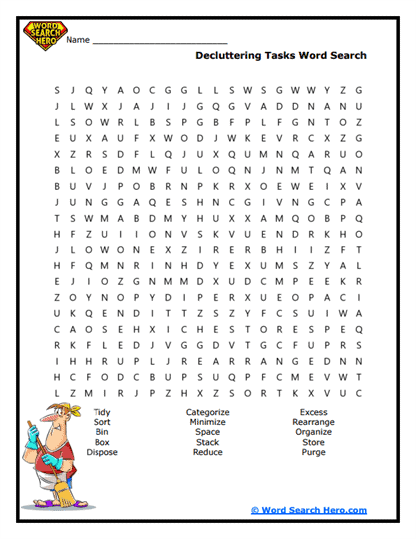
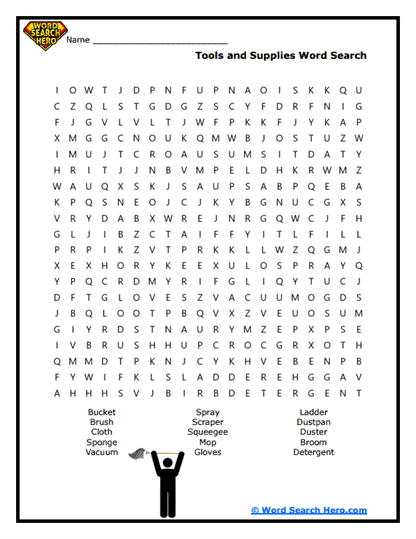
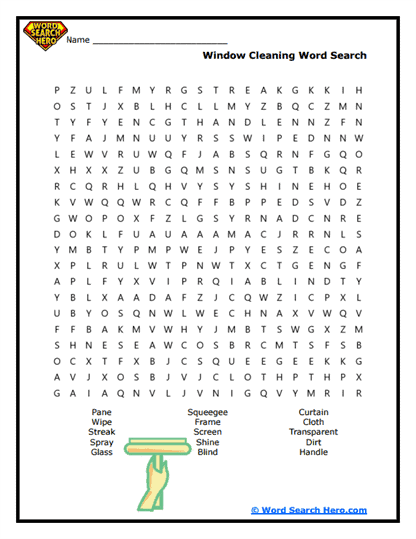
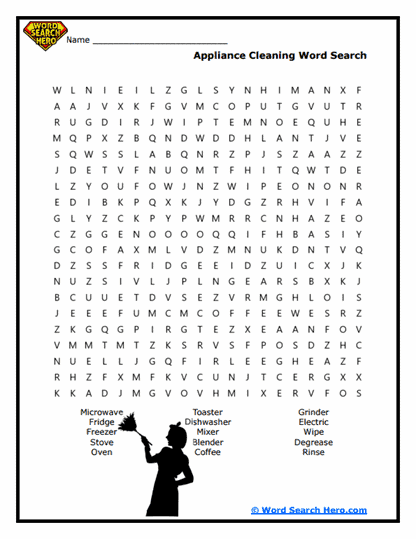
About Our Cleaning the House Word Searches
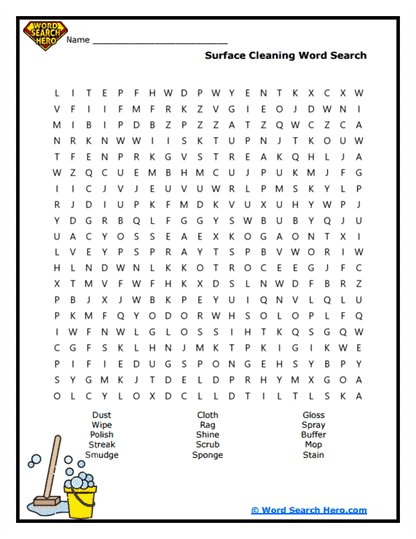
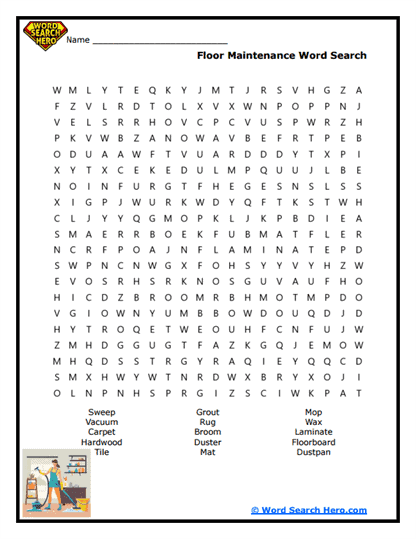
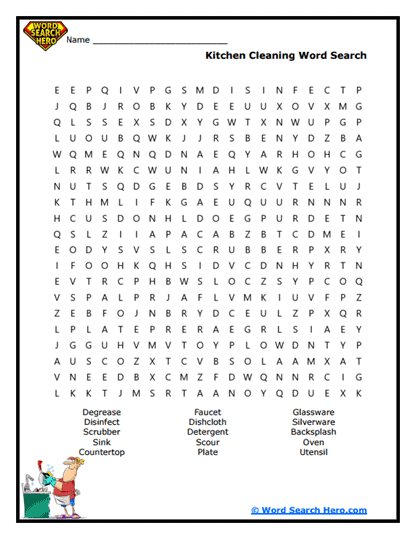
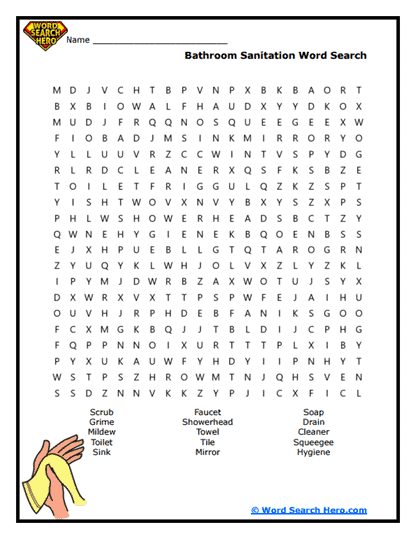
Cleaning the House word searches introduce students to vocabulary connected with household chores, organization, and everyday responsibilities. These printable puzzles help learners become familiar with words related to cleaning tasks, tools, and routines used to keep a home tidy. Because many students help with chores or observe them at home, the vocabulary in these puzzles connects naturally with real-life experiences.
Students exploring this theme may encounter words such as clean, sweep, mop, dust, vacuum, laundry, and organize. These words often appear in conversations about chores, daily routines, and maintaining a neat living space. A word search provides a fun and engaging way to reinforce this vocabulary while strengthening spelling recognition, reading confidence, and observation skills.
Since the activity feels like a puzzle rather than a traditional worksheet, it can make vocabulary practice more enjoyable. Teachers often use these printables during learning centers, quiet work periods, or early finisher activities. Parents and homeschool educators can also include them in lessons as a screen-free activity that connects reading with everyday responsibilities.
As students search the puzzle grid for hidden words, they strengthen concentration, visual scanning abilities, and pattern recognition. These skills support literacy development while keeping the activity interactive and relaxing.
Why Household Chores Are Important
Cleaning and organizing the home are important tasks that help maintain a comfortable and healthy living environment. Activities such as sweeping floors, wiping surfaces, and putting away items help prevent clutter and keep spaces safe and pleasant.
For children, helping with simple chores can build responsibility and independence. Tasks like making the bed, picking up toys, folding laundry, or wiping tables teach students how to contribute to shared spaces.
Chores can also help develop time management and teamwork. When family members work together to clean and organize a home, they learn how to divide tasks and cooperate to complete a job.
Learning vocabulary connected to household chores helps students describe tasks they perform and understand instructions related to cleaning and organization.
Word searches reinforce this learning by giving students repeated exposure to words related to everyday responsibilities.
Paul’s Pro-Tip
A highly effective extension activity is a chore sorting activity. After students complete the word search, give them a list of household chores and ask them to sort them into categories such as daily chores, weekly chores, and occasional tasks.
Students can also discuss which chores they already help with at home and which ones they would like to learn. This activity encourages responsibility while reinforcing vocabulary from the puzzle.
Connecting Vocabulary to Daily Responsibilities
Vocabulary related to cleaning and organizing appears frequently in conversations about routines, responsibilities, and teamwork at home. When students learn these words, they become better able to communicate about tasks and understand instructions for maintaining shared spaces.
These words also appear in storytelling, discussions about daily life, and writing assignments where students describe their routines or responsibilities.
A word search can serve as a calm classroom activity before discussions about responsibility or teamwork. After completing the puzzle, educators can encourage students to talk about ways they help keep their homes or classrooms tidy.
When students become familiar with vocabulary related to cleaning the house, they strengthen both their language skills and their understanding of everyday responsibilities.
Frequently Asked Questions
What are Cleaning the House word searches?
They are puzzles that feature vocabulary related to household chores and cleaning activities.
Why is it helpful for students to learn about chores?
Learning about chores helps students understand responsibility and how to care for shared spaces.
What types of words might appear in these puzzles?
Examples include sweep, mop, dust, vacuum, laundry, clean, and organize.
Are these puzzles appropriate for younger learners?
Yes. Many of the words describe simple tasks that children may already see or help with at home.
What classroom activity pairs well with this puzzle?
Students can sort different household chores into categories such as daily tasks, weekly tasks, and special cleaning jobs.