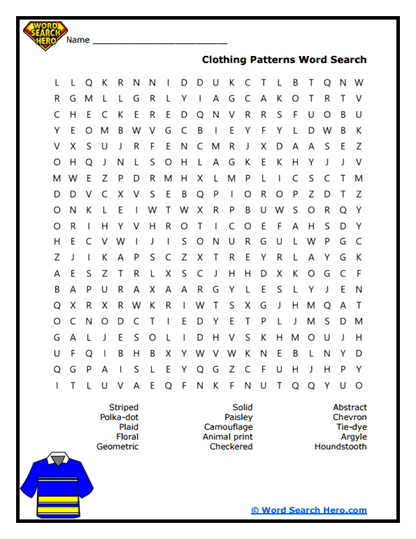
About Our Clothes Shopping Word Searches
Our Clothes Shopping Word Searches bring the familiar experience of browsing stores and choosing outfits into a fun and educational puzzle activity. These printable puzzles feature vocabulary connected to clothing, fashion, accessories, and the shopping experience, making them engaging for students, families, and anyone who enjoys themed word games. Because clothing is part of everyday life, learners often recognize many of the words right away, which helps build confidence while reinforcing spelling and reading skills.
As participants search through the puzzle grid, they practice important literacy skills like visual scanning, pattern recognition, and word identification. Finding hidden words such as jacket, sweater, shoes, or boutique encourages careful attention to detail and patience. Even though the activity feels like a game, it quietly supports vocabulary development and reading fluency.
Teachers often enjoy using clothing-themed puzzles during units about everyday vocabulary, community places, or personal choices. Since clothing and shopping are relatable topics for students, the puzzles naturally hold attention while reinforcing language skills. They also work well as early finisher activities, morning warm-ups, or quiet transitions between lessons.
Parents and homeschool educators appreciate how simple these puzzles are to use. A single printed sheet can turn into a quick independent learning activity during travel, quiet time, or rainy afternoons at home. Because the vocabulary connects to real-life experiences like shopping trips or choosing outfits, the puzzles can also inspire conversations about seasons, weather, and personal style.
Clothing-themed puzzles offer a blend of everyday vocabulary and playful challenge. By combining familiar topics with engaging word searches, this collection provides a relaxing activity that still strengthens reading skills and attention to detail.
The Everyday Vocabulary Hidden in a Shopping Trip
A trip to the clothing store is filled with language opportunities that learners might not even notice at first. Signs, labels, and conversations all introduce useful vocabulary related to garments, fabrics, accessories, and sizes. When students encounter these words again in a word search puzzle, the repetition helps reinforce their understanding and recognition.
Clothing-related vocabulary often includes a wide variety of descriptive terms. Words like denim, cotton, zipper, and sleeve introduce learners to both everyday items and the details that make each piece of clothing unique. Searching for these words inside a puzzle encourages students to slow down and study spelling patterns more carefully.
Teachers sometimes use clothing-themed activities to support lessons about seasons and weather as well. A winter clothing puzzle might include words like coat, scarf, mittens, and boots, while a summer puzzle could focus on shorts, sandals, and sunglasses. These connections help students see how vocabulary changes depending on real-life situations.
Another benefit of this theme is how relatable it is for learners of all ages. Nearly everyone has experience picking out clothes, trying on outfits, or visiting a store with family members. Because the topic feels familiar, students tend to approach the puzzle with curiosity and enthusiasm.
Over time, activities like these help learners build stronger word recognition and spelling confidence. Even a short puzzle session can reinforce important vocabulary that students will encounter again in everyday reading and conversation.
Paul’s Pro-Tip
Clothing-themed word searches are perfect for quick classroom challenges. I like to give students two highlighters-one for clothing items and one for accessories.
Once they finish the puzzle, ask them to name their favorite outfit using words they found. Suddenly you’ve got a mini fashion show discussion happening right in the classroom. It’s a simple way to turn a quiet puzzle into a fun conversation starter.
Turning Clothing Puzzles Into Creative Learning Activities
Clothing-themed puzzles can easily expand into creative classroom or homeschool activities. After students finish the word search, teachers can invite them to design their own outfit using several of the words they discovered in the puzzle. For example, a student might create an imaginary outfit that includes boots, a jacket, and a scarf.
This type of activity blends literacy practice with creativity. Students must first identify the clothing vocabulary in the puzzle, then apply those words when describing or drawing their outfit. It reinforces the meaning behind each word while encouraging imagination.
Another engaging option is a “seasonal wardrobe challenge.” After completing the puzzle, students choose words that represent clothing suitable for different seasons. They might group words into winter, summer, spring, or fall categories. This helps them connect vocabulary with real-world situations and weather conditions.
Families can try a similar activity at home by connecting the puzzle to a real shopping trip. Before visiting a store, children can complete the puzzle and circle clothing items they hope to find. During the shopping trip, they can look for those items in real life, reinforcing vocabulary in a practical way.
By extending the puzzle into creative tasks and discussions, educators and parents transform a simple word search into a more interactive learning experience. These small extensions keep students engaged while strengthening their understanding of everyday vocabulary.
Frequently Asked Questions
How can teachers use clothes shopping word searches in the classroom?
Teachers often use these puzzles as warm-up activities, early-finisher tasks, or quiet transitions between lessons. Because the theme is familiar and relatable, the puzzles help students stay engaged while practicing vocabulary recognition and spelling skills.
Are clothes shopping word searches useful for homeschool learning?
Yes, they are very helpful for homeschool environments because they combine everyday vocabulary with independent learning. Parents can print a puzzle for quiet study time and then discuss clothing choices, seasons, or shopping experiences afterward.
Do word searches help students learn vocabulary related to clothing?
Word searches reinforce vocabulary by repeatedly exposing students to words connected to clothing and accessories. As learners scan the puzzle and recognize spelling patterns, they strengthen word recognition skills that support reading and comprehension.
What age groups enjoy clothing-themed word searches the most?
Elementary and middle school students often enjoy these puzzles because the topic connects to everyday experiences like choosing outfits or going shopping with family. However, older students and adults can also appreciate them as relaxing brain exercises that strengthen concentration.
Can these puzzles be connected to real-world activities?
Absolutely. Families and teachers can extend the puzzle by discussing clothing items found in the grid or connecting the words to real shopping trips and seasonal wardrobes. This helps students see how vocabulary from the puzzle appears in everyday life.