Choose a topic !

Collective Nouns Word Searches

Wild Wonderfall Word Search

Wild Wonderfall

This word search focuses on the names for groups of animals. Students will explore collective nouns that describe animals when they gather or travel in numbers. These terms-like *pack*, *gaggle*, and *swarm*-help expand their knowledge of animal behavior and linguistic expression. The task involves finding these terms hidden in a grid of random letters. Completing […]

View More
Role Roster Word Search

Role Roster

This worksheet centers on people roles and the collective groups they form. Words like *team*, *crew*, *choir*, and *panel* reflect groupings in professional, artistic, or social settings. Learners are encouraged to search for these terms within a letter grid, reinforcing familiarity with these common collectives. Working on this word search boosts students’ vocabulary related to […]

View More
Combat Clusters Word Search

Combat Clusters

The vocabulary in this search is focused on military units and formations. Students will encounter terms such as *platoon*, *brigade*, and *taskforce* that describe how armed forces are structured. This helps learners understand military terminology and how these units function in defense contexts. This activity introduces learners to organizational terms used in military contexts, enhancing […]

View More
Nature Names Word Search

Nature Names

Centered around natural groupings and landforms, this puzzle includes vocabulary like *archipelago*, *range*, and *forest*. Students explore how nature is categorized and described through these collective and geographic nouns. The words span both land and celestial features. Nature-themed word searches help learners build environmental and earth science vocabulary. They engage visual tracking and enhance attention […]

View More
Travel Trains Word Search

Travel Trains

This word search is all about transportation-related groupings and formations. Words like *convoy*, *motorcade*, and *fleet* represent how vehicles move and are organized. It’s an excellent way to connect vocabulary to real-world logistics and travel. Students will strengthen vocabulary related to transport systems and logistical planning. This enhances reading comprehension as they see how words […]

View More
Home Heaps Word Search

Home Heaps

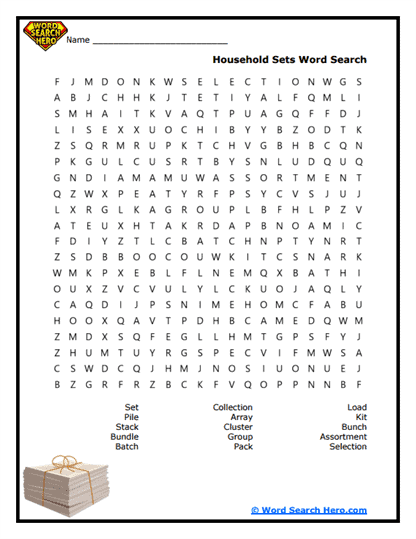
Household-related sets are the focus of this search. Words like *bundle*, *stack*, and *batch* highlight ways to describe everyday groupings of objects. It’s practical vocabulary that students encounter frequently at home or school. Learners build useful vocabulary that describes groupings and amounts, aiding in functional language use. These real-world words support comprehension and expression in […]

View More
Fan Frenzy Word Search

Fan Frenzy

This sporty puzzle dives into vocabulary around sports fans and groups. Words like *cheerleaders*, *team*, and *spectators* showcase the crowd dynamics in athletic events. Students will relate to these familiar words from their own experiences with sports. This activity sharpens understanding of sports culture vocabulary while reinforcing spelling and word identification. It links language arts […]

View More
Office Order Word Search

Office Order

Focusing on workplace-related groups and organizational terms, this puzzle includes words like *department*, *agency*, and *committee*. It’s ideal for teaching vocabulary related to professions, business, and government. Students gain familiarity with terms they’ll encounter in civic and career discussions. This word search enhances domain-specific vocabulary and promotes understanding of how organizations are structured. It builds […]

View More
Harmony Hive Word Search

Harmony Hive

Musical ensembles are the theme here, with vocabulary like *orchestra*, *quartet*, and *section*. Students explore the different groupings that make up musical performance groups. This supports their understanding of both musical structure and collective nouns. Students develop music-related vocabulary that enriches both their language and fine arts education. Spelling, pattern recognition, and scanning improve as […]

View More
Legendary Legions Word Search

Legendary Legions

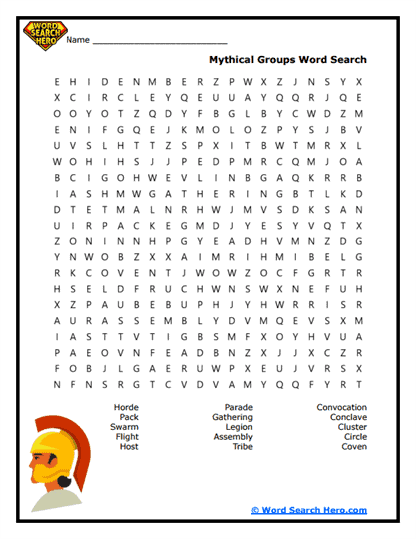
This mystical-themed search focuses on fictional and mythological groupings like *tribe*, *coven*, and *circle*. The vocabulary evokes ancient and legendary settings, enhancing creative thinking and storytelling potential. Learners build vocabulary that supports mythology, literature, and creative writing studies. The unique terms foster imagination and deepen students’ understanding of genre-specific language. Spelling and comprehension improve through […]

View More

About Our Collective Noun Word Searches

Ever stumbled upon a murder of crows or a parliament of owls and thought, “Wait, what now?” Well, you’re not alone-and you’re definitely in the right place. Welcome to a world where grammar meets curiosity, and word puzzles transform the ordinary into the wildly entertaining. Our Collective Nouns Word Search puzzles are jam-packed with quirky word groupings that are as educational as they are fun. Whether you’re a word nerd, a curious kid, or a parent looking to sneak learning into playtime, these puzzles have something special for you.

Each printable puzzle is a little treasure chest of collective nouns. Inside, you’ll uncover whimsical terms that describe groups of animals, people, and objects. Think a pride of lions, a bouquet of flowers, or a choir of singers. From the poetic to the downright hilarious, these collective nouns will stretch your brain and tickle your funny bone. And the best part? They’re totally free, easily printable, and designed to bring joyful “aha!” moments to all ages.

But don’t let the charming vocabulary fool you-these puzzles are cleverly crafted to challenge your mind. With varying difficulty levels, they’re perfect for classroom activities, homeschooling resources, or cozy evenings at the kitchen table. As you scan for hidden words, you’re not just passing time. You’re reinforcing language skills, improving pattern recognition, and uncovering the delightful oddities of the English language.

What Are Collective Nouns?

Collective nouns are the charming, often quirky, linguistic shortcuts we use to describe a group of people, animals, or things. Instead of saying “a bunch of geese,” you might say “a gaggle of geese”-and just like that, you’ve upgraded your sentence with flair and function. They’re those rare grammatical gems that inject both precision and personality into our everyday language.

Take, for example, a school of fish. That’s a collective noun in action-one word that paints a vivid image of underwater harmony. Or consider a troop of monkeys, a fleet of ships, or a band of musicians. Each one helps to streamline communication while making your descriptions more vivid and memorable. These words aren’t just useful; they’re storytellers.

Collective nouns are especially powerful for young learners. They build vocabulary, enhance grammar comprehension, and even boost memory when presented in interactive formats like word searches. They’re like the secret spices of the English language-easy to overlook, but absolutely essential for rich, colorful communication.

In daily life, we use collective nouns more than we realize. Think about a stack of books on your desk or a crowd of people at a concert. From describing gatherings at a family reunion (a clan of relatives, anyone?) to the wildlife you spot on a nature hike, collective nouns add texture and clarity to our stories. And with our word searches, learning them doesn’t feel like schoolwork-it feels like play.

Fun Facts About Collective Nouns

1. Many Collective Nouns Have Medieval Origins

Did you know that a lot of collective nouns date all the way back to the 15th century? Back then, English speakers got super creative with what was known as “terms of venery,” especially for animals. These weren’t just practical-they were poetic and often humorous. A murder of crows might sound spooky, but it was meant to be clever and memorable. The idea was to impress others with your wit and vocabulary. These terms stuck around, and now we get to enjoy them in word searches and trivia nights!

2. There’s a Collective Noun for Unicorns

Okay, technically unicorns aren’t real (shhh, don’t tell the kids), but language enthusiasts didn’t let that stop them. The accepted collective noun for unicorns is a blessing. Yes, a blessing of unicorns. It’s whimsical, magical, and exactly the kind of delightful detail that keeps language so engaging. While you may not spot a blessing of unicorns in the wild, you’ll definitely find it hidden in one of our puzzles-because why not?

3. Collective Nouns Can Be Created Based on Behavior
Ever wonder why we say a parliament of owls? It’s not just because it sounds sophisticated. It’s actually tied to the owl’s wise reputation. Similarly, a murder of crows might come from ancient folklore linking crows to death or mystery. These phrases often reflect how we view the behavior or symbolism of the group-making them linguistic time capsules that reveal how we’ve related to animals and objects over centuries.

4. Some Collective Nouns Are Up for Debate

Not all collective nouns are officially standardized. In fact, many are regional, whimsical, or invented on the fly. Language evolves, and so do collective nouns. That means you can encounter phrases like a confusion of mechanics or a galaxy of stars (yes, even the obvious ones count!). Our word searches include both classic and lesser-known collective nouns, giving you a full spectrum of language play.

5. People Are Inventing New Ones Every Day

The creativity doesn’t stop in the Middle Ages. Modern language lovers are constantly coming up with new collective nouns for fun or satire. Ever heard of an awkward of teenagers? How about a flash of photographers? These might not be in formal dictionaries (yet), but they’re widely used in social media, comedy, and creative writing. And you just might stumble across a few cheeky modern entries hidden in our puzzles.