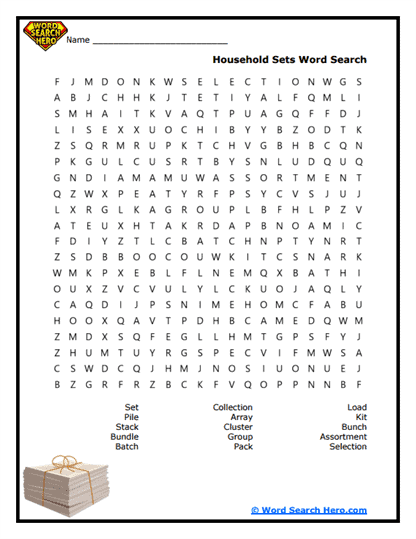
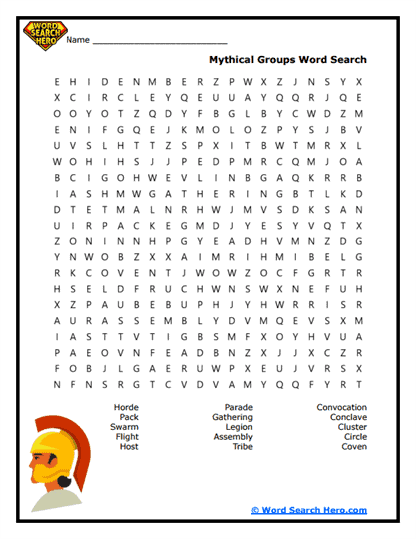
About Our Collective Nouns Word Searches
Collective nouns are the words we use to describe a group of people, animals, or things as a single unit. Words like team, flock, class, and family represent many individuals working or existing together. Our printable Collective Nouns Word Searches introduce learners to these useful grammar words in a fun and engaging way.
Instead of simply memorizing vocabulary lists, students interact with the words through a puzzle grid. Searching for each word encourages careful scanning, spelling recognition, and repeated exposure. This kind of practice helps learners become more familiar with collective nouns and recognize them more easily when they appear in reading or writing.
Teachers often use these puzzles as warm-up activities, literacy center tasks, grammar review exercises, or quiet work for early finishers. Parents and homeschool educators appreciate that they are simple to print and require very little preparation. Younger students can focus on finding the words, while older learners can expand the activity by discussing what groups the nouns represent.
Word searches also help build focus, visual tracking, and attention to detail. By combining grammar vocabulary with a puzzle challenge, these printables provide an enjoyable way to reinforce language skills.
Understanding Nouns That Describe Groups
Collective nouns are special because they refer to multiple individuals acting as one group. Instead of naming every member separately, a single word can describe the entire collection.
For example:
- The team practiced after school.
- A flock of birds flew across the sky.
- The class listened carefully to the teacher.
In each example, the noun represents several individuals but treats them as one unit within the sentence.
After completing the puzzle, students can practice identifying what group each collective noun represents. For instance, a herd refers to a group of animals, while a crew might describe a group of workers. This helps learners connect the vocabulary with real-world examples.
Another helpful extension activity is to ask students to match collective nouns with the animals or people they describe, such as a pack of wolves or a choir of singers. These connections help reinforce how the words function in everyday language.
Paul’s Pro-Tip
A fun way to teach collective nouns is to ask students to imagine unusual group names. English already has some interesting ones-like a pride of lions or a school of fish. Once students learn a few real examples, challenge them to invent their own. You might end up with something like a giggle of kids or a storm of homework.
Discovering Groups in Everyday Language
Collective nouns appear frequently in stories, conversations, and everyday descriptions because they provide a simple way to talk about groups. Whether discussing a team winning a game, a family eating dinner, or a group of friends playing together, these nouns help make communication clearer and more efficient.
After finishing the puzzle, students can become “collective noun spotters.” Encourage them to listen for these words during read-alouds, classroom discussions, or while reading independently. Recognizing them in real situations helps reinforce the concept that grammar words are tools used in everyday communication.
You can also extend the activity by asking students to write a short paragraph describing a scene-like a park, classroom, or farm-using several collective nouns from the puzzle. This encourages learners to apply the vocabulary in meaningful sentences.
Activities like word searches provide a relaxed and accessible introduction to grammar concepts. As students become more comfortable identifying collective nouns, they gain a better understanding of how language describes groups and relationships.
Frequently Asked Questions
How can teachers use collective noun word searches in the classroom?
They work well as warm-up activities, literacy center assignments, grammar review exercises, or quiet independent tasks for early finishers.
Are these puzzles helpful for homeschool learning?
Yes. They are easy to print and require minimal preparation, making them a convenient way to reinforce grammar vocabulary at home.
Do word searches help students remember grammar vocabulary?
Repeated exposure helps students recognize spelling patterns and become more familiar with important grammar terms.
What grade levels are these puzzles best suited for?
They can be used across multiple grade levels. Younger learners may focus on identifying the words, while older students can extend the activity by writing sentences or matching the nouns with the groups they describe.
Can these puzzles be combined with other grammar activities?
Absolutely. They pair well with vocabulary discussions, sentence-building exercises, reading comprehension activities, and lessons about different types of nouns.