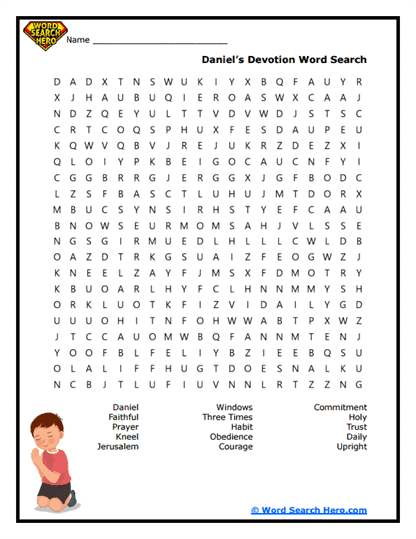
About Our Daniel and the Lion’s Den Word Searches
Daniel and the Lion’s Den word searches offer an engaging way to explore one of the most memorable stories while focusing on the people and positions that drive it. These printable puzzles introduce learners to key figures such as Daniel, King Darius, royal officials, and guards, along with important elements like the den, lions, and laws. By emphasizing both names and roles, students gain a clearer understanding of how each person’s position influences the story.
As students search for words, they begin to connect Daniel with his role as a faithful servant and advisor, while King Darius is seen as a ruler responsible for enforcing laws. The officials represent authority within the kingdom but also highlight how power can be used in different ways. This helps learners move beyond simply recognizing names and toward understanding responsibility, leadership, and decision-making.
These puzzles also support essential academic skills such as vocabulary development, spelling, and concentration. They can be used in classrooms, Sunday school, or homeschool settings as warm-ups, review activities, or discussion starters.
With a range of difficulty levels, Daniel and the Lion’s Den word searches are accessible for many learners. They provide a meaningful way to explore the story while focusing on the people and positions that shape its outcome.
Power, Position, and Responsibility in the Kingdom
The story of Daniel and the Lion’s Den becomes much clearer when students focus on the roles each person held. Word searches centered on this story often include figures like Daniel, King Darius, advisors, officials, and guards. Each of these roles carries authority or responsibility that directly impacts what happens.
Daniel serves in a high position within the kingdom, known for his integrity and dedication. His role as an advisor means he must navigate both faith and responsibility in a complex environment. King Darius, as ruler, is responsible for making and enforcing laws, even when those laws create difficult situations. The officials and advisors, meanwhile, show how positions of influence can be used to support or challenge others.
Encouraging students to examine these roles helps deepen understanding. They can ask questions like, “What power did each person have?” and “How did their position affect their choices?” This type of thinking builds stronger comprehension and encourages reflection on leadership and responsibility.
By focusing on roles and positions, students begin to see the story as more than an event-it becomes a lesson about how people use their authority and respond to challenges.
Paul’s Pro-Tip

When I teach Daniel and the Lion’s Den, I always turn the word search into a “power and position tracker.” As students find names like “Daniel” or “Darius,” I have them jot down what authority or responsibility that person had. Was Daniel in a leadership role? Did the king have the final say? This helps students understand that the story isn’t just about what happened-it’s about who had the power to make decisions and how they used it.
Another strategy that works incredibly well is asking students to rank the roles by influence after completing the puzzle. Who had the most power in the story-the king, the officials, or Daniel? Then have them explain why. This sparks great discussion and helps students think critically about leadership, influence, and integrity. I’ve found that when students debate these roles, they remember both the story and the people in it much more clearly.
From the Den to Daily Life: Understanding Roles in Action
Daniel and the Lion’s Den word searches can lead to deeper learning when students focus on how each person’s role influenced the outcome. After completing a puzzle, students can choose one figure-such as Daniel, King Darius, or an official-and describe what their role required of them. This helps connect vocabulary to real understanding.
For example, a student might explore Daniel’s responsibility to remain faithful while serving in a high position. Another might examine King Darius’s role as a ruler who must uphold laws, even when they conflict with personal feelings. These reflections help students understand how roles come with expectations and challenges.
This activity also supports cross-curricular learning. It can connect with reading comprehension by revisiting the story or with writing by asking students to explain how different roles affected the outcome. Group discussions can further deepen understanding by comparing perspectives.
By focusing on roles and responsibilities, students gain a clearer picture of how the story unfolds. It transforms a simple puzzle into a meaningful exploration of leadership, integrity, and decision-making.
Frequently Asked Questions
What key people are included in Daniel and the Lion’s Den word searches?
These puzzles typically include Daniel, King Darius, royal officials, advisors, and guards. Each of these individuals plays a specific role in the story. Including these names helps students understand how different positions influence what happens. It also reinforces familiarity with the main figures.
How do these word searches help students understand Daniel’s role?
They encourage students to connect Daniel’s name with his position as a trusted advisor and faithful servant. As learners find his name, they begin to think about his responsibilities and choices. This helps build a deeper understanding of his character. It also reinforces how his role influenced the story’s outcome.
Why is King Darius’s position important in this story?
King Darius holds authority as the ruler, which means his decisions affect everyone in the kingdom. His role requires him to enforce laws, even when those laws create difficult situations. Understanding his position helps students see the complexity of leadership. It also highlights how authority can come with challenging responsibilities.
How can I make Daniel and the Lion’s Den word searches more interactive?
You can ask students to identify each person’s role and explain how it influenced their actions. Another approach is to have them compare the power and responsibilities of different figures. These activities deepen understanding and encourage critical thinking. They also help connect the puzzle to the larger story.
What can students learn by focusing on roles in this story?
Students can learn about leadership, responsibility, and how people respond to difficult situations. By examining each role, they see how authority and integrity play a part in decision-making. This creates a clearer understanding of the story’s message. It also encourages thoughtful reflection on how roles influence actions.