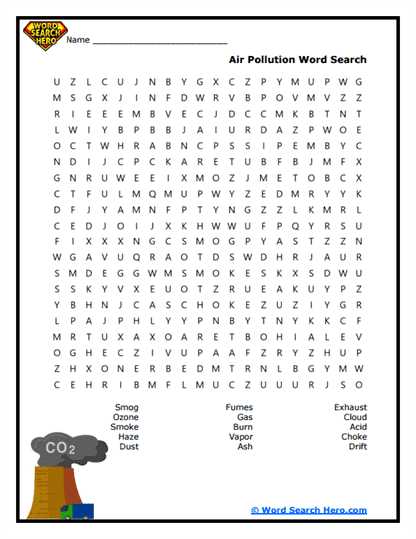
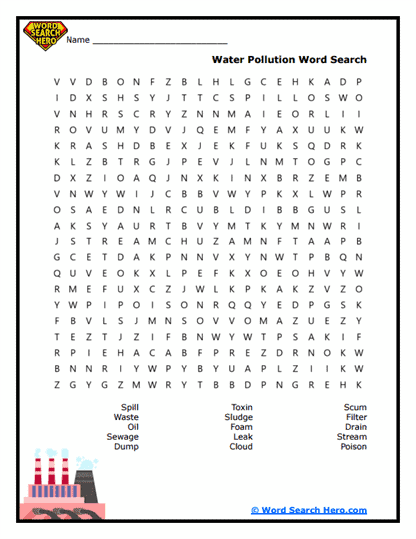
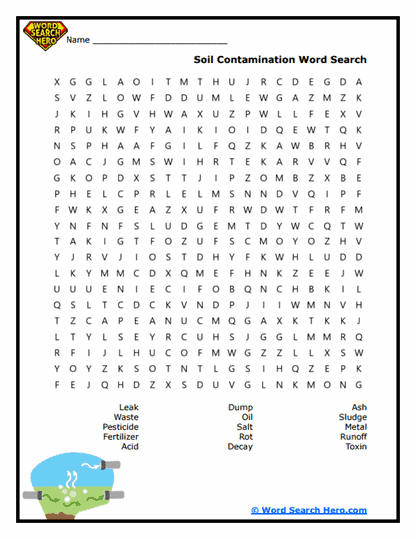
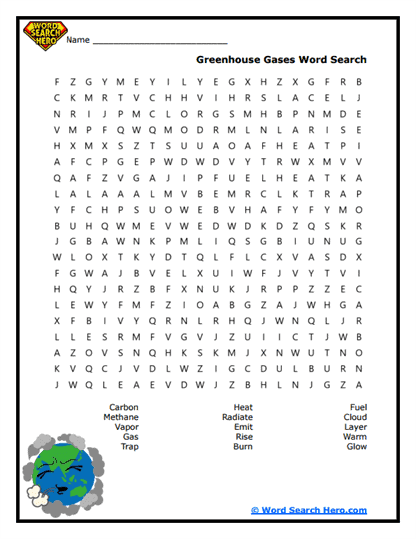
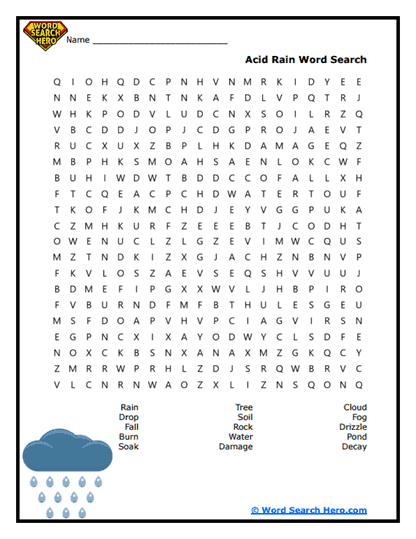
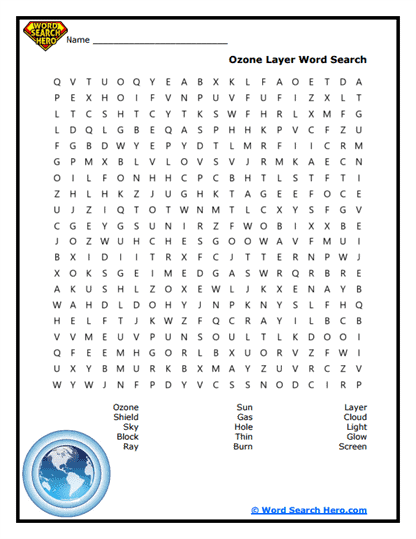
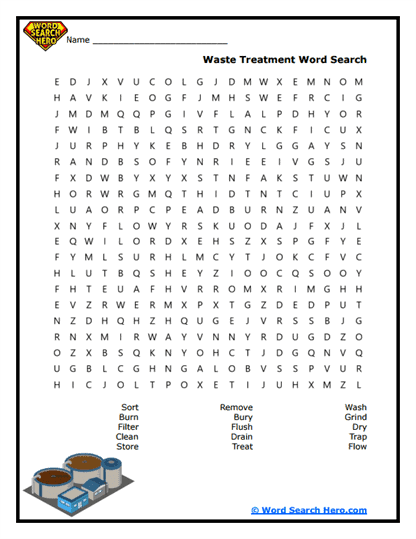
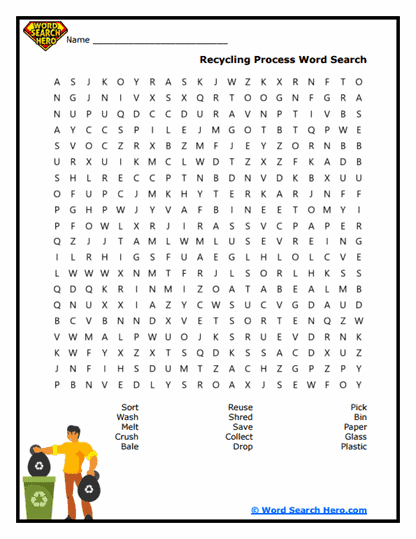
About Our Environmental Chemistry Word Searches
Environmental Chemistry word searches introduce students to the vocabulary used to study the chemical processes that occur in the natural environment. These printable puzzles help learners become familiar with key scientific terms related to air, water, soil, and the interactions between chemicals and ecosystems. Before students explore environmental science in depth, it often helps to first recognize the language used to describe how chemistry affects the natural world.
Students studying environmental chemistry may encounter words such as pollution, contamination, atmosphere, water quality, nutrients, ecosystem, and conservation. These terms frequently appear in environmental science and chemistry lessons and help students understand how human activity and natural processes influence the environment. A word search provides an engaging way to reinforce this vocabulary while strengthening reading, spelling, and observation skills.
Because the activity feels like a puzzle rather than a traditional worksheet, it can make scientific vocabulary more approachable. Teachers often use these printables during science centers, independent practice, review sessions, or early finisher activities. Parents and homeschool educators can also include them in lessons as a way to introduce environmental chemistry vocabulary in an interactive format.
As students search for the words in the puzzle grid, they strengthen concentration, visual scanning, and pattern recognition skills. At the same time, they build familiarity with the scientific language used to describe chemical processes that affect the environment.
Understanding Environmental Chemistry
Environmental chemistry focuses on how chemical substances interact with the air, water, soil, and living organisms on Earth. Scientists in this field study how natural chemical cycles work and how human activities may influence these systems.
Many important environmental processes involve chemical reactions. For example, nutrients move through ecosystems as part of natural cycles, and gases in the atmosphere help regulate Earth’s climate. Scientists also study how pollutants move through water, soil, and air and how these substances may affect ecosystems and human health.
Environmental chemistry plays an important role in protecting natural resources. By understanding how chemicals behave in the environment, scientists can develop strategies to reduce pollution, improve water quality, and protect ecosystems.
Learning the vocabulary associated with environmental chemistry helps students understand how chemistry connects to environmental science and sustainability.
Word searches reinforce this learning by giving students repeated exposure to the key terms used when studying environmental systems and chemical interactions.
Paul’s Pro-Tip
A powerful way to extend this puzzle is to introduce a “local environment investigation.” After students complete the word search, ask them to identify environmental factors in their own community that may involve chemistry.
Students might think about air quality, water sources, soil conditions, or recycling practices. Encourage them to use vocabulary from the puzzle while discussing how chemistry helps scientists study and improve these environmental conditions.
This activity adds strong instructional value because it helps students connect scientific vocabulary with real-world environmental challenges. Teachers and homeschool educators can also quickly assess whether students understand that chemistry plays a role in protecting natural systems.
Helping Students Understand Chemistry in the Environment
Environmental chemistry helps explain how natural systems function and how chemical substances move through ecosystems. Understanding these processes helps scientists address environmental challenges such as pollution, resource management, and climate change.
Learning environmental chemistry vocabulary also helps students interpret science lessons about ecosystems, sustainability, and environmental protection. These concepts connect chemistry with broader topics in environmental science and biology.
A word search can serve as an introduction to a lesson about environmental chemistry or as a review after students have studied ecosystems and environmental issues in class. After completing the puzzle, educators can encourage students to connect the vocabulary with environmental case studies or discussions about protecting natural resources.
When students become familiar with environmental chemistry vocabulary, they gain the language and understanding needed to explore how chemical processes influence the health of our planet.
Frequently Asked Questions
What is environmental chemistry?
Environmental chemistry is the study of how chemical substances interact with the air, water, soil, and living organisms in the environment.
Why is environmental chemistry important?
It helps scientists understand pollution, protect natural resources, and develop solutions to environmental problems.
What kinds of topics are studied in environmental chemistry?
Topics may include water quality, air pollution, nutrient cycles, and how chemicals move through ecosystems.
How does environmental chemistry relate to everyday life?
It helps explain issues such as clean drinking water, air quality, recycling, and environmental protection.
What classroom activity pairs well with this puzzle?
Students can research an environmental issue in their community and discuss how chemistry plays a role in understanding or solving the problem.