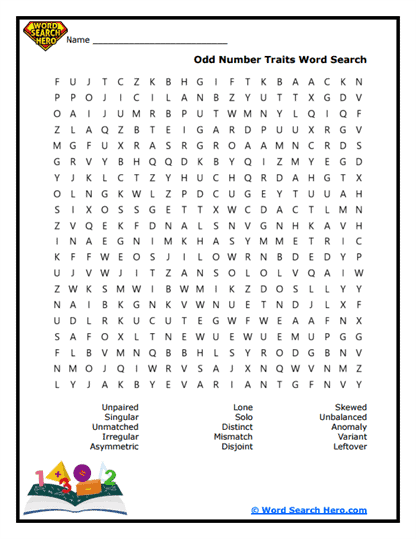
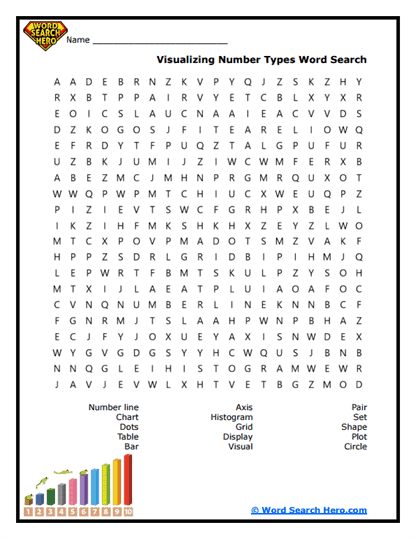
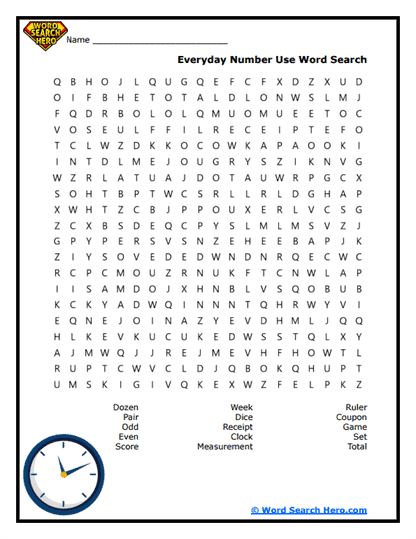
About Our Even and Odd Numbers Word Searches
Even and Odd Numbers word searches help students become more familiar with the vocabulary used to describe one of the earliest and most important number patterns in math. These printable puzzles introduce and reinforce terms connected to counting, grouping, pairs, patterns, and number classification. Before students begin sorting numbers or explaining why a number is even or odd, it often helps to first recognize the language used to talk about these ideas.
For many young learners, even and odd numbers are among the first math concepts that reveal clear patterns. Students begin to notice that some numbers can be grouped into pairs with nothing left over, while others leave one extra. Along the way, they may encounter words like even, odd, pair, count, group, number, and pattern. A word search offers a simple and engaging way to build familiarity with these terms before students apply them in class activities and discussions.
Because the activity feels like a puzzle instead of a traditional worksheet, it can boost participation and make number practice feel more approachable. Teachers often use these printables as warm-ups, math center activities, early finisher work, review pages, or quiet independent practice. Parents and homeschool educators can also add them easily to lessons as a way to reinforce number vocabulary while keeping learning low-pressure and enjoyable.
As students search for the words, they are also strengthening concentration, visual scanning, and pattern recognition. At the same time, they are building the vocabulary foundation that helps them describe number patterns with more confidence.
Building Early Number Pattern Vocabulary
Even and odd numbers give students a strong introduction to the idea that numbers can be grouped and classified by patterns. This kind of thinking supports number sense and prepares students for more advanced ideas later on. Before students can explain those patterns clearly, though, they need the language to do it.
Words like pair, equal, leftover, count, and group help students describe what makes a number even or odd. When students know this vocabulary, they can explain their thinking more precisely. Instead of simply saying “this one works” or “this one does not,” they can describe whether the number can be split into pairs or whether one is left over.
Word searches support this learning by giving students repeated exposure to the key terms. As they find each word in the puzzle grid, they become more comfortable with spelling, recognition, and meaning. That familiarity makes it easier for them to understand directions, participate in discussion, and talk through number-sorting activities later on.
These puzzles work especially well when introducing even and odd numbers for the first time or reviewing the concept before hands-on practice.
Paul’s Pro-Tip
A great way to add real value after the puzzle is to follow it with a quick “sort and prove it” routine. Give students a small set of numbers and ask them to sort them into even and odd groups. Then require them to prove each choice using objects, drawings, or simple tally marks arranged in pairs.
This is especially helpful because many students can memorize which numbers are even or odd without truly understanding why. Asking them to show pairs and identify whether there is one left over turns vocabulary into reasoning. It also gives teachers and homeschoolers an immediate window into student understanding. If a child can explain that a number is even because every object can be paired with none left over, the concept is much more secure than if they are only guessing based on memory.
It is a simple follow-up, but it transforms the puzzle from a word activity into a meaningful number sense lesson.
Helping Students Notice Patterns in Everyday Math
Even and odd numbers appear all the time in early math. Students see them when counting by twos, arranging objects into pairs, lining up classmates, sharing items equally, or noticing patterns on a number chart. Learning the vocabulary behind these ideas helps students describe what they see and understand why the pattern matters.
This concept also helps build a foundation for future learning. When students begin recognizing number patterns early, they are better prepared for skip counting, multiplication, division, and problem solving later on. Even and odd numbers may seem simple, but they teach students to look for structure and explain what numbers are doing.
A word search can be a useful starting point for these conversations. After the puzzle, educators can ask students to find even and odd examples in real life, such as pairs of shoes, chairs around a table, or blocks grouped together. Even a short discussion can help students see that number patterns are not just something on a worksheet. They are part of how we organize and understand the world around us.
When students become more comfortable with the language of even and odd numbers, they are better prepared to sort, explain, and recognize number patterns with confidence.
Frequently Asked Questions
When are even and odd numbers word searches most useful?
They are especially helpful when introducing even and odd numbers, reviewing number patterns, or adding a quiet activity to centers, morning work, or early finisher time.
What grade levels are these puzzles best for?
They work especially well for kindergarten, first grade, second grade, and other early elementary students building number sense.
Can homeschool educators use these printables in lessons?
Yes. They are easy to print and pair well with counters, drawings, number sorts, and hands-on grouping activities at home.
Do these puzzles help students understand even and odd numbers?
They can. Repeated exposure to important vocabulary helps students recognize the language used in lessons and explain their thinking more clearly.
What is a good follow-up activity after completing the puzzle?
A strong next step is to have students sort a set of numbers into even and odd groups and prove each choice by drawing or using objects to make pairs.