


George Washington
Sharpen your pencil and your patriotism because these George Washington word searches are serving up powdered wigs, wooden teeth myths, and Revolutionary War realness like it’s 1776 on a crossword grid.

Sharpen your pencil and your patriotism because these George Washington word searches are serving up powdered wigs, wooden teeth myths, and Revolutionary War realness like it’s 1776 on a crossword grid.
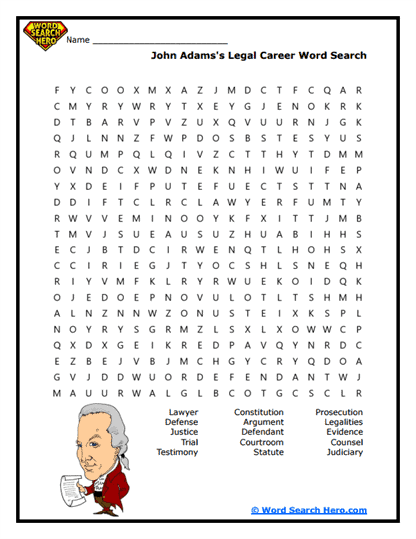
Travel back in time with our John Adams word search puzzles, where powdered wigs meet brain-boosting fun and every hidden word feels like a tiny historical mic drop. It’s like AP U.S. History threw a party, invited all the Founding Fathers, and made you hunt for their names with a pencil.
Founding Fathers word searches focus on a group of important historical people who played key roles in the creation of the United States. This collection highlights individuals like George Washington, Thomas Jefferson, Benjamin Franklin, and James Madison-each representing a person in positions such as leader, writer, statesman, and decision-maker during a critical time in history.
As students search for words like “founder,” “leader,” “delegate,” “writer,” and “statesman,” they begin to understand that these individuals held different positions while working toward a shared goal. Some were involved in writing important documents, while others led efforts to organize and guide the new nation. This makes the vocabulary more meaningful because it reflects real responsibilities carried out by real people.
These puzzles are great for classroom use during history or civics lessons. They also work well as independent activities that build focus, spelling, and reading skills. At home, they provide a structured way to explore the people who helped shape a country and the positions they held.
Because the Founding Fathers are often introduced in early American history, students usually have some familiarity with them. This helps them connect more easily to the vocabulary and understand the importance of their roles.
The Founding Fathers were not all in the same position-they each contributed in different ways. When students encounter words like “delegate,” “president,” “author,” and “leader,” they’re learning about the variety of roles these individuals held.
One way to extend this activity is by exploring those roles more closely. For example, some Founding Fathers were delegates who met to discuss and decide important issues. Others were writers who helped create key documents. Some became leaders who guided the country after it was formed. These distinctions help students understand how teamwork and different skills came together.
You can also explore collaboration. Words like “debate,” “agreement,” and “decision” show that these individuals worked together, often discussing and sometimes disagreeing before reaching conclusions. This helps students see that leadership can involve cooperation and compromise.
For a creative extension, ask students to imagine they are part of a group making an important decision. What role would they take-leader, writer, or speaker? What would they contribute? This builds both comprehension and critical thinking.
By focusing on the Founding Fathers as people in different positions, these word searches help students understand how groups work together to achieve big goals.

Use the “name-to-role” strategy-when you spot a name like “Washington” or “Jefferson,” immediately think about their role (like “leader” or “writer”) and scan the surrounding area. Role-based words often appear near names, making them easier to find in clusters.
Also, keep an eye out for capital letters or longer names first. Names tend to stand out visually in the grid, and once you find them, they act like anchors that help you quickly locate related terms nearby.
Founding Fathers word searches help students see that leadership is not always about one person-it can involve a group of individuals working together. Each word represents a role that contributed to building something larger than any one person.
These puzzles also strengthen comprehension by connecting vocabulary to real historical actions. Words like “delegate,” “author,” and “leader” reflect the different ways people contributed. This makes history feel more active and understandable.
Another benefit is learning about collaboration and shared responsibility. Students begin to see that important decisions often come from discussion and teamwork. This adds depth to their understanding of leadership.
The activity also builds focus and persistence. Students must carefully search for each word, improving attention to detail and strategy. The meaningful topic helps keep them engaged.
By connecting vocabulary to people working together in important positions, these word searches create a learning experience that is both educational and impactful.
The Founding Fathers were a group of leaders, writers, and decision-makers who helped create the United States. They held positions such as delegates, authors, and political leaders. Each person contributed in a different way to forming the country.
Because building a country required many types of skills and responsibilities. Some focused on writing important ideas, while others led discussions or made decisions. This shows that large efforts need multiple positions working together.
They connect each person to the role they played, like writing, leading, or debating. This helps students move beyond memorizing names and understand what each individual actually did. It makes history more meaningful and easier to remember.
A delegate is someone chosen to represent others in meetings or discussions. Founding Fathers who were delegates met to talk about important issues and make decisions. This role was key in shaping early plans for the country.
You can ask your child to pick one Founding Father and describe what role they played and why it mattered. Another idea is to create a simple group decision activity where each person takes on a role like leader or writer. This helps connect vocabulary to real teamwork and decision-making.