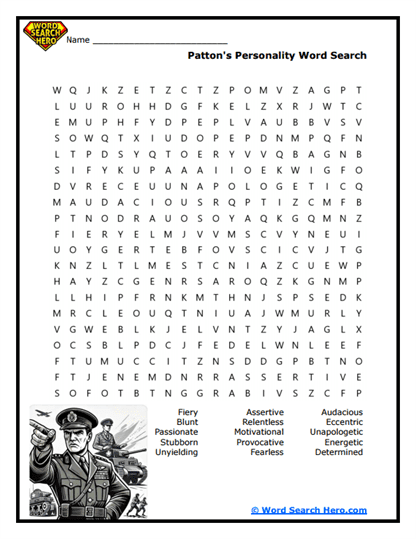
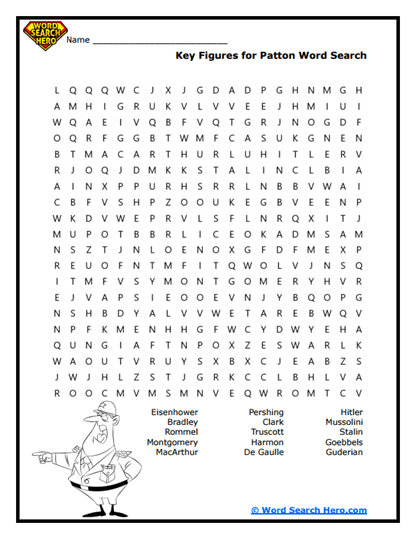
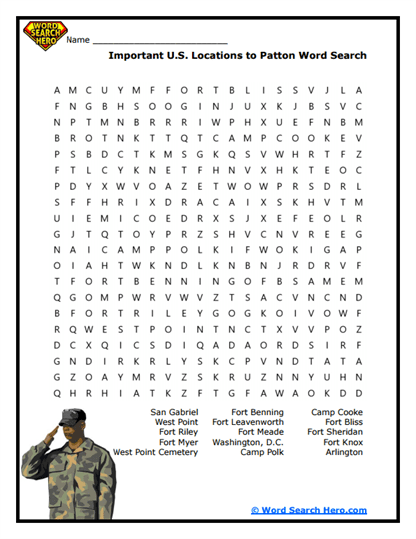
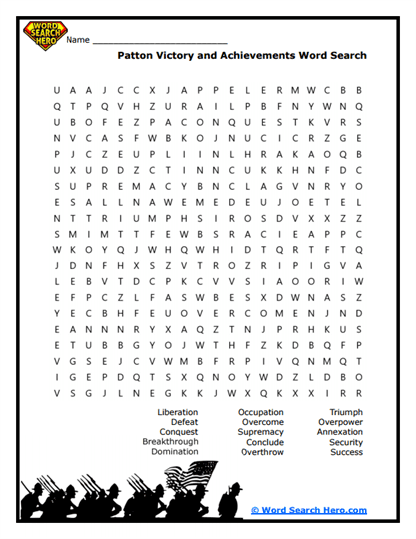
About Our George Patton Word Search Collection
George Patton word searches focus on a specific historical person known for his role as a high-ranking military leader. This collection highlights Patton not just as a name, but as a general, commander, and strategist during World War II. Each word in these puzzles connects to the positions he held and the responsibilities he carried while leading troops.
As students search for words like “general,” “commander,” “leader,” “army,” and “strategy,” they begin to understand what Patton’s role involved. He wasn’t just part of the military-he was in charge of planning movements, leading soldiers, and making critical decisions. This makes the vocabulary more meaningful because it reflects real leadership in action.
These puzzles are great for classroom use during history or military studies units. They also work well as independent activities that build focus, spelling, and reading skills. At home, they provide a structured way to explore a well-known historical figure and the position he held.
Because George Patton is often discussed in the context of leadership and wartime strategy, students can begin to see how one person’s role can influence large-scale events. This turns a simple word search into a deeper exploration of a person in a powerful position.
The Role of a General in Action
George Patton’s primary position was that of a general, which meant he was responsible for leading large groups of soldiers and making strategic decisions. When students encounter words like “general,” “officer,” “commander,” and “leader,” they’re learning about the different aspects of his role.
One way to extend this activity is by breaking down what a general does. A general plans operations, gives orders, and coordinates movements across large areas. This is very different from lower-ranking roles, which may focus on smaller groups or specific tasks. These distinctions help students understand levels of responsibility.
You can also explore Patton’s leadership style. Words like “strategy,” “command,” and “discipline” reflect how he approached his position. This helps students connect vocabulary to how a leader thinks and acts.
For a creative extension, ask students to imagine they are in charge of a large team. What decisions would they need to make? How would they guide others? This builds both comprehension and critical thinking.
By focusing on George Patton as a person in a leadership position, these word searches help students understand what it means to lead at a high level.
Paul’s Pro-Tip

Use the “title-first targeting” method-start by scanning for strong, standout words like “general” or “commander.” These words usually have distinct letter patterns, making them easier to spot and giving you a quick starting point.
After that, zoom in on nearby areas. Leadership-related words often cluster together, so once you find one, slow down and search that section carefully-you’ll often uncover two or three more without needing to scan the whole grid again.
Understanding Leadership Through a Real Person
George Patton word searches help students connect vocabulary to a real historical figure who held a major leadership position. Each word represents part of his role, helping students see how responsibilities like planning, commanding, and organizing come together.
These puzzles also strengthen comprehension by tying words to real-world actions. Terms like “strategy” and “command” become easier to understand when connected to what Patton actually did. This makes learning more concrete and less abstract.
Another benefit is learning about leadership under pressure. Students begin to see that positions like general involve quick thinking, responsibility, and decision-making. This adds depth to their understanding of leadership roles.
The activity also builds focus and persistence. Students must carefully search for each word, improving attention to detail and strategy. The historical context helps keep them engaged and interested.
By connecting vocabulary to a real person and position, these word searches create a learning experience that is both educational and impactful.
Frequently Asked Questions
Who was George Patton and what was his role?
George Patton was a general in the United States Army during World War II. His role involved leading troops and making strategic decisions during military operations. He was known for his strong leadership and command style.
What does a “general” do in the military?
A general is responsible for leading large groups of soldiers and planning major operations. They give orders, develop strategies, and oversee how missions are carried out. It is one of the highest leadership positions in the military.
How do these word searches help kids understand George Patton better?
They connect his name to the roles and responsibilities he held, like commanding and planning. This helps students move beyond just knowing who he was to understanding what he did. It makes the learning more active and meaningful.
Can these puzzles be used in history lessons about World War II?
Yes, they are a great way to reinforce vocabulary related to leadership and military roles during that time. Teachers can use them alongside lessons to keep students engaged. They also help students remember key terms more easily.
How can I make George Patton word searches more interactive?
You can ask your child to describe what decisions a general might have to make in a challenging situation. Another idea is to create a simple leadership scenario and discuss how they would respond. This helps connect vocabulary to real thinking and problem-solving.