Choose a topic !

Homer Word Searches

Epic Identity Word Search

Epic Identity

The “Homeric Identity Word Search” introduces students to vocabulary that explores who Homer was and how his legend has been understood. The words highlight his possible roles as a poet, bard, and storyteller, while also touching on his mysterious origins. Terms like “Blind,” “Ionian,” and “Rhapsode” evoke the ancient oral culture from which his works […]

View More
Verse Foundations Word Search

Verse Foundations

The “Epic Works Word Search” focuses on Homer’s Iliad and Odyssey, two of the most influential works in Western literature. Vocabulary like “Epic,” “Hexameter,” and “Invocation” introduces literary form and poetic structure. Terms such as “Episode,” “Composition,” and “Sequence” emphasize how oral tales were organized. The word list captures both the artistry and discipline behind […]

View More
Spoken Legends Word Search

Spoken Legends

The “Oral Tradition Word Search” centers on the ancient practice of storytelling before written language. Words such as “Recite,” “Memorize,” and “Perform” represent the techniques bards used to preserve myths. “Formula,” “Pattern,” and “Cadence” describe the rhythmic systems that helped poets remember long narratives. “Improvisive” and “Breath” connect the art of performance to its musical […]

View More
Hero's Code Word Search

Hero’s Code

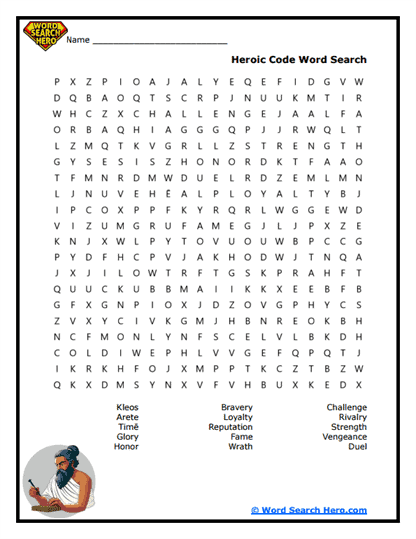
The “Heroic Code Word Search” explores the values that define honor and courage in Homeric society. Words like “Kleos,” “Arete,” and “Timฤ“” introduce Greek concepts of glory and excellence. “Bravery,” “Loyalty,” and “Reputation” reflect personal and communal ideals. The inclusion of “Wrath,” “Challenge,” and “Vengeance” reveals the duality of heroism-honor mixed with pride and conflict. […]

View More
Divine Contrasts Word Search

Divine Contrasts

The “Thematic Dualities Word Search” presents opposites and tensions that define Homeric literature. Words such as “War” and “Homecoming,” “Fate” and “Freewill,” and “Wisdom” and “Love” highlight contrasting themes. “God,” “Justice,” and “Hospitality” reflect moral balance, while “Exile” and “Loss” show human fragility. The vocabulary demonstrates how Homer balanced divine order with human struggle. Students […]

View More
Olympian Faith Word Search

Olympian Faith

The “Greek Religion Word Search” introduces vocabulary related to the gods and rituals of ancient Greece. Words like “Zeus,” “Athena,” and “Ares” represent divine figures from Homer’s epics. “Sacrifice,” “Temple,” and “Ritual” connect to religious practices. “Immortal,” “Curse,” and “Favor” reflect the gods’ unpredictable influence over mortals. Students explore how faith and divine justice shaped […]

View More
Simile Sparks Word Search

Simile Sparks

The “Homeric Similes Word Search” focuses on one of Homer’s signature literary devices-the extended simile. Words like “Like,” “As,” and “Spark” highlight the language of comparison. “Storm,” “Lion,” and “Wave” reflect nature’s power, while “Lightning,” “Bees,” and “Smoke” capture vivid imagery. “Fire” and “Ashes” symbolize destruction and renewal. Students engage with vocabulary that reveals the […]

View More
Trojan Tales Word Search

Trojan Tales

The “Trojan Legacy Word Search” revisits the mythic conflict at the heart of Homer’s Iliad. Words such as “Troy,” “Achilles,” and “Hector” introduce iconic figures of courage and fate. “Priam,” “Helen,” and “Paris” represent the causes and consequences of war. “Horse,” “Siege,” and “Swords” evoke the drama of ancient combat. This activity helps students recall […]

View More
Odyssean Voyage Word Search

Odyssean Voyage

The “Odyssean Trials Word Search” highlights the adventures and characters from Homer’s Odyssey. Words such as “Odysseus,” “Sirens,” and “Cyclops” recall famous trials and encounters. “Penelope,” “Telemachus,” and “Nausicaa” reflect loyalty, family, and discovery. “Calypso,” “Circe,” and “Shipwreck” show the tension between fate and resilience. The vocabulary encapsulates the journey of perseverance and identity across […]

View More
Timeless Influence Word Search

Timeless Influence

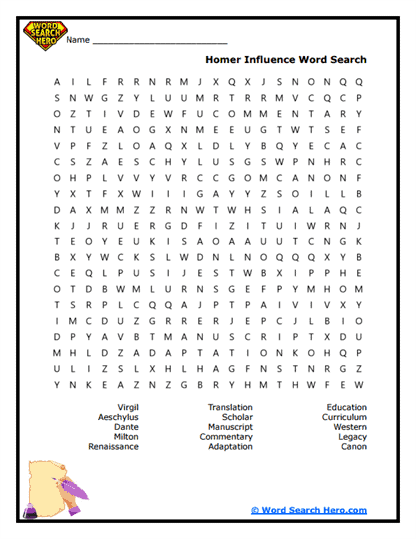
The “Homer Influence Word Search” celebrates Homer’s lasting impact on Western culture. Words such as “Virgil,” “Dante,” and “Milton” reveal the poets who followed in his footsteps. “Translation,” “Scholar,” and “Adaptation” show how his epics were preserved and reimagined. “Education,” “Curriculum,” and “Legacy” reflect his influence on learning and literature. Students discover how one ancient […]

View More

About Our Homer Collection

Step back into the world of ancient Greece, where gods mingled with mortals and heroes carved their names into eternity. Our Homer Word Searches invite readers to explore the timeless brilliance of the poet who gave the world The Iliad and The Odyssey. These interactive puzzles bring the rhythm, emotion, and grandeur of epic poetry to life, blending classical literature with the fun of discovery.

Homer’s verses have echoed through the centuries, shaping the language of courage, honor, and imagination. Within this collection, you’ll trace the origins of storytelling itself – from the oral traditions of ancient bards to the adventures of Odysseus and the glory of Troy. Each activity transforms legendary tales into an engaging way to build vocabulary, sharpen reading comprehension, and uncover the moral and mythic foundations of Western literature.

Perfect for students, educators, and lifelong learners, these printable activities turn ancient history into a living conversation. As you find terms like Hero, Odyssey, Kleos, and Cyclops, you’ll connect directly with the values, ideas, and imagination that continue to define storytelling thousands of years later.

What’s Inside

This ten-part collection celebrates Homer’s poetry, philosophy, and mythology through thoughtfully designed vocabulary challenges. Each one focuses on a different theme from Greek culture – from divine belief to heroic code – making the past vibrant, memorable, and fun to explore.

Epic Identity
The first activity delves into the mystery of Homer himself. Words such as Blind, Bard, Ionian, and Rhapsode evoke the oral traditions that gave rise to his poetry. You’ll uncover clues to his legend – part history, part myth – and explore how identity, creativity, and storytelling became inseparable in the ancient world.

Verse Foundations
Celebrate the artistry behind The Iliad and The Odyssey. Vocabulary like Epic, Invocation, Hexameter, and Composition introduces the structure of oral verse and poetic rhythm. It’s a fascinating glimpse into how performance, repetition, and melody shaped some of the earliest masterpieces in literature.

Spoken Legends
Journey into the oral tradition that preserved Greek myth long before the written word. Words like Recite, Perform, Cadence, and Voice highlight the skill of the bards who kept these stories alive through memory and song. The challenge offers insight into how storytelling began as both a craft and a communal celebration.

Hero’s Code
Honor, glory, and valor take center stage here. Terms such as Kleos, Arete, Bravery, and Vengeance reveal the moral and cultural principles that guided Homeric heroes. As you uncover each one, you’ll understand how the Greeks balanced pride, loyalty, and destiny in their pursuit of greatness.

Divine Contrasts
This section explores the tension between gods and mortals, war and peace, love and loss. Words like Fate, Freewill, Justice, and Hospitality express the intricate balance that drives Homeric stories. Searching through these contrasts reveals how myth used opposites to reflect both chaos and harmony in human life.

Olympian Faith
Step into a world ruled by immortal beings and sacred rituals. Zeus, Athena, Ares, and Hera lead a divine cast whose favor or fury determined mortal fate. You’ll find terms like Temple, Sacrifice, and Omen – reminders that religion, storytelling, and destiny were inseparable in Homer’s vision of the universe.

Simile Sparks
Homer’s vivid comparisons – his “epic similes” – remain one of his artistic signatures. Words such as Storm, Lion, Lightning, and Ashes capture his gift for transforming nature into emotion. This activity celebrates the sensory and imaginative force that makes his poetry unforgettable.

Trojan Tales
Revisit the legendary war that defined courage and tragedy. You’ll encounter Achilles, Hector, Helen, and Troy – names that echo through centuries of myth. The vocabulary also includes Horse, Siege, and Spears, immersing you in the drama, tension, and humanity of the Trojan epic.

Odyssean Voyage
Set sail alongside Odysseus on his perilous journey home. Words like Cyclops, Sirens, Penelope, and Calypso tell of monsters, temptation, and enduring love. As you navigate this challenge, you’ll relive the triumphs and trials of one of literature’s most celebrated adventurers.

Timeless Influence
The final activity celebrates Homer’s legacy through figures like Virgil, Dante, and Milton – poets who carried his torch into new eras. Terms such as Translation, Education, Legacy, and Canon show how his stories became the foundation of Western thought and artistic tradition.

Fascinating Facts About Homer

Though Homer’s life remains shrouded in mystery, his impact is undeniable. Ancient Greeks believed he lived sometime between the 8th and 7th centuries BCE, a wandering bard who immortalized their heroes in song. His works weren’t originally written down; instead, generations of storytellers passed them from memory to memory until they were finally preserved in text.

Homer’s poetry wasn’t just art – it was education. His verses taught values of courage, justice, and loyalty, becoming the moral backbone of Greek civilization. For centuries, students memorized lines from The Iliad and The Odyssey as lessons in virtue and language alike.

The “Homeric Question” – whether one man actually wrote both epics or whether they were compiled by many poets – continues to intrigue scholars. Some suggest that Homer was a symbolic figure representing an entire tradition of oral poets. Regardless of authorship, his style of rhythm and repetition shaped the very idea of narrative.

His use of the dactylic hexameter gave Greek poetry its heartbeat, creating patterns that echoed through later Roman and Renaissance literature. Epic similes, emotional speeches, and dramatic confrontations all trace their origins to Homer’s mastery of rhythm and imagery.

Even today, Homer’s stories live on in modern language and imagination. We still speak of “epic journeys,” “Achilles’ heels,” and “Trojan horses,” proof that his storytelling continues to define how we describe heroism and human struggle. His influence spans millennia – from ancient amphitheaters to classrooms and movie screens – reminding us that stories, once spoken beneath the stars, can endure forever.

Homer’s world may be ancient, but his voice still calls across time, inviting every reader to seek truth, courage, and beauty through the power of words. Within these pages, his legacy awaits – timeless, human, and endlessly inspiring.