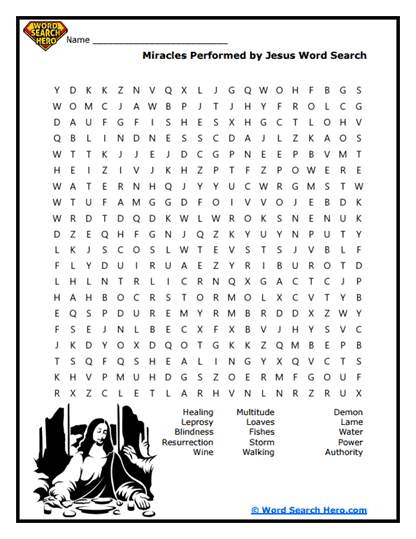
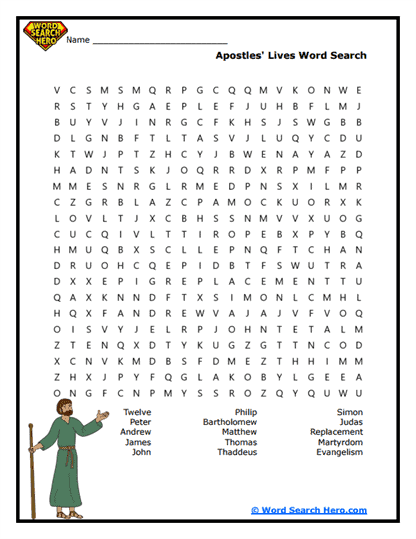
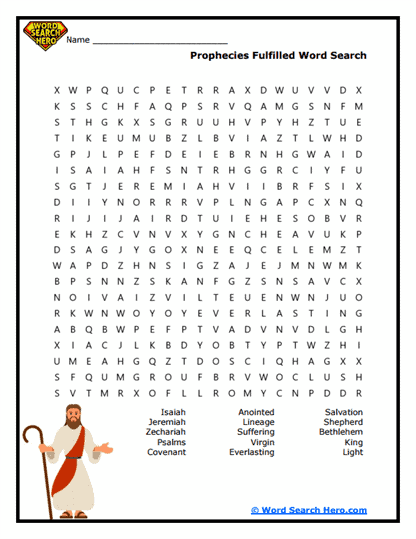
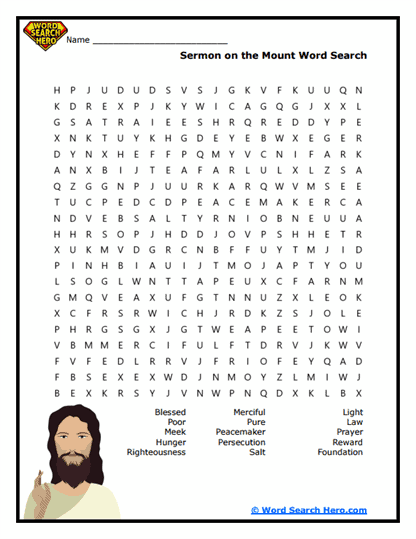
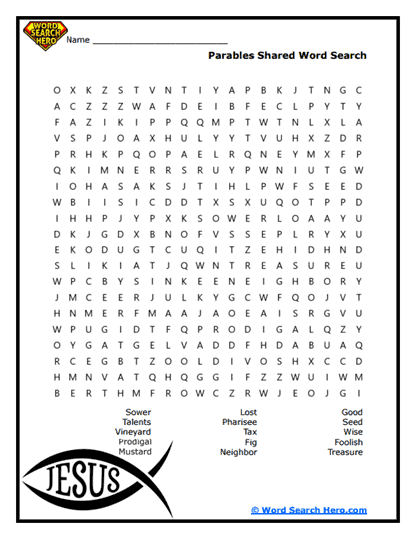
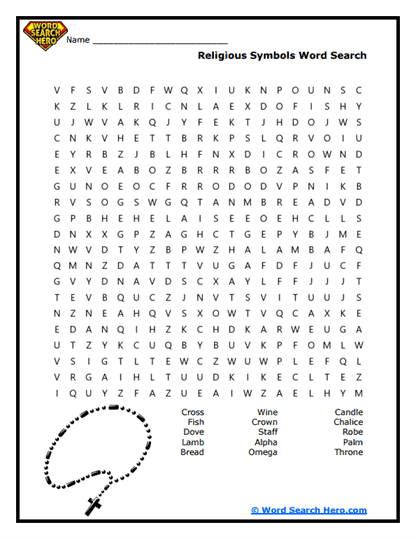
About Our Jesus Word Searches
Jesus word searches provide a meaningful and engaging way for learners to explore one of the most central figures in religious teachings while focusing on the roles and positions He held. These printable puzzles introduce students to key titles such as teacher, healer, shepherd, Savior, and Son, helping them understand not just who Jesus is, but what He did and how He served others.
As students search for words, they begin to connect each title with a responsibility or action. For example, Jesus as a teacher shares wisdom, while as a healer He cares for those in need. These roles help learners move beyond simply recognizing His name and into understanding His purpose and influence. It also opens the door to deeper conversations about leadership, service, and compassion.
These puzzles support essential academic skills like vocabulary development, spelling, and concentration. They work well in classrooms, Sunday school, or homeschool settings as warm-ups, review activities, or discussion starters.
With a range of difficulty levels, Jesus word searches are accessible for different learners. They provide a thoughtful way to explore important teachings while focusing on the roles and positions that define who Jesus is.
Titles and Roles That Define Jesus
Understanding Jesus becomes clearer when students focus on the many roles and titles associated with Him. Word searches centered on this topic often include terms like teacher, healer, shepherd, king, and servant. Each of these titles reflects a different aspect of His role and purpose.
For example, as a teacher, Jesus shares lessons and parables that guide others. As a healer, He helps those who are sick or in need. The title shepherd represents care and guidance, while king reflects authority and leadership. These roles help students see that Jesus is understood in multiple ways, each with its own meaning.
Encouraging students to think about these roles helps deepen comprehension. They can ask questions like, “What does this title tell us about what Jesus did?” or “How do these roles connect to each other?” This type of thinking builds stronger understanding and reflection.
By focusing on roles and positions, students begin to see a fuller picture of who Jesus is and how His actions and teachings are connected.
Paul’s Pro-Tip

One of the most effective ways to use a Jesus word search is to turn it into a “title-to-action connection.” As students find words like “teacher,” “healer,” or “shepherd,” have them immediately explain what that role looks like in action. For example, a healer helps the sick, while a teacher explains and guides. This helps students connect each title to something real and understandable, instead of just memorizing words.
Another strategy I’ve used for years is having students rank the roles by how they see them in the stories they’ve learned. Ask them, “Which role do you notice most often-teacher, healer, or leader?” and have them explain why. This encourages observation and deeper thinking. It also helps students recognize patterns and better understand how different roles work together to form a complete picture.
Exploring Jesus Through His Roles
Jesus word searches can lead to deeper learning when students focus on how each role is shown through actions and teachings. After completing a puzzle, students can choose one title-such as teacher, healer, or shepherd-and describe what that role means and how it is demonstrated.
For example, a student might explore how Jesus teaches through parables or how He shows compassion as a healer. Another might examine what it means to guide others as a shepherd. These reflections help connect vocabulary to real understanding.
This approach also supports cross-curricular learning. It can connect with reading by revisiting stories or with writing by asking students to describe a role in their own words. Group discussions can further deepen understanding by comparing perspectives.
By focusing on roles and positions, students gain a clearer understanding of Jesus and His teachings. It transforms a simple puzzle into a meaningful exploration of purpose, leadership, and service.
Frequently Asked Questions
What titles are commonly included in Jesus word searches?
Jesus word searches often include titles like teacher, healer, shepherd, king, and servant. These titles reflect different roles and responsibilities associated with Him. Including these helps students understand what each role represents. It also makes the puzzles more meaningful by connecting words to actions.
How do these word searches help students understand who Jesus is?
They encourage students to connect titles with actions and responsibilities. As learners find each word, they begin to think about what that role means and how it is shown. This builds a deeper understanding beyond just recognizing a name. It also helps reinforce learning through repetition and context.
Why is it important to focus on the different roles of Jesus?
Focusing on roles helps students see that Jesus is understood in many ways, each with a specific purpose. These roles highlight teaching, caring, leading, and serving. Understanding this variety creates a fuller picture of His significance. It also helps students connect different teachings and stories.
How can I make Jesus word searches more interactive?
You can have students explain each role they find and give an example of what that role involves. Another approach is to compare different titles and discuss how they relate to each other. These activities deepen understanding and encourage discussion. They also help students connect the puzzle to real meaning.
How do the roles of Jesus connect to His teachings?
Each role reflects a part of His teachings and actions. For example, as a teacher, He shares lessons, and as a healer, He shows compassion. These roles help students understand how His actions match His message. It also makes it easier to see how everything fits together into a larger understanding.