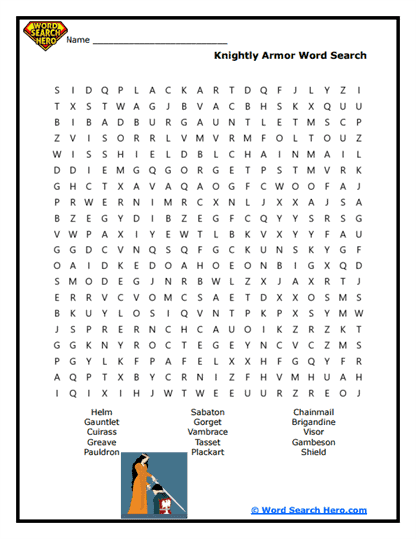
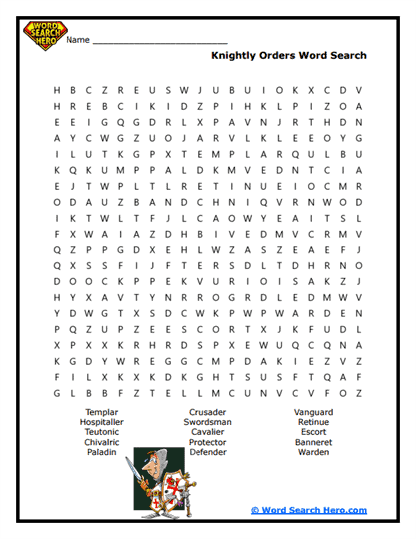
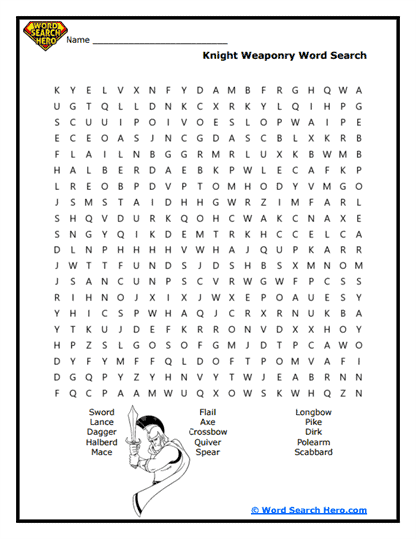
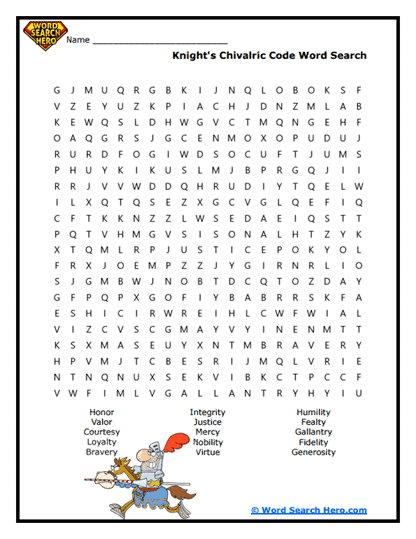
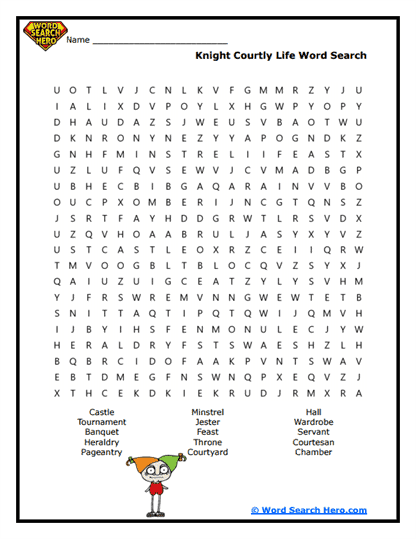
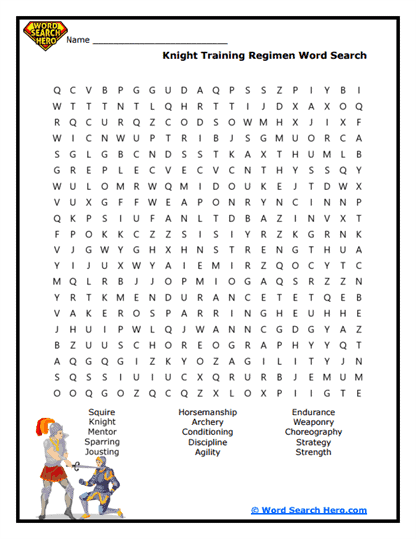
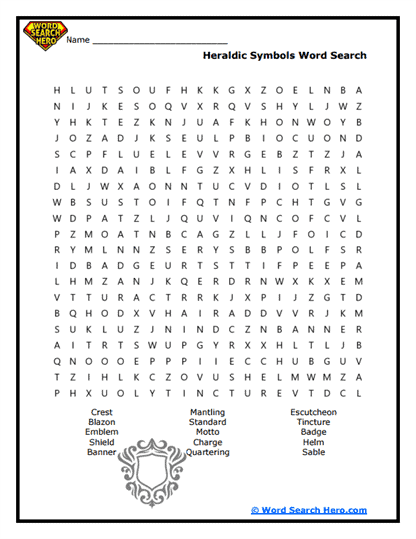
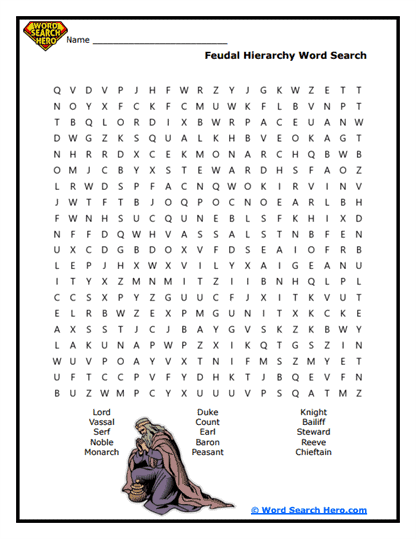
About Our Knights and Chivalry Word Searches
Our Knights and Chivalry Word Searches bring the heroic world of medieval warriors and noble ideals into an engaging printable puzzle collection designed to build vocabulary while exploring one of the most iconic parts of the Middle Ages. Knights were central figures in medieval society, known for their armor, horsemanship, and dedication to protecting their kingdoms. Alongside their martial skills, they were expected to follow the code of chivalry, a set of values that emphasized courage, loyalty, honor, and respect.
Word search puzzles provide a simple but effective way for students to interact with historical vocabulary. As learners scan the grid to locate hidden words, they practice recognizing spelling patterns, identifying letter combinations, and strengthening visual tracking skills. These abilities support reading fluency and help students become more confident when encountering unfamiliar historical terms.
Teachers often incorporate themed puzzles like these into medieval history units as warm-up activities, literacy center tasks, or enrichment for students who finish work early. Because students can work independently while still engaging with important vocabulary, the puzzles help maintain a focused classroom environment.
Homeschool families also appreciate how easily printable puzzles fit into flexible learning routines. They can introduce key medieval terms before reading about knights or serve as a review activity after a lesson on castles, tournaments, or feudal society.
The theme of knights and chivalry naturally sparks curiosity about medieval life. Words connected to armor, tournaments, castles, and noble behavior help students visualize the responsibilities and traditions associated with knighthood.
By blending historical vocabulary with puzzle-solving, these activities turn learning about medieval knights into an engaging and memorable experience.
The Code of Chivalry in Medieval Society
Knighthood in medieval times was not only about fighting in battles. Knights were also expected to live by a code of behavior known as chivalry. This code included ideals such as bravery, loyalty, fairness, and respect for others. While the exact rules varied across regions and time periods, the concept of chivalry shaped how knights were expected to act both on and off the battlefield.
Knights typically began their training at a young age. Many started as pages, learning basic skills and manners in the household of a noble family. As they grew older, they often became squires, assisting experienced knights while practicing combat techniques, horsemanship, and weapon handling.
Once fully trained, a squire could be officially recognized as a knight during a special ceremony. From that point forward, the knight was expected to defend the kingdom, protect the weak, and serve their lord faithfully.
When students encounter words connected to knights and chivalry in a puzzle activity, they become familiar with important vocabulary that appears frequently in medieval history lessons. Words such as armor, tournament, sword, and honor help learners picture the world of medieval warriors.
Teachers can extend the activity by asking students to think about what values were important for knights. How might bravery or loyalty appear in a knight’s daily life? These discussions help students connect vocabulary with the cultural ideas that shaped medieval society.
Paul’s Pro-Tip

After students finish the puzzle, turn the vocabulary into a “knightly code challenge.” Ask them to choose three words from the puzzle and explain how those words might represent a value or duty of a knight.
Another fun extension is creating a mini knightly oath. Students pick a few puzzle words and write a short pledge describing how a knight should act. This helps kids connect vocabulary to the ideas of honor, loyalty, and courage.
These small follow-up activities turn a simple word search into a deeper exploration of medieval values.
Why Knight-Themed Activities Help Students Understand the Middle Ages
Knights are one of the most recognizable symbols of medieval history. Their armor, castles, and tournaments make the Middle Ages easier for students to visualize. Using knight-themed word searches helps introduce vocabulary that appears frequently when studying medieval society.
Word searches reinforce spelling and word recognition by exposing students to the same terms multiple times while they search through the grid. This repeated exposure helps learners become more comfortable with historical vocabulary such as chivalry, armor, or tournament.
The puzzle-solving process also strengthens cognitive skills. Students must carefully scan rows, columns, and diagonals to locate hidden words, which builds concentration and attention to detail.
Another benefit is engagement. Knights and chivalry naturally spark curiosity because they are tied to stories of bravery, quests, and medieval adventures. When students feel interested in the theme, they are more likely to stay focused and participate actively in the activity.
Puzzle-based learning also encourages persistence. Some words are easy to find, while others require patience and careful searching. Each successful discovery reinforces confidence and motivates students to keep working.
By combining interactive puzzles with medieval themes, students gain both vocabulary practice and a clearer understanding of the traditions and values associated with knighthood.
Frequently Asked Questions
What kinds of words appear in Knights and Chivalry word searches?
These puzzles typically include vocabulary related to medieval knighthood and noble values. Students may encounter words such as armor, sword, shield, tournament, honor, loyalty, and chivalry, all of which help describe the duties and ideals associated with knights.
How can teachers use these puzzles when teaching about medieval knights?
Teachers can introduce the puzzle before a lesson about knighthood to familiarize students with important vocabulary. After completing the puzzle, students can discuss how each word connects to the training, responsibilities, and traditions of medieval knights.
Why is chivalry an important concept when studying knights?
Chivalry represented the moral code that knights were expected to follow. Understanding this concept helps students see that knighthood was not only about fighting battles but also about values like courage, loyalty, and protecting others.
How can homeschool families extend the activity beyond the puzzle?
Parents can ask students to choose several puzzle words and explain how those terms might appear in the daily life of a knight. This encourages learners to connect vocabulary with real historical roles and responsibilities.
Do knight-themed puzzles help students remember medieval vocabulary?
Yes, searching for historical terms within a puzzle grid reinforces spelling patterns and word recognition. When students later encounter those words in medieval history lessons or reading materials, they are more likely to remember and understand them.