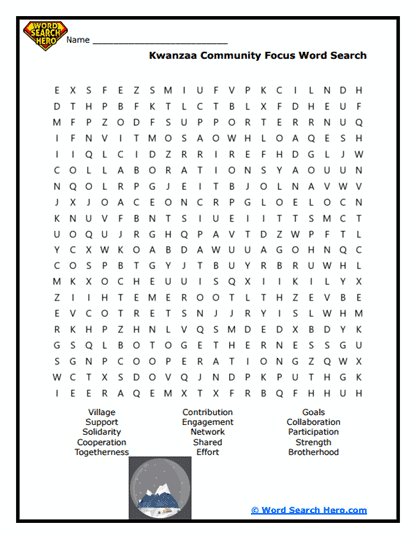
About Our Kwanzaa Word Searches
Kwanzaa is celebrated every year from December 26 through January 1 and is a week-long cultural celebration honoring African heritage, unity, and community. Our Kwanzaa Word Searches collection turns this meaningful late December celebration into an engaging activity that helps learners connect vocabulary with tradition, values, and cultural understanding.
Created in 1966 by Dr. Maulana Karenga, Kwanzaa focuses on seven core principles known as the Nguzo Saba, with each day from December 26 to January 1 highlighting a different value such as unity, self-determination, and collective work.
During Kwanzaa, families and communities gather to light candles on the kinara, share meals, reflect on values, and celebrate culture. Word searches introduce terms like “Kwanzaa,” “unity,” “heritage,” “kinara,” “community,” and “principles,” helping students understand the meaning behind each day of the celebration.
Because Kwanzaa spans multiple days at the end of December and into the New Year, these puzzles are perfect for use throughout the entire week-long celebration.
Celebrating Culture and Values in Late December
Kwanzaa is unique because each day-from December 26 through January 1-focuses on a specific principle. Word searches built around this celebration help students explore those values in a meaningful and accessible way.
Puzzles might include words like “unity,” “purpose,” “faith,” and “creativity,” which represent the Nguzo Saba. These words can lead to conversations about what each value means in everyday life.
You might also include terms like “kinara,” “candles,” “celebration,” “family,” and “heritage,” which reflect how Kwanzaa is observed during the final days of December. These words help students understand both the symbolism and traditions of the celebration.
By connecting vocabulary to both values and traditions, Kwanzaa word searches help learners better understand this important cultural event that bridges December and January.
Paul’s Pro-Tip

This is a great opportunity to slow things down and focus on meaning, not just activity. Start by asking, “What does a word like ‘unity’ or ‘community’ mean to you?” and give students time to think before answering. You’ll often get thoughtful responses, and that helps set the tone for Kwanzaa.
As students work through the puzzle, point out words tied to the seven principles like “unity,” “purpose,” or “faith,” and connect them back to real-life examples. Keep the conversation simple and relatable-Kwanzaa from December 26 to January 1 is about values people can practice every day.
You can also have students choose one word and explain how they could show that value in their own life. For example, what does “unity” look like at school or at home?
If you want to extend it, ask: “Why do you think Kwanzaa focuses on a different principle each day?” This helps students understand the structure of the celebration.
Wrap it up by reinforcing that Kwanzaa is not just about the week between December 26 and January 1-it’s about carrying those values forward into the new year.
Understanding the Meaning Behind Each Day
Kwanzaa Word Searches help turn a week-long December celebration into a meaningful learning experience. Instead of just learning about the holiday, students actively engage with its core values.
As students find words like “unity” and “community,” they begin to understand how those ideas apply in real life. This builds cultural awareness and personal reflection.
Because Kwanzaa spans the end of December and the beginning of January, these puzzles are perfect for lessons during that transitional time of year.
Using Kwanzaa-themed word searches creates a thoughtful and engaging way to explore culture, values, and community during this important celebration.
Frequently Asked Questions
What is Kwanzaa and why is it celebrated from December 26 to January 1?
Kwanzaa is a cultural celebration honoring African heritage and values, observed from December 26 through January 1. Each day focuses on one of the seven principles, making it a week-long reflection on community and identity.
What are the seven principles of Kwanzaa and how are they used during the celebration?
The seven principles, or Nguzo Saba, include unity, self-determination, collective work, cooperative economics, purpose, creativity, and faith. Each day of Kwanzaa highlights one principle, guiding daily reflection and activities.
What vocabulary should be included in Kwanzaa word searches?
High-value words include Kwanzaa, unity, kinara, candles, heritage, community, purpose, creativity, and faith. These terms reflect both the traditions and core values of the celebration.
How can I teach Kwanzaa in a respectful and meaningful way?
Focus on the cultural significance, the seven principles, and how they apply to everyday life. Using activities like word searches alongside discussion helps students engage thoughtfully with the celebration.
How can Kwanzaa activities help students reflect at the end of December?
Because Kwanzaa happens right after Christmas and before the New Year, it provides a natural time for reflection. Activities tied to the celebration help students think about values they want to carry into the new year.