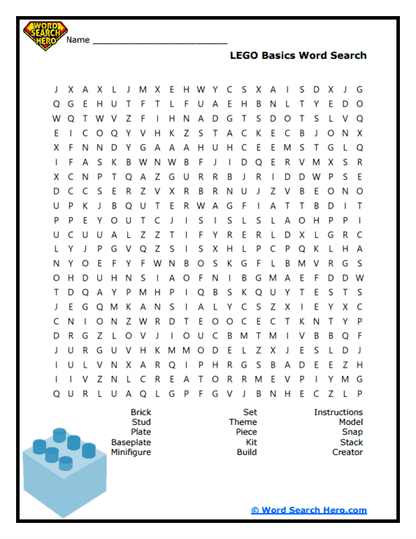
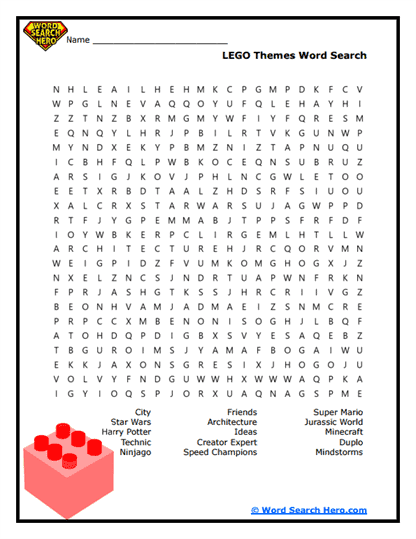
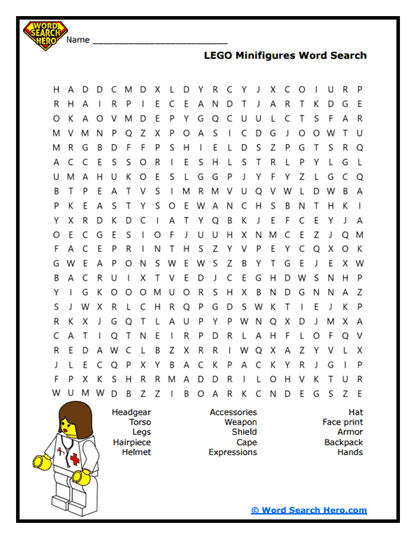
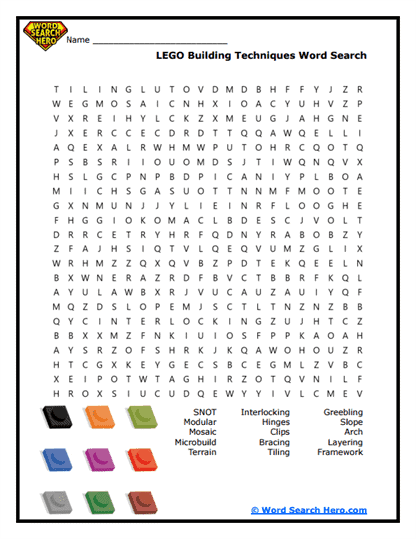
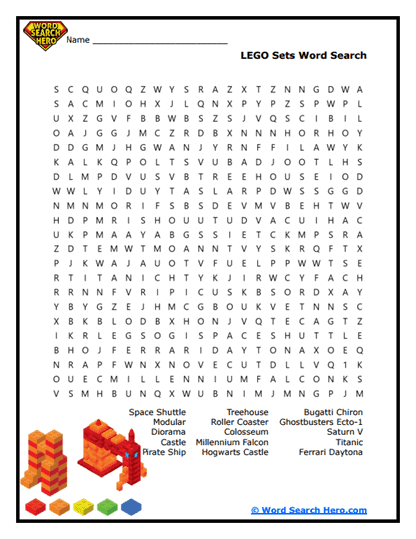
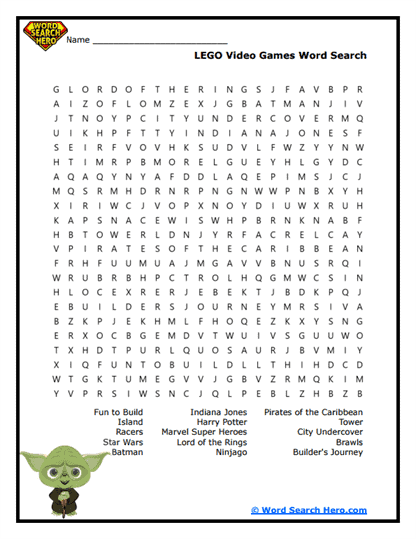
About Our LEGO Word Search Collection
LEGO word searches combine the creativity of one of the most popular building toys with meaningful literacy practice. Centered around LEGO bricks, minifigures, and imaginative builds, these printable puzzles help learners connect physical objects they know and love with reading and spelling skills. Words like “brick,” “tower,” “wheel,” and “minifigure” reflect the hands-on world of LEGO, making each puzzle both familiar and engaging.
Because LEGO is such a tactile and visual object, it naturally supports learning. Students can easily picture the pieces they’re searching for, which strengthens word recognition and helps with memory retention. This connection between real objects and written words makes vocabulary development feel more intuitive, especially for younger learners.
In the classroom, LEGO-themed puzzles are perfect for centers, STEM tie-ins, or creative writing prompts. At home, they offer a screen-free activity that still encourages problem-solving and focus. Parents can even pair the puzzles with actual LEGO play, reinforcing vocabulary while building structures.
These word searches also promote important skills like attention to detail, pattern recognition, and persistence. As students scan for LEGO-related terms, they’re practicing the same careful observation they use when building with bricks. It’s a simple but powerful way to turn a beloved object into a tool for learning.
Building Words Brick by Brick
LEGO is all about constructing something bigger from small pieces, and that same idea applies beautifully to vocabulary learning. Each word in a LEGO-themed puzzle represents a physical object or part of the building process-bricks, plates, wheels, and connectors. When students search for these words, they’re mentally assembling knowledge just like they would with real LEGO pieces.
To deepen the experience, try pairing the puzzle with a building challenge. After finding words like “bridge” or “car,” students can use their LEGO pieces to create those objects. This reinforces vocabulary while encouraging creativity and problem-solving.
You can also focus on descriptive language. Ask learners to describe the LEGO objects they find-What color are the bricks? How do the pieces connect? What does the final build look like? These questions help expand vocabulary beyond single words into richer, more detailed language.
Group activities work especially well with LEGO themes. Students can compare builds, discuss favorite pieces, or even collaborate on a shared structure inspired by the puzzle. By linking words to hands-on play, LEGO word searches create a dynamic learning experience that sticks.
Paul’s Pro-Tip

When tackling a LEGO word search, start by looking for short, familiar words like “brick” or “stud.” These are often easier to find and can help you get into a rhythm. Once you’ve spotted a few, your brain starts recognizing patterns faster, making the longer words less intimidating.
If a word feels tricky, think about how the object looks in real life. Picture a stack of LEGO bricks or a set of wheels, then focus on the first letter and scan slowly across the grid. Breaking the puzzle into small sections can make a big difference and keep you from feeling overwhelmed.
Strengthening Focus with Hands-On Object Connections
LEGO word searches naturally strengthen focus because they mirror the careful attention required when building with bricks. Just like snapping pieces together, finding words requires patience, precision, and a willingness to look closely at small details. This makes the activity both calming and mentally engaging.
These puzzles also support visual processing skills. Students learn to recognize letter patterns and shapes, similar to how they identify different LEGO pieces by size and function. This strengthens their ability to quickly scan and interpret information, which is essential for reading fluency.
Another key benefit is how these puzzles encourage persistence. Building with LEGO doesn’t always go perfectly the first time, and neither does finding every word in a puzzle. Students learn to keep trying, adjust their strategies, and celebrate small successes along the way.
Fine motor skills are also reinforced when students circle or highlight words. These small actions build coordination and control, which are important for writing and other hands-on tasks.
By connecting literacy to a physical object like LEGO, these puzzles create a well-rounded activity that supports both cognitive and motor development in a fun and meaningful way.
Frequently Asked Questions
How do LEGO word searches connect to actual LEGO play?
They use words based on real LEGO objects like bricks, wheels, and minifigures, which children can easily recognize. This makes it simple to connect what they see in the puzzle to what they build during play. That connection helps reinforce vocabulary in a natural and memorable way.
What types of LEGO pieces or objects are included in these puzzles?
Most puzzles include common elements like bricks, plates, studs, minifigures, and vehicles. Some may also include themed builds like castles, spaceships, or cities. This variety keeps the puzzles interesting while exposing learners to a wide range of object-based vocabulary.
Can I use LEGO word searches alongside building activities?
Yes, and it’s highly effective to do so. After completing a puzzle, students can build one or more of the objects they found, which strengthens understanding. This hands-on extension makes the learning experience more interactive and engaging.
How do these puzzles help kids better understand LEGO structures and parts?
By repeatedly seeing the names of pieces and objects, students become more familiar with how LEGO components are identified and used. This can improve their ability to follow instructions or describe their own builds. Over time, they gain both vocabulary and confidence in talking about what they create.
Are LEGO word searches useful for kids who already love building with LEGO?
Absolutely, because they tap into an existing interest and turn it into a learning opportunity. Kids are more motivated to complete the puzzle when it relates to something they enjoy. This leads to better focus, stronger vocabulary retention, and a more positive learning experience.