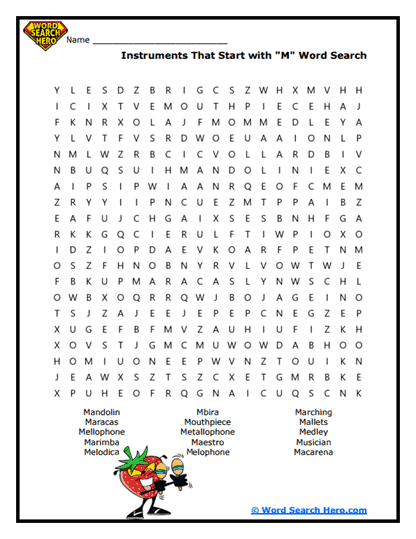
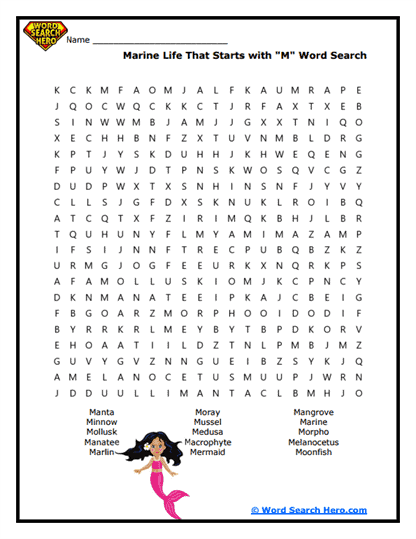
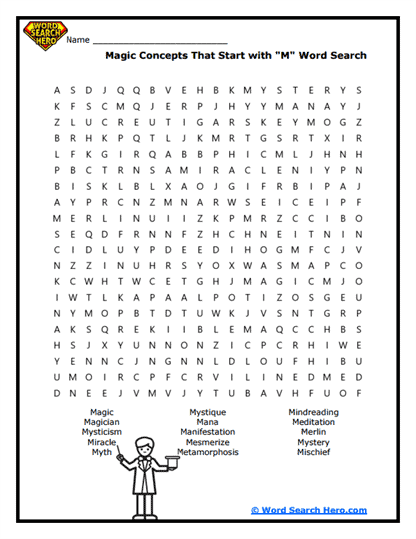
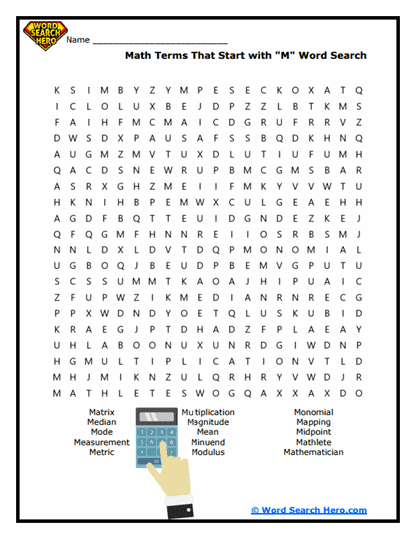
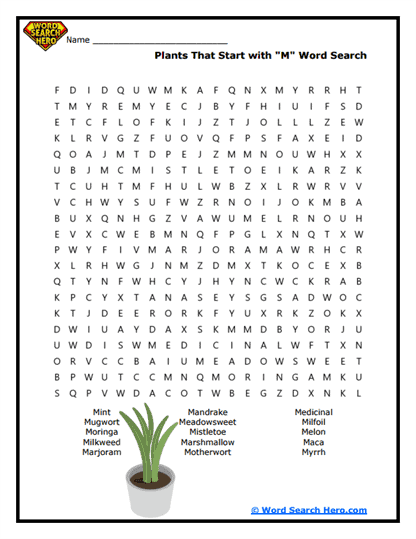
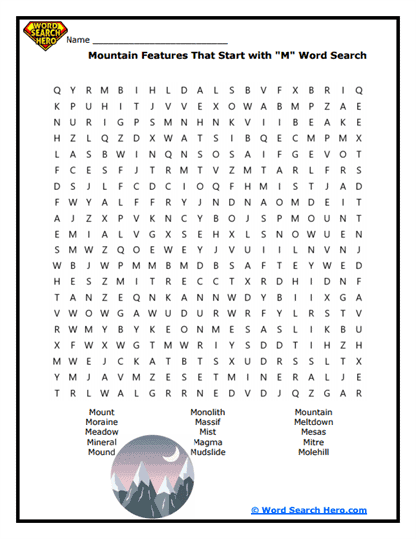
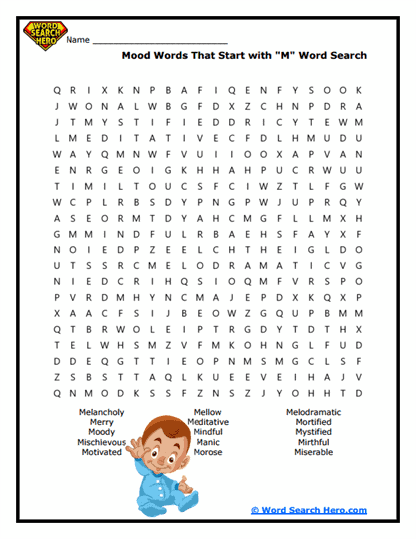
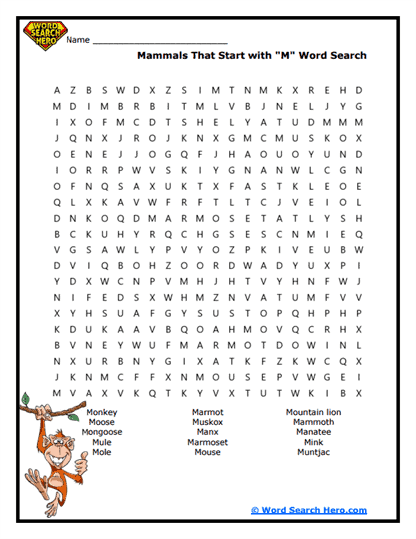
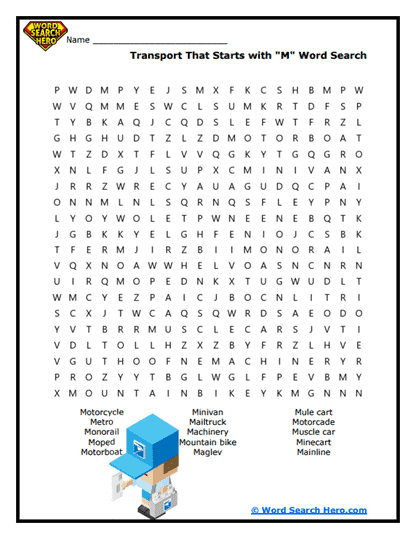
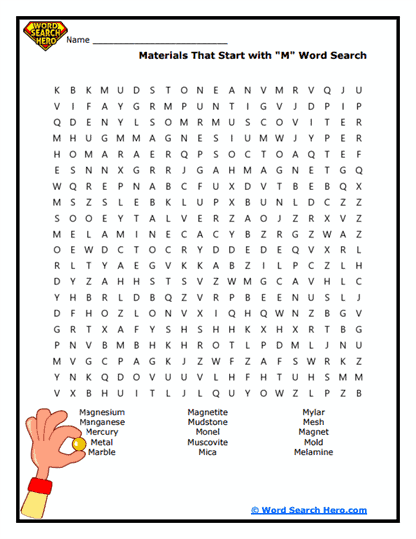
About Our Starts With Letter M Word Searches
Our Starts With Letter M word search collection is built around a letter students see all the time. From “monkey” and “mountain” to “matrix” and “motorcycle,” these puzzles bring together words from many parts of everyday life.
Because all the words start with M, students quickly learn where to look when searching the grid. This makes the puzzles easier to start while still giving a fun challenge. They’re a great way to build skills in phonics practice and strengthen patterns used in reading development.
Teachers can use these puzzles during centers or as a quiet activity. Parents and homeschoolers will also find them easy to use for short learning sessions. As students work through each puzzle, they build confidence by recognizing word patterns and spelling more accurately.
Marvelous M Words in Everyday Language
The letter M shows up in many words students already know.
In these puzzles, learners might find words about animals, machines, music, math, and more. That wide mix keeps the activity interesting and helps students connect words to real life.
Some words will feel familiar, like “mint” or “moose.” Others may be new, like “moraine” or “modulus.” This mix helps students grow their vocabulary while still feeling successful.
These puzzles also connect well to topics like math vocabulary and science areas like earth science, since many M words are used in those subjects. Students begin to see how the same letter can appear across many areas of learning.
Paul’s Pro-Tip
 Start with the longest M word in the list.
Longer words are easier to spot because their letter patterns stand out more in the grid. Once you find one big word, it clears space and makes the rest easier to find.
It’s a great way to build momentum at the start of the puzzle.
How Word Searches Encourage Strategic Thinking
Word searches help students think in different ways.
As they search, they must remember how a word is spelled and look for it across the grid. This builds strong pattern recognition skills.
Students also learn to try different strategies. Some scan row by row, while others look for unusual letter combinations or check the corners first. Over time, they figure out what works best for them.
This kind of thinking helps with reading and spelling. It also builds confidence, because students learn how to solve problems on their own.
Because puzzles feel like a game, students stay focused longer. With regular practice, they improve their attention, spelling, and ability to recognize words quickly.
Frequently Asked Questions
How many words are usually included in a puzzle?
Most puzzles include a list of words hidden in the grid. The number can vary depending on how big the puzzle is.
Can these puzzles support alphabet learning?
Yes. Since all the words start with M, students get repeated practice with that letter and its sound.
Are the words hidden in different directions?
Yes. Words can go across, up and down, diagonally, and sometimes backward.
What age group typically enjoys these puzzles?
They are great for elementary students, but anyone who enjoys word puzzles can have fun with them.
Do these puzzles require special materials?
No. You only need a printed puzzle and something to write with to get started.