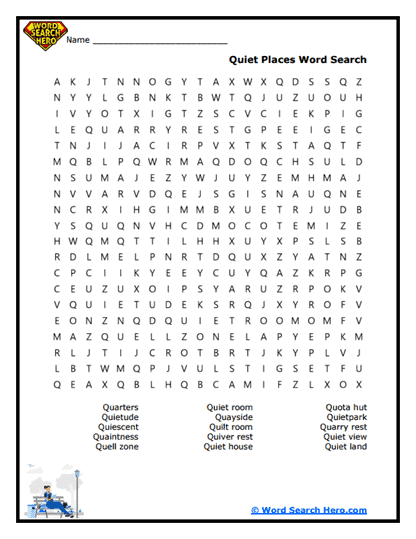
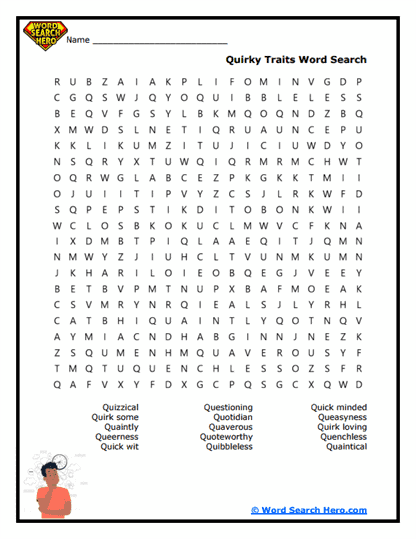
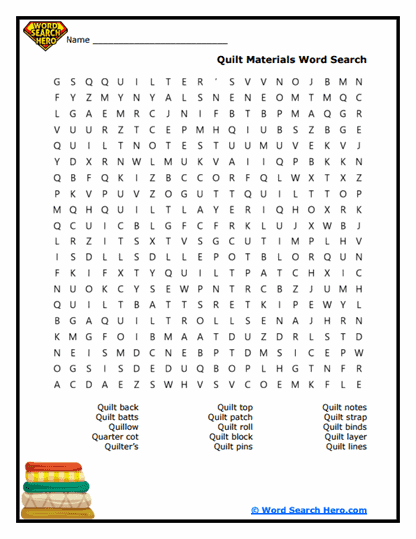
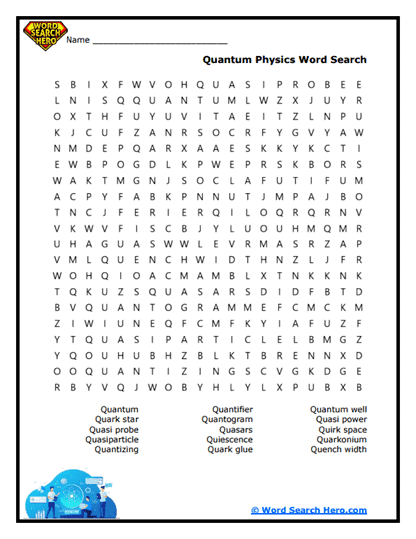
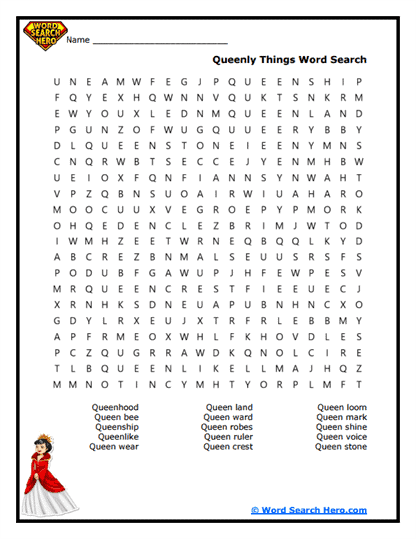
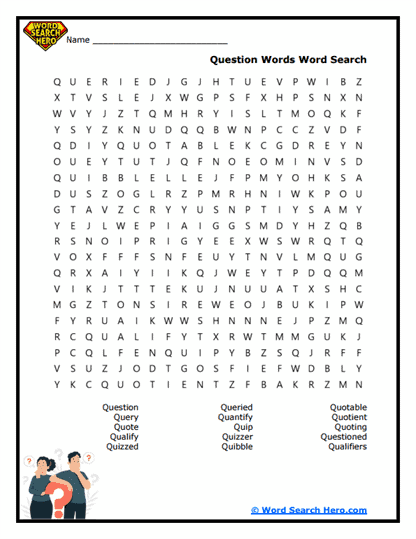
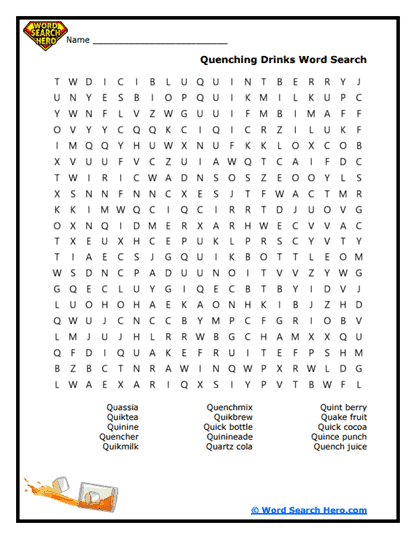
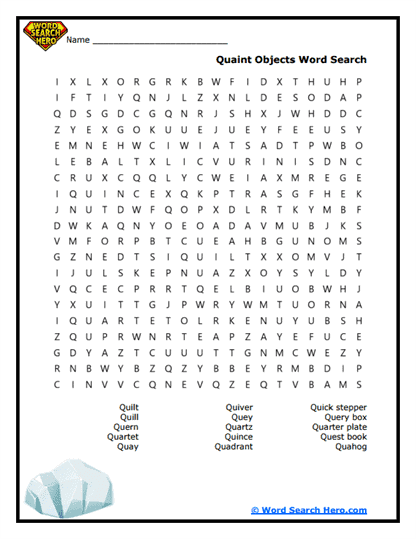
About Our Starts With Letter Q Word Searches
Our Starts With Letter Q word search collection focuses on one of the most unusual letters in the alphabet. Every puzzle is built around Q words, giving students a fun challenge that feels a little different from more common letter sets.
What makes Q special is its strong partnership with the letter U. In almost every case, they appear together as “qu,” which gives learners a clear pattern to look for. This makes these puzzles a great match for early spelling work and pattern recognition, especially alongside topics like phonics and spelling patterns.
Even though there are fewer Q words than other letters, the ones that do exist are often interesting and memorable. Students may come across words tied to science, personality, objects, or everyday life. That mix keeps the puzzles engaging while still building real vocabulary skills.
For teachers and families, these puzzles turn a tricky letter into something approachable. Instead of feeling stuck on an uncommon letter, students begin to see it as a pattern they can recognize and use.
What Makes Q Vocabulary So Unique in English
The letter Q stands out right away because it almost never works alone.
Unlike most letters, Q nearly always teams up with U. That means students aren’t just learning one letter-they’re learning a pair that works together in a very consistent way. Once they understand this, everything starts to click.
This makes Q words easier than they seem at first.
When students scan a puzzle, they can skip most of the grid and focus on spotting “qu.” That gives them a huge advantage and helps them feel more successful. It’s also a great way to build confidence with a letter that might otherwise feel difficult.
Q words are also memorable because they are less common. Words like “quasar,” “quilt,” or “query” stand out more than everyday words. That helps students remember both the meaning and the spelling long after the puzzle is finished.
Paul’s Pro-Tip
 In Q puzzles, always search for “QU” first-never just “Q.”
That pair is your shortcut. Once you find “qu,” check the letters around it to see if they match a word from your list. This works especially well because almost every answer will start the same way.
Think of “qu” as your starting signal-it points you right to the word.
Turning Q Words Into Quick Spelling Wins
Q puzzles are perfect for quick and easy spelling practice.
After finishing a puzzle, pick a few Q words and have students write them from memory. Because the “qu” pattern is so strong, students often get the beginning right-and that builds confidence fast.
You can keep it simple:
- write each word once from memory
- say the word out loud and spell it together
- find another word that starts with “qu”
This works well alongside other early literacy skills like sight words and basic work with word families, helping students see how patterns repeat across different words.
The goal isn’t to memorize long lists. It’s to notice the pattern, use it, and build confidence step by step. With Q words, that process happens quickly-and that’s what makes them so rewarding to learn.
Frequently Asked Questions
Why do most Q words include the letter U?
In English, Q is almost always followed by U because together they create the “qu” sound. This pairing is one of the most consistent spelling patterns students will learn.
Are Q word puzzles harder than other letter puzzles?
They can feel different at first because there are fewer Q words. But once students recognize the “qu” pattern, many actually find them easier to solve.
What types of words might appear in these puzzles?
Students will see a mix of words, including objects, descriptive terms, and interesting topic-based vocabulary. Even though Q words are less common, they still connect to real-world ideas.
Can students learn spelling patterns from these puzzles?
Yes, and this is one of the biggest benefits. Repeated exposure to “qu” helps students quickly recognize and remember this important spelling pattern.
Do these puzzles work well as quick learning activities?
They’re perfect for short practice sessions. Students can complete a puzzle in a small amount of time while still building useful spelling and word recognition skills.