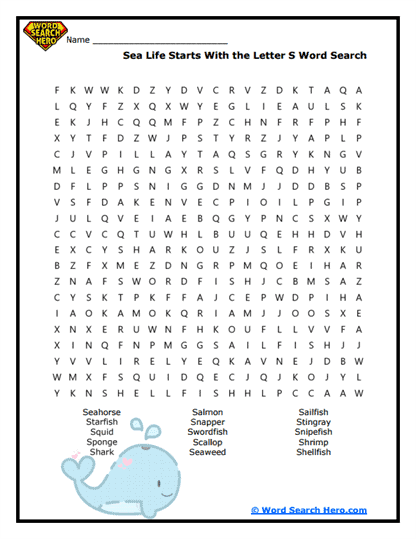
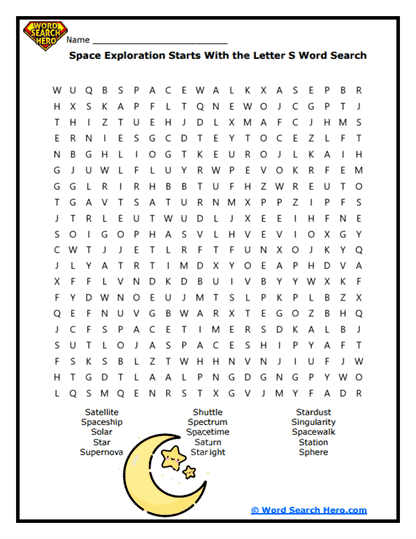
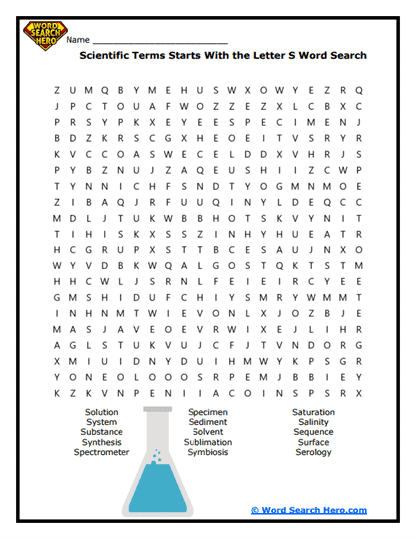
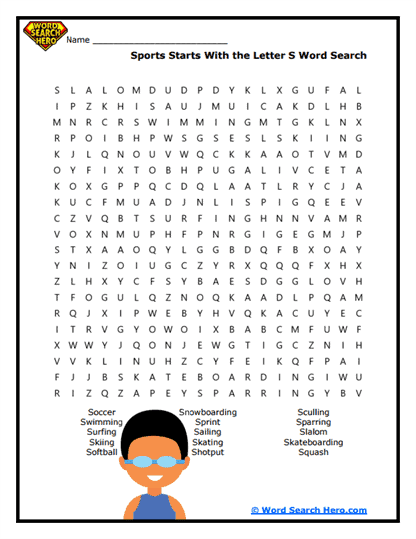
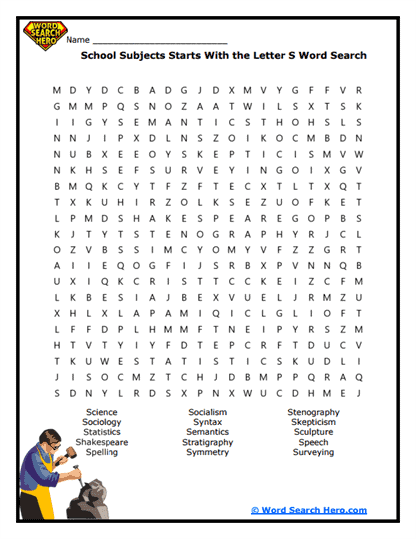
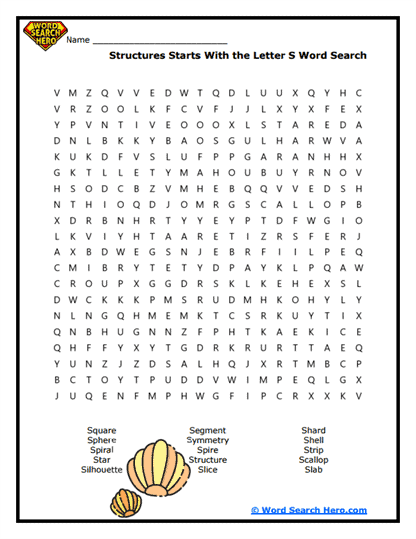
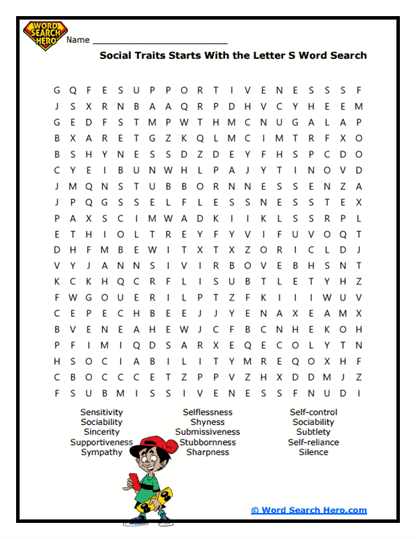
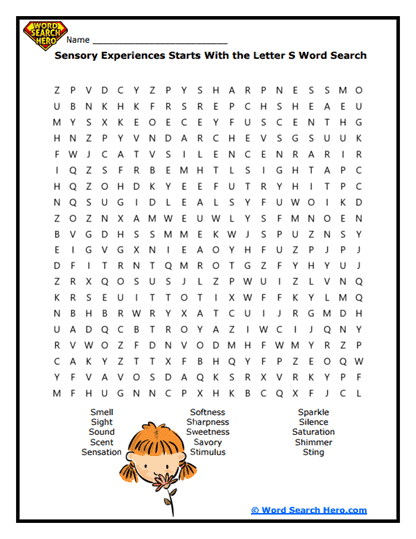
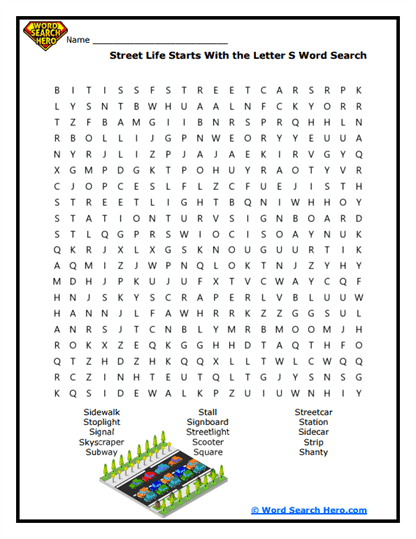
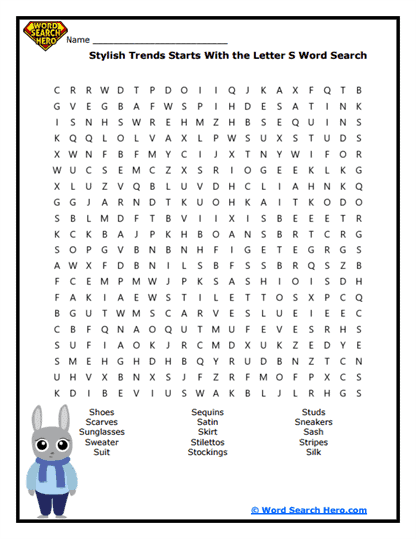
About Our Starts With Letter S Word Searches
Our Starts With Letter S word search collection brings together an incredible range of vocabulary, all unified by one of the most common letters in English. From sea creatures like “shark” and “squid” to academic terms like “statistics” and “synthesis,” these puzzles show just how much language begins with S.
Because S is so widely used, these puzzles feel both familiar and expansive. Students quickly recognize many of the starting sounds, which builds confidence, while still encountering new and meaningful words across topics like science, space, sports, and social development. This makes them a strong companion to foundational skills like phonics and broader language categories such as vocabulary.
Teachers often use these puzzles to reinforce letter recognition while connecting to subject-based learning. Parents and homeschoolers appreciate how easily they can turn a simple printable into a rich learning moment. With every word beginning the same way, students begin to spot patterns faster-an important step in building reading fluency and spelling awareness.
The Surprising Range of Words That Start With S
What makes this collection stand out is just how far the letter S stretches across different areas of knowledge.
Within a single set of puzzles, students might explore ocean life, outer space, scientific concepts, personal traits, and even city infrastructure. It’s not just a vocabulary exercise-it’s a tour through multiple subjects, all connected by one starting letter.
That variety matters.
When learners see words like “supernova,” “sidewalk,” and “sincerity” side by side, they begin to understand that language isn’t organized into neat categories. Instead, it connects ideas across disciplines. This makes S-based puzzles a natural fit alongside topics like science or broader real-world themes found in social studies learning.
It also helps students stay engaged. Familiar words keep the activity approachable, while less common terms introduce just enough challenge to spark curiosity. The result is a puzzle experience that feels both comfortable and exciting at the same time.
Paul’s Pro-Tip
 If a puzzle feels overwhelming, have students lightly cross out each word on the list as soon as they find it.
This keeps the search organized and prevents them from accidentally looking for the same word twice. It also gives a small sense of progress with each find, which helps maintain focus-especially for longer or more detailed puzzles.
Turning S Words Into Quick Writing Prompts
One of the easiest ways to extend these puzzles is by turning the words into short writing activities.
After finishing a puzzle, choose 3-5 S words and challenge students to use them in a sentence, a short paragraph, or even a quick story. For example, they might combine “shuttle,” “storm,” and “signal” into a creative narrative.
This works especially well with action-based and descriptive vocabulary, making it a great pairing with topics like action verbs or descriptive language from adjectives.
You can also keep it simple:
- write one sentence per word
- describe a real-life situation using the word
- create a “mini story” using three puzzle words
These small writing extensions help move vocabulary from recognition into actual use. Instead of just finding the word, students begin to understand how it fits into communication-which is where real language growth happens.
Frequently Asked Questions
What makes the letter S good for word search puzzles?
The letter S is extremely common, which means it opens the door to a wide variety of vocabulary. This allows puzzles to feel rich and diverse while still being accessible to learners at different levels.
Do these puzzles help improve observation skills?
Yes, and in a very practical way. Students must carefully scan the grid, compare letter sequences, and stay focused long enough to find matches, all of which strengthen visual attention and detail recognition.
Can these puzzles be used for early finishers in class?
They’re perfect for that. Because they require little explanation and no setup, students can jump right in and stay productively engaged while others finish their work.
Is it helpful to search for longer words first?
For many students, yes. Longer words often have more distinct letter patterns, which can make them easier to spot and help build momentum early in the puzzle.
Can students make their own S word list before solving the puzzle?
Absolutely, and it’s a great extension activity. Brainstorming S words ahead of time helps activate prior knowledge and makes students more aware of patterns when they begin the puzzle.