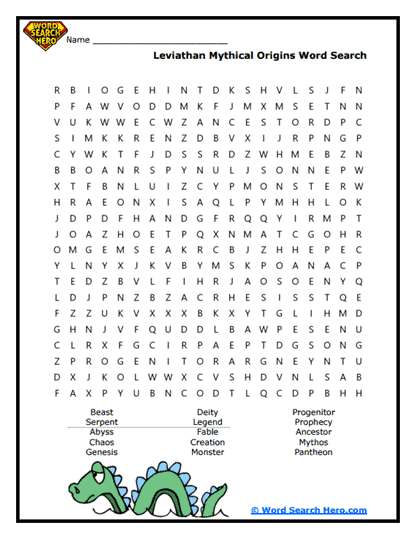
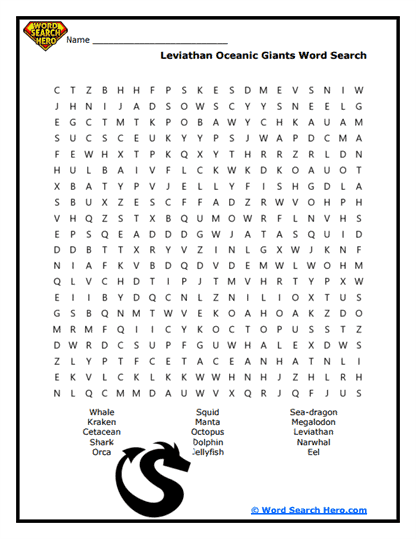
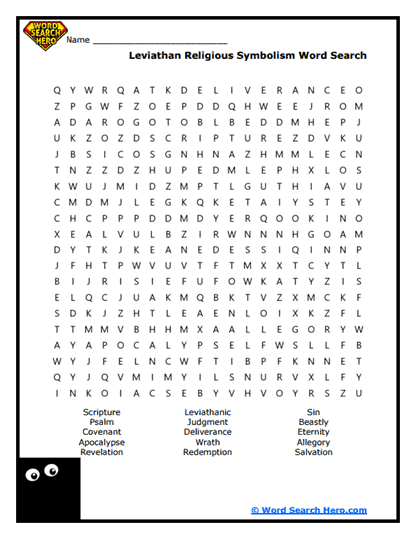
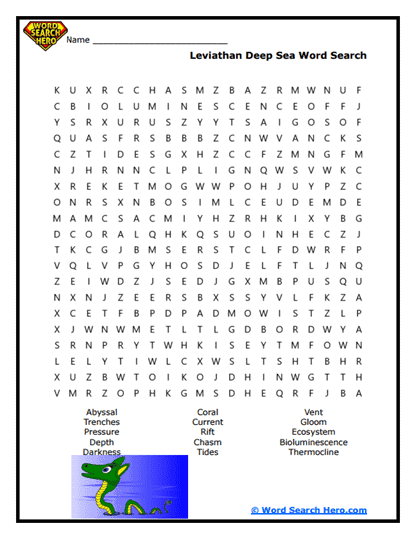
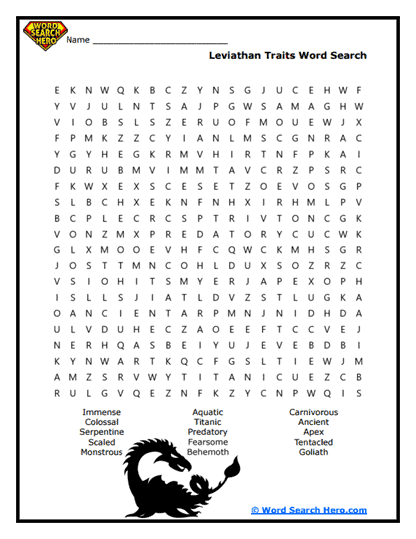
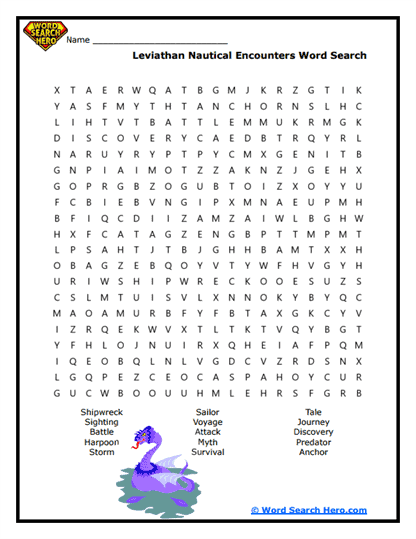
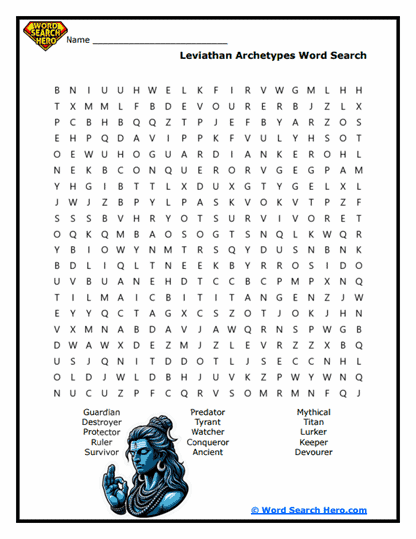
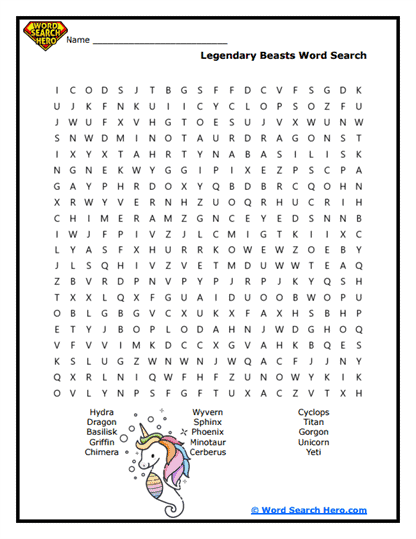
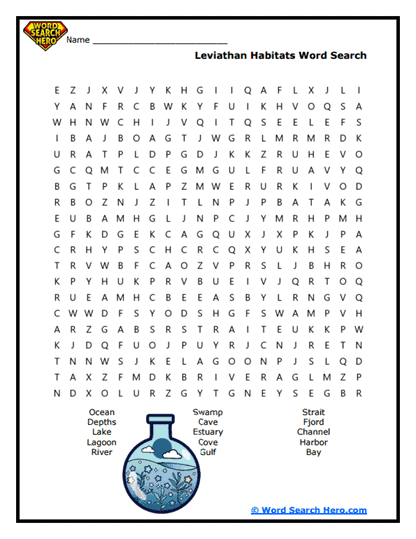
About Our Leviathan Word Searches
Our Leviathan Word Searches explore one of the most legendary sea creatures ever described in mythology and ancient storytelling while helping students strengthen vocabulary and reading skills through engaging printable puzzles. The Leviathan is often portrayed as a massive sea creature of incredible power, appearing in historical texts, legends, and maritime folklore. By turning this famous sea creature into a puzzle theme, students can explore the language connected to ocean myths while enjoying a fun and educational activity.
Word searches are a simple but powerful way to reinforce literacy skills. As students scan the puzzle grid to locate hidden words, they practice recognizing spelling patterns, identifying letter combinations, and strengthening visual tracking skills. These abilities support reading fluency and help learners become more confident when encountering unfamiliar vocabulary.
Teachers frequently use themed puzzles like these as classroom warm-ups, literacy center activities, or enrichment tasks for students who finish assignments early. Because word searches allow students to work independently while still interacting with meaningful vocabulary, they help maintain a focused learning environment.
Parents and homeschool educators also find printable puzzles easy to incorporate into learning routines. A single puzzle can introduce ocean mythology vocabulary before a reading lesson or serve as a review activity afterward.
The Leviathan theme naturally sparks curiosity about legendary sea creatures and ancient ocean stories. Words connected to oceans, storms, massive creatures, and maritime legends help students imagine the mysterious depths of the sea.
By combining mythology with puzzle-solving, these activities transform vocabulary practice into an exciting exploration of one of the ocean’s most famous legendary creatures.
The Legend of the Leviathan
The Leviathan is one of the most famous sea creatures described in ancient texts and mythology. In many stories, it is portrayed as a gigantic serpent-like creature that lives deep beneath the ocean’s surface. Sailors and storytellers often imagined it as a powerful being capable of creating massive waves or storms as it moved through the sea.
The idea of the Leviathan appears in several ancient traditions and writings, where it symbolized the immense power and mystery of the ocean. For people in earlier centuries who traveled across dangerous waters, the deep sea often felt unknown and unpredictable. Legends like the Leviathan helped explain the fear and wonder people felt toward the ocean.
Introducing the Leviathan through word search puzzles allows students to explore vocabulary connected to ocean mythology. Words related to storms, waves, deep water, and giant sea creatures help learners visualize the dramatic environments described in these legends.
Teachers can extend the activity by asking students why ancient sailors might have imagined such enormous sea creatures. Did mysterious ocean sounds or powerful storms inspire these stories? Discussions like these help students think about how myths often grow from real-world experiences.
Students may also enjoy imagining their own legendary sea creature. What would it look like? Would it live in deep trenches, underwater caves, or near giant coral reefs? Encouraging these ideas helps strengthen creative thinking while reinforcing vocabulary.
Exploring the legend of the Leviathan helps students see how myths and ocean exploration have long been connected throughout history.
Paul’s Pro-Tip

After students complete the puzzle, try a quick “deep sea discovery” challenge. Ask them to pick three words from the puzzle and imagine how those words might appear in a story about a giant sea creature like the Leviathan.
Another fun extension is asking students to design their own legendary ocean monster using several puzzle words as clues about its size, habitat, or abilities.
These small follow-up activities turn a simple puzzle into a creative storytelling opportunity.
Why Ocean Mythology Themes Inspire Learning
Ocean mythology captures students’ curiosity because it blends mystery, storytelling, and exploration. Giant sea creatures like the Leviathan have fascinated people for centuries, making them an engaging theme for vocabulary activities.
Word search puzzles strengthen literacy skills by encouraging students to recognize words through repeated visual scanning. As learners search for hidden words, they repeatedly examine spelling patterns and letter combinations, helping reinforce vocabulary recognition.
Puzzle solving also builds concentration. Students must carefully examine rows, columns, and diagonal patterns to locate hidden terms. This attention to detail strengthens focus and problem-solving abilities.
Another benefit is visualization. Words connected to deep oceans, waves, storms, and giant creatures naturally create vivid mental images. These images help students remember vocabulary and understand the storytelling themes connected to ocean legends.
When educational activities combine imaginative themes with interactive puzzles, students remain engaged while strengthening important language skills. Exploring ocean myths through word searches makes vocabulary practice feel like an adventure beneath the waves.
Frequently Asked Questions
What kind of words appear in Leviathan word searches?
Leviathan-themed puzzles typically include vocabulary related to ocean myths, giant sea creatures, and marine environments. Students may encounter words connected to deep water, waves, storms, sea monsters, and other elements commonly found in ocean legends.
How can teachers use Leviathan word searches during an ocean mythology lesson?
Teachers can introduce the puzzle before discussing famous sea creature legends from history. After completing the puzzle, students can explore why sailors and storytellers created myths about enormous sea creatures living in the depths of the ocean.
Why is the Leviathan considered a famous sea creature?
The Leviathan appears in ancient texts and mythology as a massive and powerful ocean creature. Over time, it became one of the most well-known legendary sea monsters associated with the mystery of the deep sea.
How can homeschool parents extend learning after the puzzle is completed?
Parents can ask students to choose several words from the puzzle and create their own sea monster legend. This activity encourages creative storytelling while helping reinforce the vocabulary they discovered.
Do mythology-themed word searches help students remember vocabulary?
Yes, repeatedly searching for words within a puzzle grid helps reinforce spelling patterns and word recognition. When students encounter those same words later in reading or writing activities, they are more likely to recognize and understand them.