Choose a topic !

Mark Twain Word Searches

Twain Beginnings Word Search

Twain Beginnings

This word search focuses on the life and career of Mark Twain, the pen name of Samuel Clemens. The vocabulary words reflect different aspects of his personal and professional journey, from his Missouri roots to his roles as a humorist, lecturer, and journalist. Students will search for words like steamboat, biography, and legacy, which capture […]

View More
River Journey Word Search

River Journey

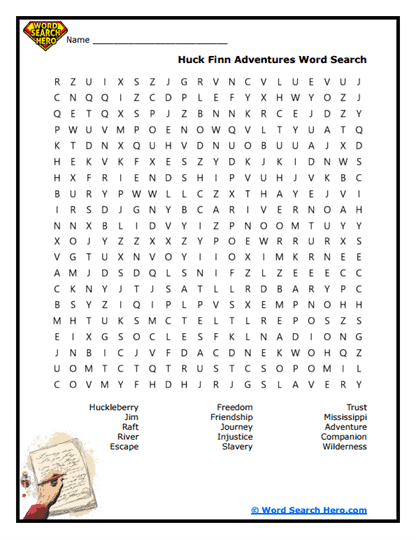
This puzzle highlights vocabulary from The Adventures of Huckleberry Finn, focusing on key themes and characters from Twain’s classic novel. Words like Huckleberry, Jim, Raft, and River recall the iconic Mississippi journey at the heart of the story. Others such as Freedom, Friendship, and Injustice point to the deeper moral and social issues explored in […]

View More
Mischief Maker Word Search

Mischief Maker

The vocabulary in this word search centers on Twain’s The Adventures of Tom Sawyer, a story filled with youthful energy and small-town adventure. Students will encounter familiar characters such as Tom, Becky, Aunt, Sid, and explore story elements like Fence, Whitewash, Cave, and Treasure. Words such as Pirate and Superstition reveal Tom’s playful imagination and […]

View More
River Roots Word Search

River Roots

This word search explores the geographical and cultural landscape of the Mississippi River, a central element in Twain’s works. Words like Steamboat, Bayou, Dock, and Plantation evoke 19th-century life along the river. Natural features such as Canoe, Delta, Marsh, and Sandbar emphasize the beauty and complexity of this environment. The vocabulary introduces students to the […]

View More
Clever Critique Word Search

Clever Critique

This worksheet highlights vocabulary related to Twain’s use of satire and humor to challenge social norms. Words such as Irony, Sarcasm, Parody, and Critique capture techniques Twain employed in his writing. Others like Mockery, Absurdity, and Exaggeration reflect the witty and insightful tone that defines his literary style. Students gain exposure to the language of […]

View More
Liberty Quest Word Search

Liberty Quest

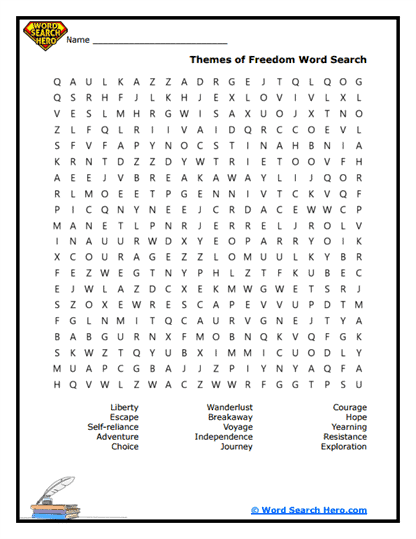
This word search centers on the powerful theme of freedom that runs through Twain’s works. The vocabulary includes Liberty, Escape, Self-reliance, and Adventure, reflecting individualism and moral courage. Words like Voyage, Independence, and Journey connect to the spirit of exploration and personal growth. The puzzle emphasizes freedom as both a physical and emotional pursuit in […]

View More
Truth Lens Word Search

Truth Lens

This puzzle explores Twain’s role as a social critic who exposed hypocrisy, racism, and inequality in society. Words such as Oppression, Poverty, Corruption, and Injustice reflect his sharp commentary on moral and social failings. Through vocabulary like Pretense, Conformity, and Materialism, students confront enduring human flaws Twain addressed through his wit and honesty. The word […]

View More
River Symbolism Word Search

River Symbolism

The vocabulary in this worksheet explores the Mississippi River’s symbolic meanings in Twain’s writing. Words like Current, Depth, Voyage, and Stillness reveal the river as both a physical and spiritual force. Other terms such as Muddy, Reflection, and Channel point to life’s complexity and transformation. The word search helps students connect natural imagery to deeper […]

View More
Twain's Humor Word Search

Twain’s Humor

This word search celebrates the humor that defines Twain’s storytelling style. Vocabulary such as Joke, Quip, Punchline, and Exaggeration represent the techniques he used to engage readers. Other terms like Prank, Wordplay, and Satire showcase his blend of sharp intellect and warm-hearted mischief. Students explore how Twain’s humor not only entertained but also revealed truth […]

View More
Timeless Voice Word Search

Timeless Voice

This word search focuses on Twain’s lasting influence on literature and culture. Words like Classic, Iconic, Legacy, and Tradition highlight his role in shaping American storytelling. Others such as Canon, Reflection, and Cultural emphasize the continuing relevance of his themes and style. The vocabulary captures how Twain’s works remain touchstones for literary study and artistic […]

View More

About Our Mark Twain Word Searches

Step into the witty and wonder-filled world of Mark Twain, the storyteller who turned America’s rivers, towns, and tempers into timeless tales. This collection celebrates the man born Samuel Clemens, whose words continue to ripple through literature with humor, honesty, and heart. Each activity takes learners down the Mississippi of the imagination, exploring his adventures, his satire, and his enduring insight into human nature.

Twain’s genius lies in his dual gift for laughter and truth. From The Adventures of Tom Sawyer to Huckleberry Finn, his stories blend childhood curiosity with biting social critique. These puzzles draw readers into his landscapes of mischief and morality, reflecting his deep understanding of people and place. They transform vocabulary into exploration, reminding us that every word carries both meaning and mischief.

Each page invites reflection and play. Students engage with the language of freedom, humor, and conscience while improving literacy, focus, and comprehension. The result is more than practice-it’s a journey through American history, culture, and imagination guided by one of its sharpest voices.

What’s Inside?

This collection travels through Twain’s life, his literature, and the legendary river that shaped his art. Each themed activity celebrates a unique aspect of his storytelling-from small-town adventures to biting social commentary. Together, they show how Twain turned observation into art and laughter into lasting truth.

Twain Beginnings
Explore the life of Samuel Clemens as he evolves from steamboat pilot to world-famous humorist. Words like “Missouri,” “Steamboat,” and “Lecturer” reveal his restless curiosity and talent for reinvention. It’s a lively glimpse into how real experiences shaped a literary legend.

River Journey
Sail along with Huck and Jim in The Adventures of Huckleberry Finn through words such as “Raft,” “Freedom,” and “Friendship.” This activity captures the moral courage and wild spirit of Twain’s greatest adventure story. Each term reflects the search for justice, independence, and belonging that lies at its heart.

Mischief Maker
Return to the whitewashed fences and hidden treasures of The Adventures of Tom Sawyer. Vocabulary like “Fence,” “Cave,” and “Pirate” brings back the playful energy of youth and the thrill of imagination. It’s a joyful reminder of how humor can reveal life’s deepest lessons.

River Roots
Explore the beauty and vitality of the Mississippi River through words like “Bayou,” “Plantation,” and “Current.” This puzzle celebrates the setting that shaped Twain’s vision of freedom and fluidity. It immerses students in the natural and cultural heart of nineteenth-century America.

Clever Critique
This section honors Twain’s satirical style-the art of truth told through laughter. Vocabulary such as “Irony,” “Mockery,” and “Exaggeration” shows how wit can expose folly and hypocrisy. It encourages learners to see humor as both entertainment and insight.

Liberty Quest
Discover the spirit of freedom that flows through Twain’s fiction. Words like “Escape,” “Voyage,” and “Courage” reflect characters’ quests for self-reliance and dignity. It’s an inspiring lesson in independence and resilience.

Truth Lens
Here, students confront Twain’s role as a moral observer and social critic. Vocabulary such as “Injustice,” “Hypocrisy,” and “Corruption” captures his fearless confrontation with inequality. The activity builds awareness of how literature can challenge society and provoke conscience.

Flow Meaning
Dive into the symbolism of the Mississippi as both setting and metaphor. Words like “Current,” “Reflection,” and “Voyage” reveal the river’s spiritual and emotional significance. This exercise highlights how natural imagery can reflect life’s constant motion and change.

Wit Works
Celebrate Twain’s humor with words like “Joke,” “Wordplay,” and “Punchline.” This section shows how laughter becomes storytelling’s secret weapon-capable of disarming, teaching, and delighting. Each term honors Twain’s knack for finding wisdom in laughter.

Timeless Voice
A tribute to Twain’s lasting legacy, featuring words such as “Classic,” “American,” and “Pioneer.” This closing activity honors his influence on writers, humorists, and dreamers across generations. It reminds readers that truth, once told with heart, never grows old.

These activities blend vocabulary learning with literary discovery. Students refine language skills, cultural literacy, and interpretive thinking while journeying through Twain’s humor and humanity. Each challenge connects directly to the author’s themes of courage, honesty, and the joy of storytelling.

Fun Facts About Mark Twain

Mark Twain was born Samuel Langhorne Clemens in 1835 in the small river town of Hannibal, Missouri, which later inspired the fictional St. Petersburg of Tom Sawyer and Huckleberry Finn. As a young man, he worked as a steamboat pilot on the Mississippi River-a career that gave him both his famous pen name and a lifelong love of adventure. “Mark twain” was a riverboat term meaning two fathoms deep, a safe depth for navigation.

Before becoming a novelist, Twain tried his hand as a printer’s apprentice, miner, and journalist. His keen eye for absurdity and injustice came from observing real life in all its comedy and contradiction. His first big success, The Celebrated Jumping Frog of Calaveras County, made readers laugh across America and introduced his signature mix of wit and wisdom.

Twain’s humor often hid serious critique. Beneath his jokes about human folly lay fierce opposition to slavery, greed, and hypocrisy. His novels were among the first to use authentic regional dialects, giving voice to ordinary Americans rather than polished elites. Critics and readers alike recognized him as both entertainer and reformer.

Despite his fame, Twain faced deep personal and financial losses. He outlived most of his family and suffered bankruptcy before rebuilding his fortune through worldwide lecture tours. Even in grief, his sharp humor never dulled; he once quipped, “The reports of my death are greatly exaggerated.”

Twain was fascinated by technology and invention, investing in early typewriters and developing ideas for printing presses. Though not all his ventures succeeded, his curiosity embodied the restless spirit of progress that defined his age.

In 1907, Oxford University awarded him an honorary doctorate, recognizing him as a global literary treasure. He died three years later, in 1910-the same year Halley’s Comet returned to Earth, just as it had in the year he was born. Twain had predicted he would “go out with it,” and, fittingly, he did.

Mark Twain’s legacy endures because his writing balances laughter with truth. He captured the contradictions of human nature and the promise of freedom with language that still feels alive today. His stories remind us that humor is often the sharpest form of honesty-and that compassion, not cynicism, is the heart of great storytelling.