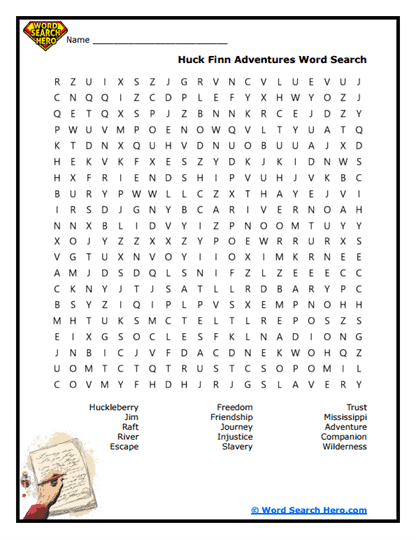
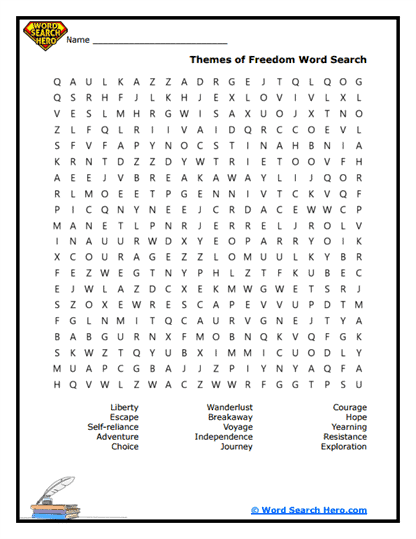
About Our Mark Twain Word Searches
Our Mark Twain Word Searches help students explore the work of one of the most famous and influential American authors while strengthening vocabulary, spelling, and concentration skills. These printable puzzles introduce learners to the characters, settings, and storytelling ideas connected to Twain’s classic novels and humorous writing.
Teachers often look for engaging ways to reinforce literary knowledge, and word searches provide a simple and effective option. As students search for words related to Mark Twain’s books, characters, and historical settings, they become more familiar with the vocabulary associated with classic American literature. Repeated exposure to these terms helps learners recognize them more easily when studying famous novels or discussing literary themes.
Parents and homeschool educators also appreciate activities that combine learning with entertainment. Word searches encourage visual scanning, patience, and attention to detail while quietly reinforcing reading-related concepts. Students interact with vocabulary connected to adventure, humor, friendship, and life along the Mississippi River.
Mark Twain’s stories remain widely read because they combine entertaining adventures with thoughtful observations about society and human behavior. Through these puzzles, students gain an engaging introduction to the vocabulary associated with one of the most beloved storytellers in American literary history.
The Author of American Adventure Stories
Mark Twain was the pen name of Samuel Langhorne Clemens, an American writer born in 1835 in Missouri. He became famous for his humorous storytelling and vivid descriptions of life in the United States during the 19th century.
Two of Twain’s most well-known novels are The Adventures of Tom Sawyer and Adventures of Huckleberry Finn. These stories follow young characters who experience exciting adventures along the Mississippi River while learning important lessons about friendship, independence, and moral choices.
Twain’s writing is known for its lively dialogue, memorable characters, and strong sense of place. He often used regional speech and everyday experiences to make his stories feel authentic and relatable.
In addition to novels, Twain also wrote essays, speeches, and humorous sketches that commented on society and human nature. His wit and storytelling style made him one of the most popular writers of his time.
Students studying Mark Twain often discover how humor and adventure can combine with deeper ideas about society and personal growth.
Paul’s Pro-Tip
After students finish the word search, try a quick “adventure story starter” activity.
Ask them to circle one character name and one place-related word from the puzzle.
Then ask: If that character started a new adventure in that place, what might happen next?
Students often imagine river journeys, hidden caves, or unexpected discoveries. This activity helps them see how authors like Twain turn simple situations into exciting stories.
Great adventure stories often begin with curiosity and a willingness to explore.
Why Mark Twain’s Writing Is So Influential
Mark Twain’s work had a lasting impact on American literature because of his distinctive voice and storytelling style. His novels often combine humor with thoughtful observations about society, culture, and human behavior.
Twain was especially skilled at creating memorable characters and lively dialogue. His use of regional speech helped make his stories feel realistic and helped shape the development of American literary voice.
Many of his stories explore themes such as friendship, freedom, personal responsibility, and moral decision-making. Through the adventures of young characters, Twain often encouraged readers to reflect on fairness, courage, and individual conscience.
Today, Twain’s works continue to be widely read and studied. His stories have inspired numerous adaptations in film, theater, and other media, helping introduce new generations to his characters and adventures.
Word searches featuring vocabulary connected to Mark Twain help reinforce the characters, settings, and themes students encounter when studying classic American literature. By recognizing these words repeatedly, learners gain a clearer understanding of why Twain remains one of the most celebrated authors in literary history.
Frequently Asked Questions
Who was Mark Twain?
Mark Twain was the pen name of Samuel Langhorne Clemens, an American author known for writing humorous and adventurous stories.
What are Mark Twain’s most famous books?
His best-known novels include The Adventures of Tom Sawyer and Adventures of Huckleberry Finn.
Why is Mark Twain important to literature?
He helped shape American storytelling through humor, realistic dialogue, and memorable characters.
How can teachers use Mark Twain word searches in class?
Teachers often use them as vocabulary activities, reading warm-ups, or introductions to lessons about classic American literature.
What extension activity works well after completing the puzzle?
Students can write a short adventure story involving two friends exploring a new place and discovering an unexpected challenge along the way.