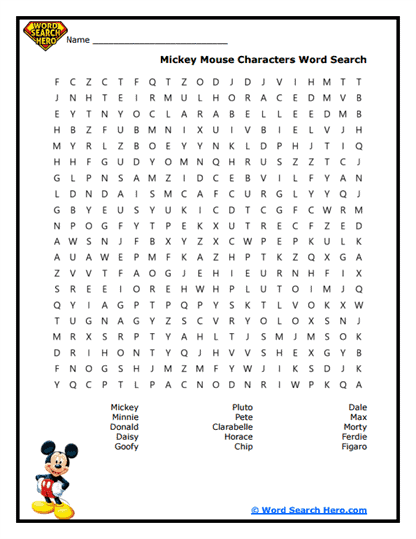
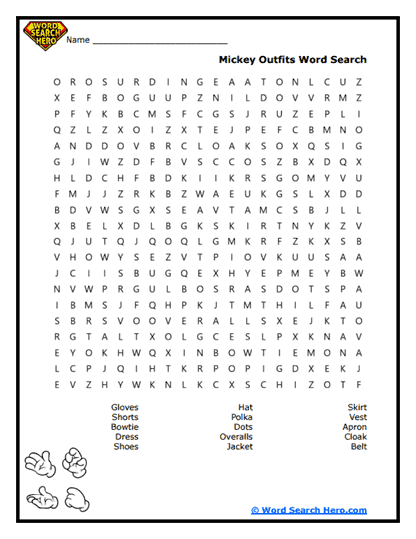
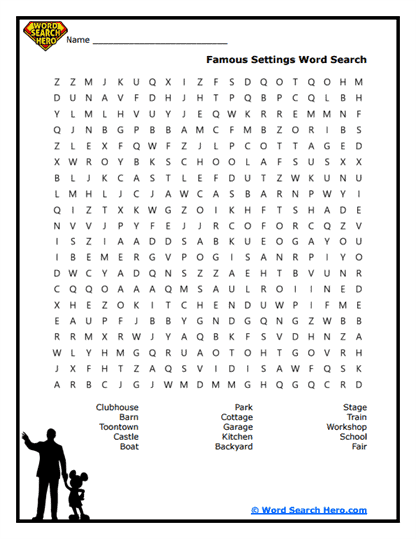
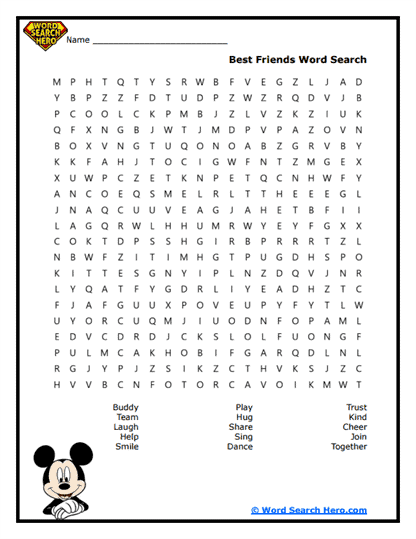
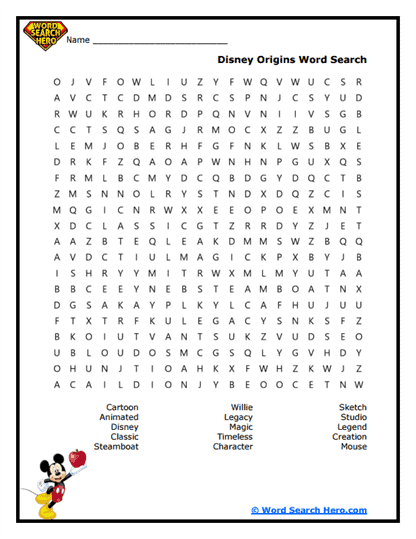
About Our Mickey Mouse Word Searches
Our Mickey Mouse Word Searches help students explore one of the most recognizable characters in popular storytelling while strengthening vocabulary, spelling, and concentration skills. These printable puzzles introduce learners to character names, settings, and cheerful story elements connected to Mickey Mouse and his world of animated adventures.
Teachers often look for engaging ways to reinforce reading and word recognition skills, and word searches provide a simple and effective option. As students search for words related to Mickey Mouse, friends, adventures, and playful settings, they become more familiar with vocabulary tied to character-based storytelling. Repeated exposure to these words helps learners recognize them more easily during reading activities and classroom discussions.
Parents and homeschool educators also appreciate activities that combine learning with fun. Word searches encourage visual scanning, persistence, and attention to detail while quietly reinforcing literacy skills. Students interact with vocabulary connected to friendship, imagination, humor, and teamwork.
Mickey Mouse remains such a popular topic because the character has been part of storytelling, animation, and family entertainment for generations. These puzzles give students an approachable way to connect with familiar characters while practicing focus and reading readiness. They also work well as quiet-time activities, literacy centers, or light extensions after a lesson on characters and stories.
Whether used at home or in the classroom, these printable activities make it easy to turn a well-known character into a fun reading and vocabulary experience.
A Character Who Became a Storytelling Icon
Mickey Mouse first appeared in animation in the early 20th century and quickly became one of the most famous cartoon characters in the world. Over time, Mickey grew from a playful animated figure into a larger symbol of imagination, adventure, and classic character storytelling.
One reason Mickey Mouse works so well for literacy activities is that the character exists in a world full of recognizable names and story elements. Students may already know characters like Minnie Mouse, Donald Duck, Goofy, Pluto, and Daisy Duck, which makes the vocabulary feel welcoming rather than intimidating. Familiarity helps young learners build confidence as they search for words and recognize patterns.
Mickey-centered stories are often built around simple but memorable ideas: helping a friend, solving a problem, exploring a new place, or turning an ordinary day into an adventure. That makes the topic especially useful for students who are still learning how stories work. They can notice characters, settings, actions, and relationships more easily when the material feels familiar.
These puzzles can also support conversations about character traits. Mickey is often shown as curious, cheerful, determined, and kind. Those qualities make him a useful starting point for talking about how characters behave in stories and why audiences connect with them.
For many students, a Mickey Mouse word search feels fun first and educational second, which is often exactly what makes it so effective.
Paul’s Pro-Tip
After students finish the puzzle, try a quick “character teamwork” challenge.
Ask them to pick three words from the puzzle that sound like they belong in the same story. Maybe they choose a character, a place, and an action word.
Then ask: How would those three things work together in a Mickey Mouse adventure?
This gets students thinking about plot without making it feel like formal literary analysis. They start building a beginning, middle, and end almost by accident.
And honestly, that is one of my favorite classroom tricks: sneak the learning in while everyone thinks they are just having fun.
Using Character-Based Puzzles for Reading Skills
Character-themed word searches can do more than keep students busy. They can reinforce several early literacy and comprehension skills at the same time. Because students are working with names and story vocabulary they often already recognize, they are more likely to stay engaged and successful.
These puzzles help strengthen letter tracking and pattern recognition, which are useful for developing reading fluency. They also support spelling familiarity, especially with repeated exposure to well-known names and common adventure words. For younger learners, even recognizing the difference between similar character names can be useful practice.
Mickey Mouse word searches also connect nicely to lessons about stories and media. Teachers can use them before a read-aloud, after a cartoon-themed writing prompt, or alongside a lesson on main characters and supporting characters. Homeschool families can pair them with drawing activities, simple story retells, or character comparisons.
Another advantage is that this topic feels friendly and low-pressure. Some students who hesitate during traditional reading tasks feel more willing to join in when the activity centers on familiar, upbeat characters. That kind of confidence matters.
When a printable activity can support vocabulary, attention, and story understanding all at once, it becomes more than a puzzle. It becomes a useful literacy tool wrapped in something students are genuinely happy to do.
Frequently Asked Questions
What skills can students practice with Mickey Mouse word searches?
Students can practice spelling recognition, visual scanning, concentration, and familiarity with character-based vocabulary.
Are these puzzles best for younger learners?
They are especially appealing for younger students, but they can also work as light review or fun literacy activities for any learner who enjoys familiar characters.
Can these word searches connect to story lessons?
Yes. They pair well with lessons about characters, settings, sequencing, and simple plot structure.
How can families use these at home?
Families can use them during quiet time, as part of a themed learning day, or before a short writing activity where children invent their own Mickey-style adventure.
What is a good follow-up activity after the puzzle?
Have students choose a few words from the puzzle and use them to tell or write a short story featuring Mickey Mouse and his friends.