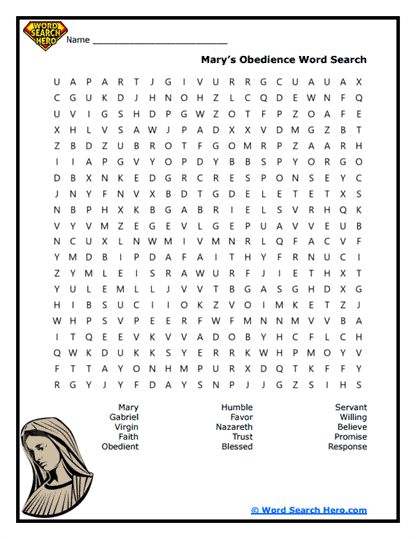
About Our Nativity Word Searches
Nativity word searches provide a meaningful and engaging way to explore this important event while focusing on the people and positions involved. These printable puzzles introduce learners to key figures such as Mary, Joseph, baby Jesus, shepherds, wise men, and angels, along with elements like manger, star, and stable. By emphasizing both the place and the roles present, students gain a clearer understanding of how the Nativity story unfolds.
As students search for words, they begin to connect each person with their position. Mary takes on the role of mother, Joseph as protector and caretaker, shepherds as witnesses, and wise men as seekers. Angels hold the role of messengers, delivering important announcements. This helps learners move beyond recognizing names and toward understanding how each person contributes to the event.
These puzzles also support essential academic skills like vocabulary development, spelling, and concentration. They can be used in classrooms, Sunday school, or homeschool settings as warm-ups, review tools, or discussion starters.
With a range of difficulty levels, Nativity word searches are accessible for many learners. They provide a thoughtful way to explore this event while focusing on the people and positions that give it meaning.
Roles at the Place of Birth
The Nativity becomes much clearer when students focus on the roles present at the place of birth. Word searches centered on this topic often include terms like mother, father, shepherd, king, angel, and messenger. Each of these reflects a responsibility tied to the setting.
Mary holds the position of caregiver and mother, while Joseph takes on the role of protector and provider. Shepherds are in the position of witnesses who receive and respond to the message, and the wise men act as seekers who travel with purpose. Angels serve as messengers, delivering important news. Each role helps students understand how the event is structured.
Encouraging students to think about these roles helps deepen understanding. They can ask questions like, “What responsibility did each person have at the Nativity?” and “How did their position affect what they did?” This kind of thinking builds stronger comprehension and reflection.
By focusing on roles and positions, students begin to see the Nativity not just as a story, but as a moment where each person had a clear purpose and responsibility within a specific place.
Paul’s Pro-Tip

One of the most effective ways to use a Nativity word search is to turn it into a “role-at-the-scene mapping activity.” As students find words like “shepherd,” “angel,” or “wise men,” have them place each role within the Nativity setting and explain why they are there. For example, why are the shepherds nearby? Why do the wise men travel? This helps students connect each person’s position to their purpose in the event, making the story more structured and easier to understand.
Another strategy that works incredibly well is the “arrival and response breakdown.” After completing the puzzle, ask students to identify when each role enters the story and how they respond to what they see or hear. Who arrives first? Who brings a message? Who responds by traveling or witnessing? This builds deeper understanding by showing that roles are not static-they involve movement, response, and timing. It also helps students see how each position contributes to the unfolding of the event.
Understanding the Nativity Through Roles
Nativity word searches can lead to deeper learning when students focus on how each role functions within the place of the event. After completing a puzzle, students can choose one role-such as shepherd, wise man, or angel-and describe what that position involves. This helps connect vocabulary to understanding.
For example, a student might explore what it means to be a witness as a shepherd or what responsibilities come with being a messenger as an angel. Another might examine how the role of a caretaker shapes the actions of Mary or Joseph. These reflections help students understand how each role contributes to the meaning of the event.
This approach also supports cross-curricular learning. It can connect with reading by exploring the Nativity account or with writing by asking students to describe a role in the setting. Group discussions can deepen understanding by comparing perspectives.
By focusing on people and positions, students gain a clearer picture of the Nativity. It transforms a simple puzzle into a meaningful exploration of place, purpose, and responsibility.
Frequently Asked Questions
Who are the main people included in Nativity word searches?
Nativity word searches typically include figures like Mary, Joseph, baby Jesus, shepherds, wise men, and angels. Each of these individuals holds a specific role within the event. Understanding who they are helps students see how the story is structured. It also makes the puzzle more meaningful.
What roles do the shepherds and wise men play in the Nativity?
The shepherds are often seen as witnesses who receive the message and respond quickly. The wise men take on the role of seekers who travel with purpose to find the child. These roles show different ways people respond within the story. It helps students understand action and intention.
Why is it important to understand the roles of Mary and Joseph?
Mary and Joseph hold central positions as caregiver and protector. Their roles involve responsibility, care, and trust within the setting of the Nativity. Understanding their positions helps students see how the event is supported. It also highlights the importance of their actions.
How can I make Nativity word searches more interactive?
You can have students assign each role to a place within the Nativity scene and explain why they are there. Another effective activity is asking them to describe how each person responds to the event. These strategies deepen understanding and encourage discussion. They also help bring the story to life.
What can students learn by focusing on roles in the Nativity?
Students can learn how purpose, responsibility, and response are connected within a single event. By examining each role, they see how different people contribute in unique ways. This creates a clearer understanding of the Nativity. It also encourages reflection on how roles shape meaningful moments.