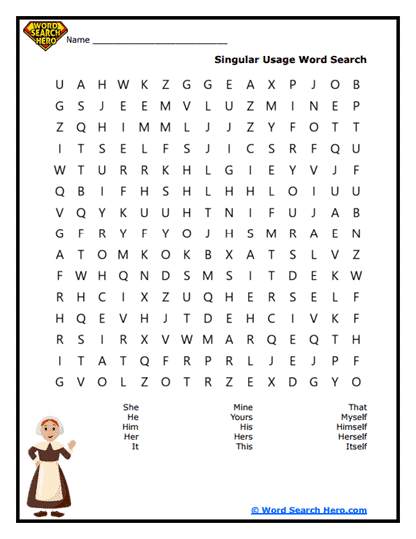
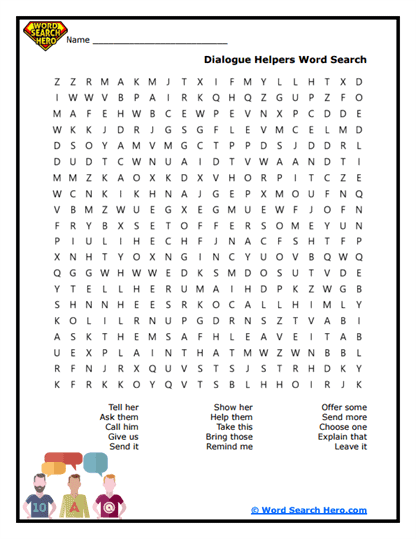
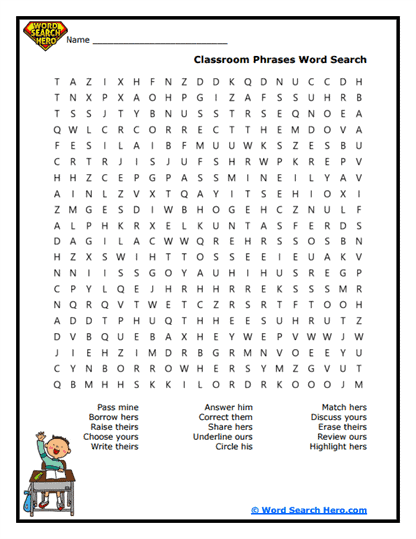
About Our Personal Pronouns Word Searches
Personal pronouns might be small, but they do a big job in everyday language. Words like I, you, he, she, we, and they help us talk and write without repeating names over and over. This collection focuses on helping students recognize and use those words in a way that actually sticks.
Each puzzle in this set takes a slightly different angle. Some focus on basic pronouns, while others mix in ownership (like “mine” or “theirs”) or group references such as “them” and “us.” There are even puzzles built around real phrases students hear in class or use in conversation. That variety helps learners see that pronouns aren’t just grammar terms-they’re tools we use constantly.
These printables work especially well alongside lessons on bold parts of speech and early grammar instruction. They also pair nicely with activities from bold pronouns, giving students more chances to see how these words function in real sentences.
Instead of memorizing lists, students search, recognize, and revisit these words in a way that feels more like a challenge than a worksheet. That repetition-without boredom-is where real learning starts to happen.
Why Pronouns Are the Glue That Holds Sentences Together
Without pronouns, sentences would feel clunky and repetitive. Imagine saying, “Maria went to Maria’s desk because Maria forgot Maria’s book.” It works-but it doesn’t sound natural. Pronouns fix that instantly.
This collection helps students see that shift in action. As they find words like “he,” “they,” and “ours,” they begin to understand how these small replacements keep ideas connected. Pronouns act like shortcuts, linking sentences together so they flow smoothly instead of sounding stiff or repetitive.
You’ll also notice that many puzzles include short phrases rather than just single words. That’s intentional. It helps learners understand how pronouns function inside real language-not just in isolation. This makes a big difference when students begin writing their own sentences.
If you’re already working on sentence-building skills, these puzzles connect naturally with topics like bold action verbs and bold simple sentences, where students start to see how subjects and actions come together. Pronouns are what keep that structure from falling apart when ideas expand.
Paul’s Pro-Tip
 If pronouns aren’t “clicking” for your students, take the lesson off the page for a minute.
Have students point and speak in real time: “I am sitting,” “You are listening,” “We are learning.” Then switch it up-have them talk about classmates: “He is reading,” “They are working.” This quick activity turns pronouns into something they feel instead of something they memorize.
Once they go back to the puzzles, those words won’t feel abstract anymore-they’ll feel familiar.
Simple Games to Help Students Practice Pronouns Without Worksheets
Word searches are a great starting point, but pronouns really come alive when students use them in motion, speech, and quick thinking.
One easy game is “Pronoun Swap.” Say a sentence like “Liam is running,” and have students replace the name: “He is running.” Then make it trickier by adding more people: “Liam and Ava are running” → “They are running.” It builds instant awareness of how pronouns change with context.
Another simple activity is a “Pass the Sentence” game. One student starts with a noun-based sentence, and each student after must improve it using pronouns. By the end, the sentence becomes smoother and more natural. It’s a fun way to show how writing improves step by step.
You can also tie this into writing by having students describe their day using at least five pronouns they found in the puzzle. This works especially well alongside lessons on bold sentence structure or even beginner work with bold adjectives, where students are already expanding their ideas.
These small, no-prep activities help students move from recognition to real use-and that’s where grammar starts to stick.
Frequently Asked Questions
What are personal pronouns in English?
Personal pronouns are words we use to replace names or things so we don’t have to repeat them. Instead of saying someone’s name over and over, we can say “he,” “she,” or “they,” which makes sentences sound smoother and more natural. They show up constantly in both speaking and writing, even if students don’t always notice them at first.
What are the different types of personal pronouns?
Personal pronouns usually fall into two main groups: subject pronouns and object pronouns. Subject pronouns (like I, he, she, we, they) are the ones doing the action, while object pronouns (like me, him, her, us, them) receive the action. Students don’t always need to memorize the labels right away, but seeing how they work in sentences makes the difference clearer over time.
What are examples of personal pronouns in sentences?
You’ll see them in simple sentences like “She is reading,” “They are playing,” or “We finished our work.” These examples help students understand that pronouns are tied directly to actions and meaning. The more students see them used in real sentences, the easier it becomes to use them correctly in their own writing.
How do you teach personal pronouns to kids?
The best way is to mix recognition with real use. Word searches help students spot and remember the words, but speaking activities, sentence rewriting, and short writing tasks help them apply what they’ve learned. When students hear and say pronouns in real situations, the concept becomes much easier to understand.
Why are personal pronouns important in English grammar?
Personal pronouns make language smoother, clearer, and easier to follow. Without them, sentences would feel repetitive and awkward, especially in longer pieces of writing. Learning how to use pronouns correctly helps students communicate ideas more naturally and confidently, both in conversation and on paper.