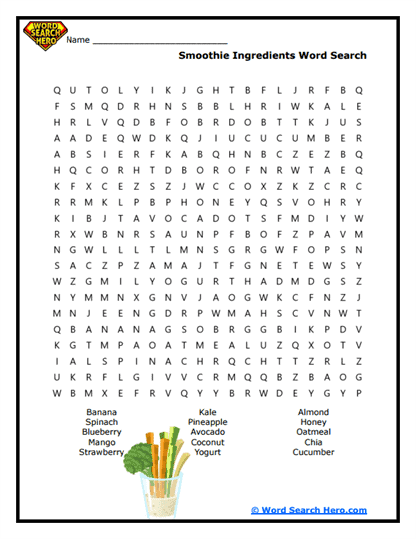
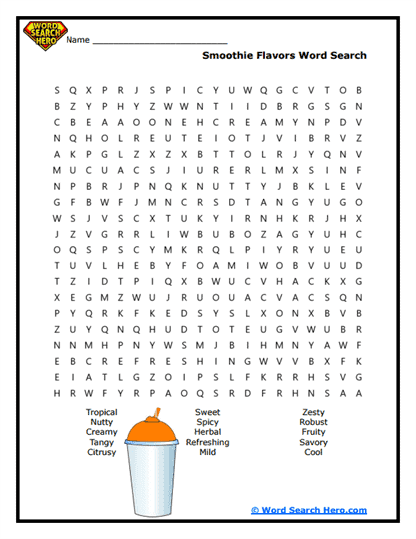
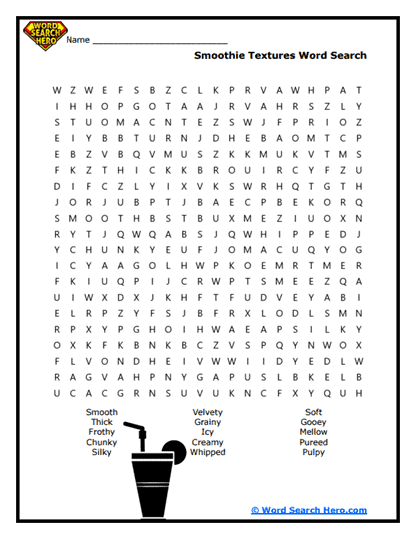
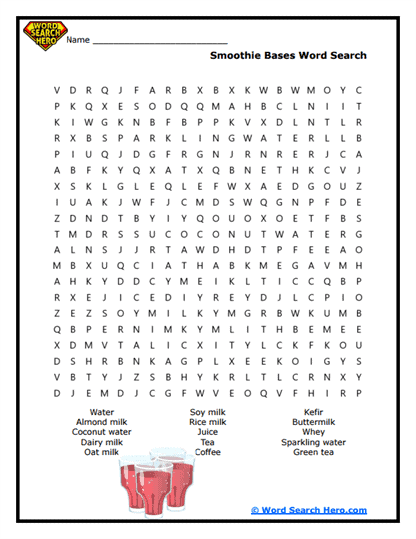
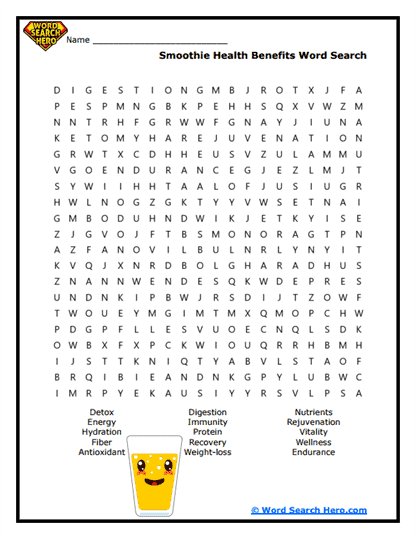
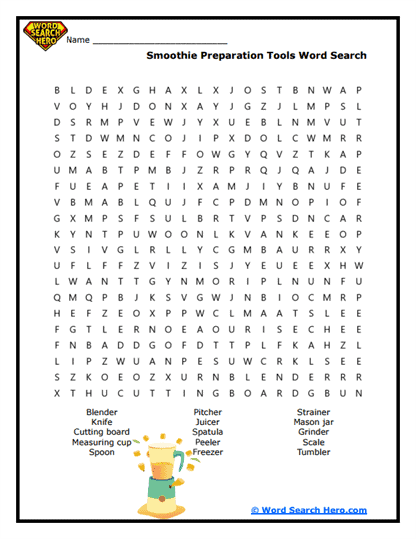
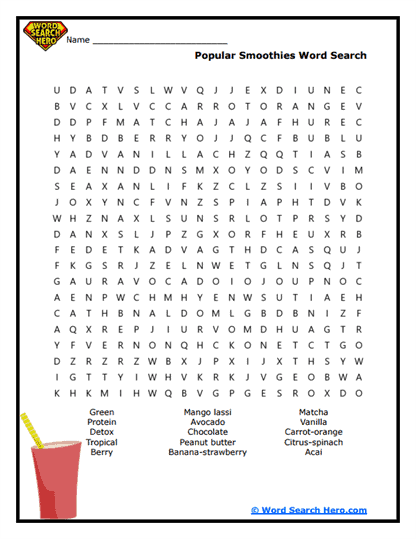
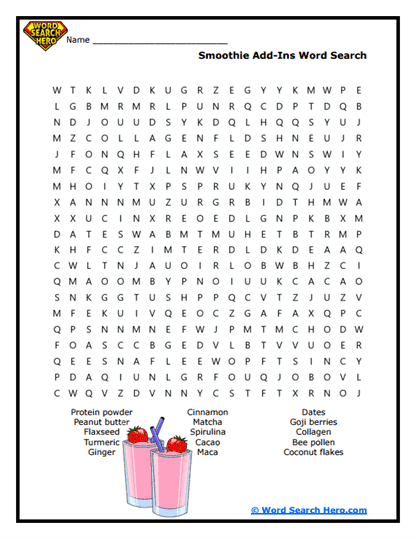
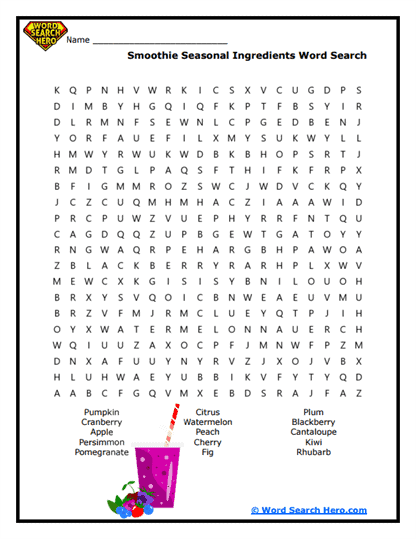
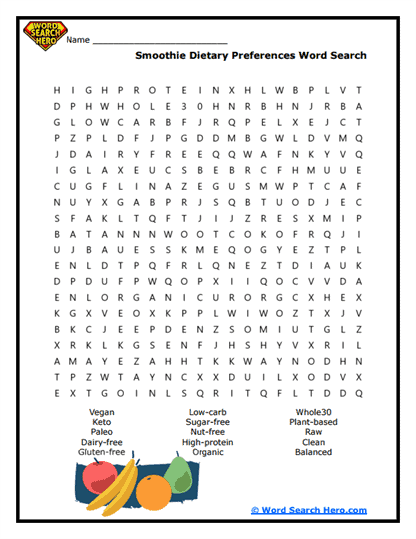
About Our Smoothie Word Searches
Smoothies are colorful, refreshing, and packed with variety-which makes them a perfect theme for engaging word search puzzles. Our Smoothie Word Searches collection features a wide range of vocabulary centered around fruits, ingredients, flavors, and blending techniques. From strawberries and bananas to yogurt, spinach, and protein blends, these puzzles are filled with words that feel both familiar and fun.
Because smoothies are often associated with healthy habits and creativity, this theme naturally appeals to a wide range of learners. Kids enjoy recognizing their favorite fruits and flavors, while older students can explore more complex ingredients and combinations. The bright, positive nature of smoothies makes these puzzles feel energizing rather than academic.
These printables are easy to use in classrooms, homeschool settings, or at home. They work well as morning work, nutrition lesson supplements, or simple brain breaks. The smoothie theme also ties nicely into discussions about healthy eating, making it both enjoyable and meaningful.
Blend Learning with Fun
Smoothie word searches offer more than just entertainment-they build important literacy skills. Learners practice spelling, word recognition, and visual scanning as they search for each term. The familiar nature of smoothie ingredients helps boost confidence, especially for younger students who may already recognize many of the words.
This theme also connects naturally to other subjects. In health or science lessons, students can talk about the nutritional benefits of different ingredients, like fruits, vegetables, and proteins. In math, they can count how many fruit-based words appear versus other ingredients. Even basic categorization-such as grouping fruits, liquids, and add-ins-can turn the puzzle into a deeper learning activity.
In group settings, smoothie puzzles can spark fun conversations. Learners might share their favorite smoothie combinations, debate the best ingredients, or describe flavors and textures. These discussions help build communication skills while keeping the activity light and engaging.
Paul’s Pro-Tip

Turn your smoothie word search into a “recipe builder.” After finishing the puzzle, have learners pick 3-5 ingredients they found and create their own smoothie recipe. They can name it, describe the flavor, and even draw it.
If someone gets stuck, suggest starting with easy-to-spot fruit words like “banana,” “berry,” or “mango.” These are often longer and more recognizable, making them great entry points into the puzzle.
A Fresh Way to Encourage Healthy Thinking
Smoothie-themed puzzles naturally lead to conversations about healthy choices. Because smoothies are often seen as nutritious and customizable, they give learners a chance to explore how different ingredients work together.
Kids might begin to think about balance-combining fruits, greens, and liquids-or talk about what makes a smoothie sweet, creamy, or refreshing. These simple ideas can build awareness around nutrition without feeling like a formal lesson.
At home, these puzzles can easily connect to real-life activities. Families might make a smoothie together after completing a puzzle or try a new ingredient they discovered. This hands-on extension helps reinforce learning and makes the experience more memorable.
Frequently Asked Questions
What words are typically included in smoothie word search puzzles?
Smoothie word searches usually include a mix of fruits (banana, strawberry, mango), liquids (milk, juice, almond milk), add-ins (yogurt, protein, honey), and extras like ice or spinach. Some puzzles may also include flavor descriptors or smoothie types, giving a well-rounded view of ingredients and combinations.
Are smoothie word searches good for teaching healthy eating?
Yes, they are a great entry point. The puzzles introduce a variety of fruits, vegetables, and nutritious ingredients in a fun way. After completing the puzzle, learners can group ingredients into categories or discuss which combinations make a balanced smoothie.
What age group are smoothie word searches best for?
They work well across a wide range of ages. Younger children enjoy recognizing fruits and simple ingredients, while older students can engage with more complex vocabulary like “protein,” “kale,” or “blend.” The theme is approachable for nearly everyone.
How are smoothie word searches different from general food puzzles?
Smoothie word searches focus specifically on ingredients and combinations used in drinks, especially those tied to health and freshness. This creates a more focused vocabulary set compared to broader food puzzles that include meals, snacks, and desserts.
Can smoothie word searches be used in classroom lessons?
Absolutely. They are perfect for nutrition units, science lessons about plants or food groups, and even writing activities where students describe recipes or flavors. They also work well as quick, low-prep activities.
Why do kids enjoy smoothie-themed word searches?
Kids enjoy them because the theme is colorful, familiar, and customizable. Many children already have favorite smoothie flavors, which makes the words easy to recognize and the activity more engaging.
Can I turn a smoothie word search into a hands-on activity?
Yes. After completing the puzzle, learners can create their own smoothie recipes, draw their drinks, or even help make a real smoothie. These extensions make the activity more interactive and memorable.
How can smoothie word searches support vocabulary development?
They introduce words related to food, nutrition, and preparation in a meaningful context. Because learners can connect the words to real-life experiences, they are more likely to remember and use them in conversation.