


Squid Games
Think you could survive Squid Game armed with nothing but a pencil and a passion for puzzles? These hilariously intense word searches let you outwit deadly games without losing your marbles-or your marbles.
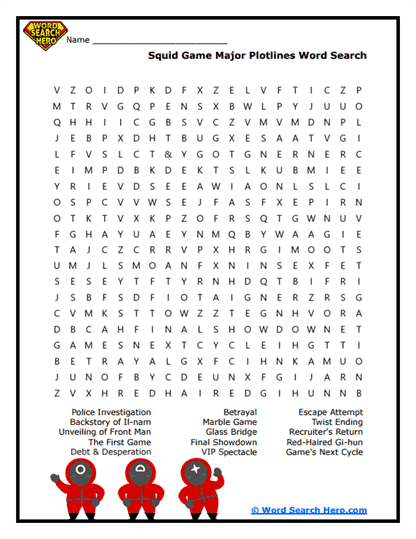
Think you could survive Squid Game armed with nothing but a pencil and a passion for puzzles? These hilariously intense word searches let you outwit deadly games without losing your marbles-or your marbles.
Our Survival TV Word Searches explore the intense, high-stakes world of survival-based television while highlighting the powerful role music plays in building tension, urgency, and emotion. These printable puzzles are perfect for classrooms, homeschool settings, or media-focused learning, offering an engaging way to build vocabulary while diving into how survival shows use both storytelling and sound to keep viewers fully engaged.
Students will search for words like “survival,” “challenge,” “island,” “contestant,” “strategy,” “elimination,” “theme,” “score,” “soundtrack,” and “tension,” all while strengthening spelling, reading fluency, and concentration. Because survival TV is built around pressure and unpredictability, these puzzles emphasize how music enhances dramatic moments and decision-making scenes. Teachers often use them in media studies, storytelling lessons, or discussions about sound design in television.
These printables are easy to use with no preparation required and can be adapted for different age groups. Younger learners can focus on basic TV and survival terms, while older students explore more advanced vocabulary tied to production, pacing, and musical scoring.
Beyond literacy skills, these puzzles help students understand how sound and storytelling combine to create suspenseful and engaging television.
Music is a key part of survival TV, and these puzzles introduce students to the vocabulary behind how it shapes the viewing experience. Words like “build-up,” “cue,” “score,” “intensity,” “dramatic,” and “silence” help learners understand how music is used to heighten tension. In many survival shows, music builds slowly during challenges and becomes more intense as the stakes rise.
A helpful classroom strategy is to have students group words into categories such as show elements and audio elements. For example, they might separate “challenge” and “contestant” from words like “soundtrack” or “composer.” This helps students see how music works alongside competition and storytelling.
You can extend the activity by asking students to imagine a survival challenge and describe what the music would sound like using several of the words from the puzzle. Would it start quietly and build, or be fast and intense from the beginning? This reinforces vocabulary while encouraging creative thinking.
Because survival TV often relies on suspense and pacing, these puzzles help students recognize how music controls the emotional rhythm of an episode.

I always found that survival shows are perfect for helping students notice how music builds tension. I’d start by asking, “What kind of music do you hear right before a big moment or elimination?” That question gets them thinking about how sound creates anticipation.
After they finished, I liked to have students pick one word and build a short scene around it, including the music. Maybe it’s a slow buildup before a challenge or a sudden dramatic cue during a big reveal. That step helps them connect vocabulary to both storytelling and sound. And if someone gets stuck, I remind them to start with strong, familiar words like “challenge” or “game” to get moving.
Survival TV Word Searches offer strong connections to media studies, music, and storytelling. In lessons, they support understanding of how music enhances competition, builds suspense, and guides audience emotions.
These puzzles also connect to production and sound design. Students can learn how editors and composers use timing, rhythm, and silence to create dramatic moments and keep viewers engaged.
Creative extensions are especially effective with this theme. Students might design a soundtrack for a survival challenge, describe how music changes during an elimination, or create their own survival show concept using words from the puzzle. These activities reinforce vocabulary while encouraging imagination.
These puzzles also highlight how music and visuals work together to create tension-filled television. By focusing heavily on the music side of survival TV, students gain a deeper appreciation for how sound shapes every moment of suspense and excitement.
Survival TV word searches are printable puzzles that include vocabulary related to survival shows, challenges, and competition, along with music-related terms like score and soundtrack. They provide a fun way to explore television while improving reading and spelling skills.
Music plays a major role in building tension, highlighting important moments, and guiding the audience’s emotions. It often increases in intensity during challenges and dramatic scenes to make the experience more exciting.
They introduce key vocabulary related to both storytelling and sound design, helping students see how music enhances what they watch. When paired with discussions or viewing examples, they deepen understanding of how survival shows are created.
Yes, they are a great fit for both. They help students explore how television storytelling works while also showing how music is used to create suspense and excitement.
Students enjoy the competition, strategy, and high-stakes moments found in survival shows. When they also learn how music builds tension and excitement, it makes the activity even more engaging and memorable.