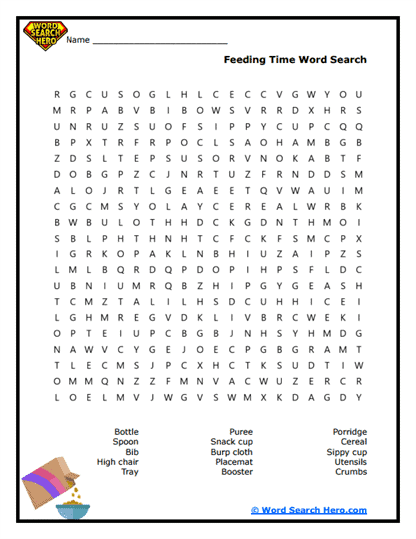
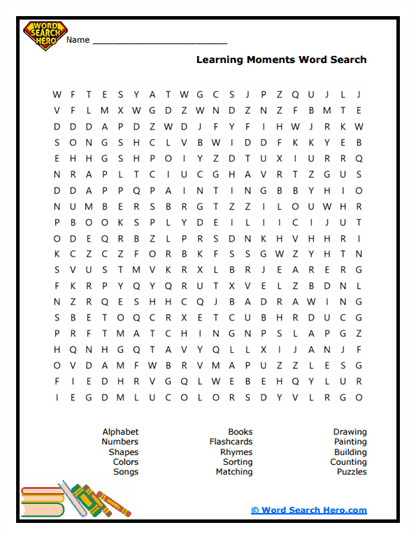
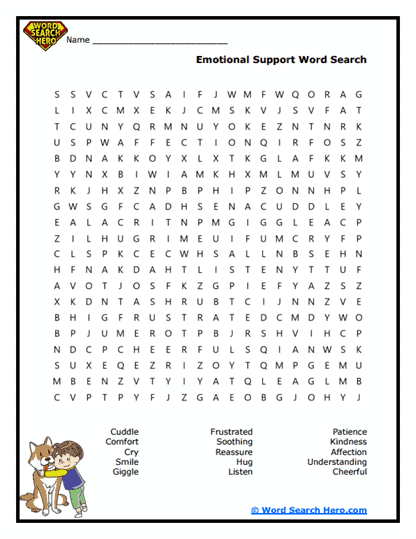
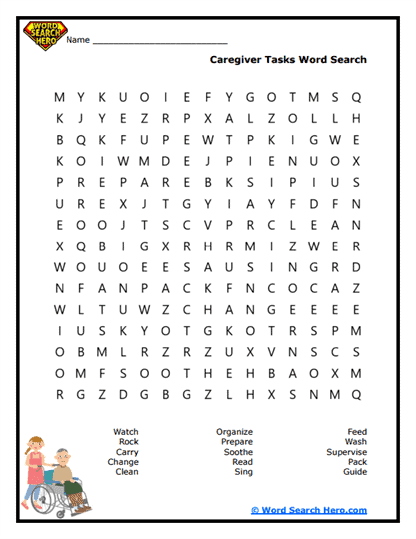
About Our Taking Care of Children Word Searches
Taking Care of Children word searches introduce students to vocabulary connected with caring for younger children and supporting their daily needs. These printable puzzles help learners become familiar with words related to caregiving, responsibility, and activities that help children stay safe, healthy, and happy. Because many students interact with younger siblings, cousins, or neighbors, the vocabulary in these puzzles reflects real-life experiences.
Students exploring this theme may encounter words such as care, help, feed, watch, play, teach, and protect. These words often appear in conversations about family responsibilities, babysitting, and childcare. A word search provides an engaging way to reinforce this vocabulary while strengthening spelling recognition, reading confidence, and observation skills.
Because the activity feels like a puzzle rather than a traditional worksheet, it can make vocabulary practice more enjoyable. Teachers often use these printables during learning centers, quiet work periods, or early finisher activities. Parents and homeschool educators can also include them in lessons as a screen-free activity that connects language learning with real-world responsibilities.
As students search the puzzle grid for hidden words, they strengthen concentration, visual scanning abilities, and pattern recognition. These skills support literacy development while keeping the activity interactive and relaxing.
Understanding the Role of Caring for Children
Taking care of children involves helping them stay safe, healthy, and comfortable while they grow and learn. Parents, caregivers, teachers, and sometimes older siblings all play important roles in supporting younger children.
Caregiving can involve many everyday tasks. These may include preparing meals, helping with learning activities, supervising playtime, and making sure children follow safe routines. Caregivers also help children learn new skills, develop social abilities, and understand rules.
Looking after younger children requires patience, responsibility, and attention. Caregivers must watch carefully, provide guidance, and respond when children need help.
Learning vocabulary related to childcare helps students understand the responsibilities involved in helping younger children and communicating about their needs.
Word searches reinforce this learning by giving students repeated exposure to terms related to caregiving and responsibility.
Paul’s Pro-Tip
A valuable extension activity is a caregiving scenario discussion. After students complete the word search, present simple situations involving younger children.
For example, ask students what they might do if a child falls down, feels sad, or needs help tying a shoe. Encourage students to discuss safe and helpful responses using vocabulary from the puzzle.
This activity helps students practice problem-solving while reinforcing words related to responsibility and caring for others.
Learning Responsibility and Empathy
Caring for younger children helps students develop empathy, patience, and leadership skills. When students learn how to help others, they also build stronger communication and cooperation abilities.
Vocabulary related to caregiving appears frequently in conversations about family life, babysitting, and community support. When students learn these words, they become better able to describe ways people care for and support one another.
A word search can serve as a warm-up activity before lessons about responsibility, empathy, or family roles. After completing the puzzle, educators can encourage students to share ways they help younger siblings or assist friends and classmates.
When students become familiar with vocabulary related to taking care of children, they strengthen both their language skills and their understanding of kindness and responsibility.
Frequently Asked Questions
What are Taking Care of Children word searches?
They are puzzles that feature vocabulary related to caregiving, helping younger children, and supporting their daily needs.
Why is learning about childcare vocabulary useful?
It helps students understand responsibility and communicate about ways people help and support younger children.
What kinds of words might appear in these puzzles?
Examples include care, help, feed, watch, play, guide, and protect.
Are these puzzles appropriate for classroom discussions about responsibility?
Yes. They work well alongside lessons about empathy, family roles, and helping others.
What classroom activity pairs well with this puzzle?
Students can discuss caregiving scenarios and explain how they would help a younger child in different situations.